Destinations

Aerial view of Pathiramanal Island bird sanctuary in Vembanad Lake
Destinations

Pathiramanal Island

Pathiramanal Island Pathiramanal Island: Floating like an emerald droplet in the expansive waters of the Vembanad Lake in the Alappuzha district, Pathiramanal Island is a secluded, uninhabited paradise that stands as one of the most unique ecological assets of the Kerala backwaters. The name Pathiramanal translates literally to “Sands of Midnight” in the native tongue of Malayalam, inspired by an enchanting local myth which tells of a scholarly Brahmin who dove into the lake to perform evening prayers, causing a pristine stretch of land to miraculously rise from the dark water overnight. Sprawling across a modest 10 acres, this isolated landmass is completely surrounded by water and is accessible exclusively by boat. Pathiramanal serves as a vital, strictly protected sanctuary for global bird migration. Crisscrossed by narrow, overgrown dirt paths beneath a thick, primeval canopy of dense tropical vegetation and wild mangroves, the island offers an absolute sensory escape. For travelers and birdwatchers, it is a silent world where the hum of modern life vanishes completely, replaced by the rustle of leaves, the gentle lapping of lake waves, and the echoes of thousands of rare birds nesting in the wild. Top Things to See & Do Inside: Embark on a Dawn Birdwatching Expedition: Pathiramanal is a globally celebrated avian paradise, serving as a critical roosting and breeding ground for over 90 species of local birds and 50 species of rare migratory travelers. Boarding a small country canoe to land on the island at daybreak allows you to spot magnificent flocks of Pintail Ducks, Cotton Teals, Cormorants, Night Herons, and Bronze-winged Jacanas. The sight of these birds gliding over the surrounding water hyacinths against a rising sun is an unforgettable visual spectacle. Trek the Untamed Mangrove Canopy Trails: The interior of Pathiramanal is an untouched wilderness network. Visitors can walk along the single, unpaved nature trail that loops through the island’s heart. The path takes you directly beneath towering groves of wild teak, bamboo thickets, and spectacular, exposed mangrove root systems that crawl out into the lakebed. Walking through this dense green tunnel gives you a profound sense of isolation, completely detached from the busier tourist tracks on the mainland. Capture Panoramic Views of the Vembanad Lake Horizon: Because Pathiramanal sits directly in the widest part of Vembanad Lake, its outer shoreline offers some of the most dramatic, unobstructed water vistas in Kerala. You can stand on the wooden wooden observation decks built along the banks to watch traditional fishermen cast nets from narrow skiffs, massive luxury houseboats sailing in the distance, and the distant blue shores of Kumarakom and Alleppey framing the immense water horizon. Explore the Surrounding Water Hyacinth Lagoons by Kayak: The quiet, shallow lagoons that immediately border the island are rich with floating water lilies and dense patches of green vegetation. Renting a low-profile kayak allows you to glide silently around the island’s perimeter, passing right under low-hanging branches where purple swamphens and kingfishers dive for fish. This slow-paced water safari offers the closest possible look at the delicate wetland ecosystem that sustains the island. View Nearby Destinations All Events Destinations Pathiramanal Island Marari Beach Gavi Kannur & Kasaragod Wayanad Kozhikode & Malappuram Load More End of Content.
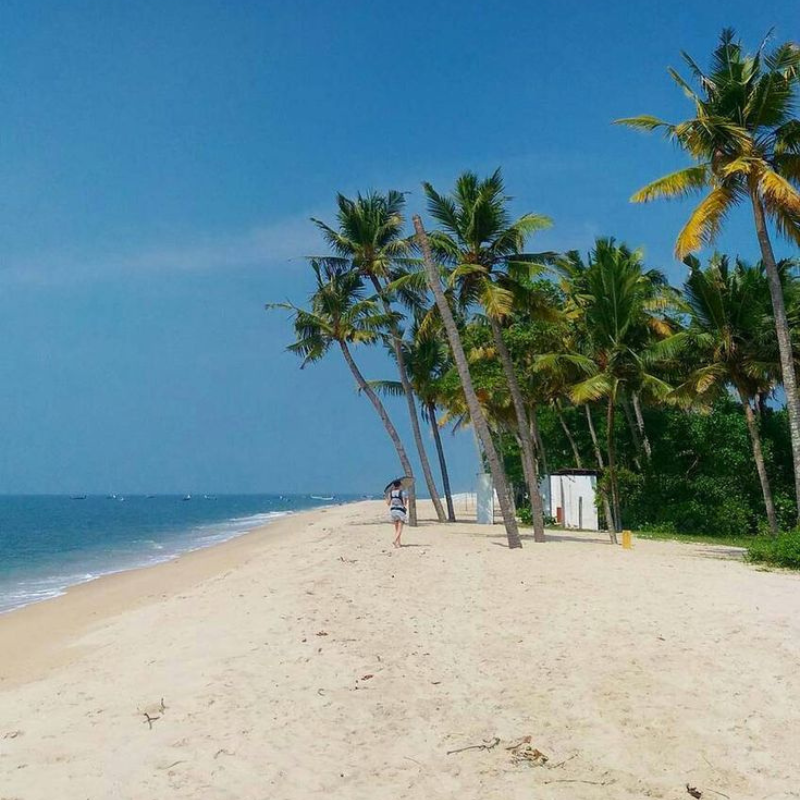
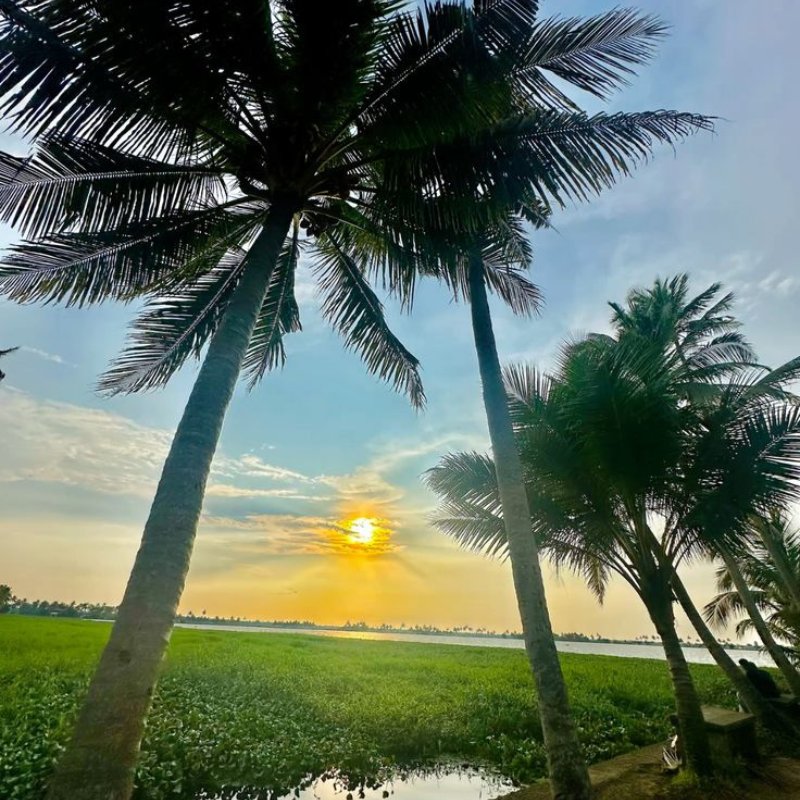
Quiet shoreline of Marari Beach with coconut trees and white sand
Destinations

Marari Beach

Marari Beach Marari Beach: Nestled quietly along the sun-drenched shores of the Alappuzha district, roughly 11 kilometers north of Alleppey town, Marari Beach (short for Mararikulam) is a masterclass in slow, restorative travel. While the high-energy boardwalks of Kovalam or the dramatic cliff-backed sands of Varkala cater to bustling tourist crowds, Marari remains a peaceful, underdeveloped paradise. The destination is defined by its deep commitment to eco-conscious luxury, traditional Ayurvedic wellness, and the preservation of its identity as a working Malabar fishing village. The beach itself is a vast, pristine expanse of powdery white sand, framed by a thick, endless wall of bowing coconut palms and an absence of commercial beach shacks or motorized water sports. Top Things to See & Do Inside: Witness the Dawn Catch with the Mararikulam Fishermen: Marari is fundamentally an active, working fishing shoreline, and its sands are at their most captivating at daybreak. Arrive on the cool beach around 5:30 AM to watch the traditional wooden Vallam boats pierce through the crashing surf to return to shore. Teams of local fishermen line up in rhythmic patterns to haul in massive drag-nets entirely by hand. It is a striking, uncurated display of community labor, soundtracked by sea birds circling overhead, offering a raw look into a coastal lifestyle unchanged by time. Explore the Architectural Mystery of the Sree Mahadeva Temple: Tucked away in the shaded village lanes just off the beach sits the ancient Mararikulam Sree Mahadeva Temple, an architectural gem of rural Kerala. What makes this historic stone-and-timber structure structurally unique—and a rarity across India—is its layout: it is the only known temple where the main deities, Lord Shiva and Goddess Parvati, are installed facing each other directly. Walking through its outer courtyard allows you to admire classic Malabar temple architecture, featuring steep, sloping tiled roofs and intricately carved wooden gables. Unwind with Ancestral Ayurvedic Wellness Treatments: Marari is globally celebrated as a premier hub for authentic, non-commercialized Ayurveda. The eco-resorts and traditional wellness centers backing onto the beach specialize in holistic healing therapies administered by licensed physicians. Visitors can step into peaceful, oil-scented wooden treatment rooms for specialized full-body massages (Abhyangam) or traditional oil-dripping therapies (Shirodhara) performed using organic herbs harvested directly from local medicinal gardens. Visit the International Coir Museum: For culture enthusiasts seeking an insight into the local economy, a short drive from the sands leads to the world’s first International Coir Museum. This fascinating industrial repository showcases the entire traditional process of retting coconut husks and spinning them into golden fiber thread. The gallery displays stunning, intricate works of art and grand sculptures crafted entirely from coir rope, while onsite workshops let you watch local master weavers operate traditional manual looms. View Nearby Destinations All Events Destinations Marari Beach Gavi Kannur & Kasaragod Wayanad Kozhikode & Malappuram Thrissur & Palakkad Load More End of Content.

Vast green paddy fields of Kuttanad below sea level
Destinations

Kuttanad

Kuttanad Kuttanad: Sprawling across the Alappuzha, Pathanamthitta, and Kottayam districts, Kuttanad is one of the most geographically fascinating and visually stunning regions in South India. Widely celebrated as the “Rice Bowl of Kerala,” this vast delta network is defined by an extraordinary agricultural phenomenon: it is one of the very few places on earth where farming is successfully sustained roughly 4 to 10 feet below sea level. Woven together by four major rivers—the Pamba, Meenachil, Achankovil, and Manimala—Kuttanad is a vibrant, low-lying water world where vast, bright green paddy fields are separated from winding backwater channels by nothing more than narrow earthen dykes and rows of leaning coconut palms. Recognized globally by the UN as a Globally Important Agricultural Heritage System (GIAHS), Kuttanad offers an unhurried look at an indigenous engineering marvel, where local communities have mastered the art of living, farming, and thriving completely in sync with the rising tides. Top Things to See & Do Inside: Explore the Below-Sea-Level Paddy Fields (Kayal Lands): The absolute defining highlight of Kuttanad is its sprawling Kayal (lake) cultivation system. Travelers can walk along the high, narrow earthen embankments that keep the backwaters from flooding the sunken fields. Watching farmers tend to endless expanses of emerald-green rice crops while massive houseboats glide along water channels above the level of the fields is a striking, surreal visual spectacle that showcases the brilliant reclamation engineering of the region. Kayaking Through the Narrow Inner Village Canals: While large houseboats navigate the major waterways, the true soul of Kuttanad is hidden in its narrow, labyrinthine inner village canals. Boarding a low-profile kayak or a traditional country canoe allows you to drift deep into the heart of local life. You will glide directly past the front porches of water-bound homesteads, watching villagers harvest river clams, transport duck flocks in specialized boats, and cross narrow, single-log footbridges. Visit the Historic Karumadikuttan Buddha Shrine: Located near the town of Ambalappuzha on the edge of the Kuttanad delta sits a fascinating historical anomaly—a weather-beaten, 11th-century black granite statue of Lord Buddha known locally as Karumadikuttan. Depicted in a seated meditating posture, this unique monastic relic stands as a quiet testament to the ancient era when Buddhism flourished deeply along the coastal trade routes and backwater enclaves of South Kerala. Observe the Duck Farming and Inland Fishing Culture: Kuttanad is famous for its massive, synchronized duck farming industry. Visitors traveling the waterways will frequently encounter thousands of ducks being herded across the open waters by local farmers using long bamboo poles and skiffs. Along the canal banks, you can also watch traditional inland fishermen use cast-nets or unique underwater diving techniques to harvest the prized Karimeen (pearl spot fish) and giant freshwater prawns from the riverbeds. View Nearby Destinations All Events Destinations Kuttanad Gavi Kannur & Kasaragod Wayanad Kozhikode & Malappuram Thrissur & Palakkad Load More End of Content.

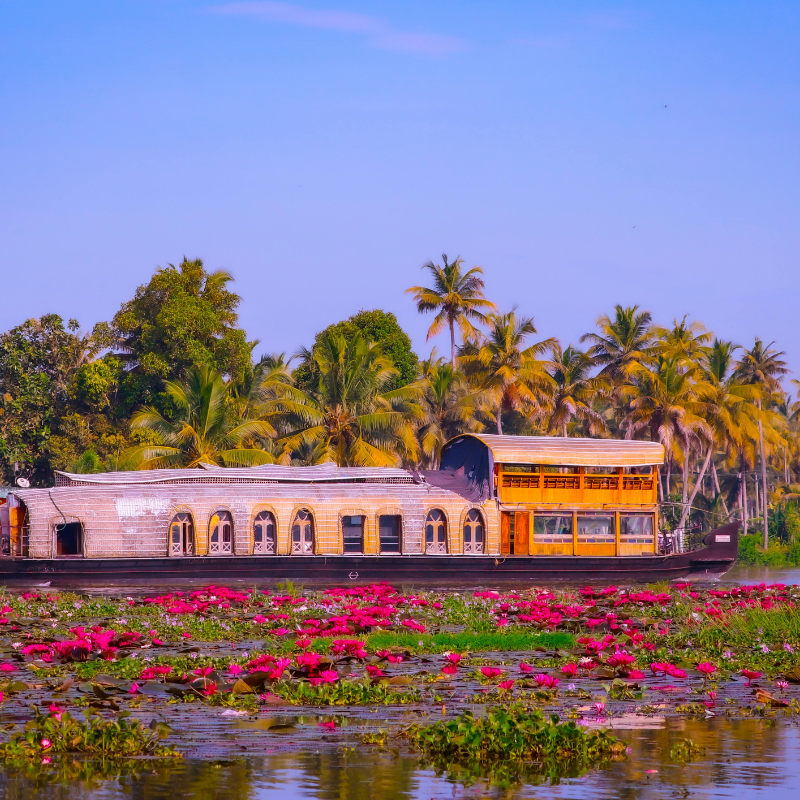
Luxury Kerala houseboat cruising through palm-fringed Alleppey backwaters
Destinations

Alleppey Backwaters

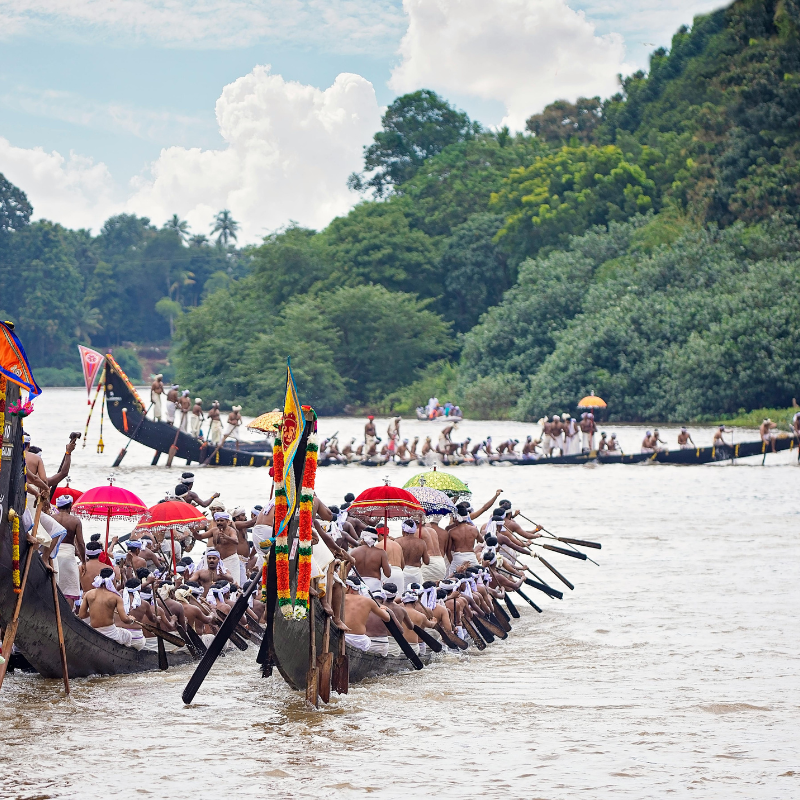
Alleppey Backwaters Alleppey Backwaters: Sprawling across a vast, intricate network of interlocking canals, rivers, and massive lakes in the Alappuzha district, the Alleppey Backwaters are the undisputed jewel of Kerala’s aquatic landscape. Famously dubbed the “Venice of the East” by Lord Curzon during the British Raj, this world-renowned destination is defined by its unique below-sea-level farming systems and an expansive water world where land and liquid blur seamlessly. The absolute lifeblood of the region is the sprawling Vembanad Lake—India’s longest lake—which feeds into an endless labyrinth of narrow, palm-fringed channels. Alleppey is globally celebrated as the birthplace and capital of the modern Kettuvallam (luxury houseboat) cruise industry. For the global traveler, it offers the ultimate slow-travel immersion: a serene paradise where floating boutique hotels glide past emerald-green paddy fields, ancient lakeside villages, and whistling groves of coconut palms, capturing the romantic essence of classic Malabar heritage. Top Things to See & Do Inside: Cruise in a Traditional Luxury Kettuvallam (Houseboat): The definitive, bucket-list experience in Alleppey is spending a night aboard a traditional luxury houseboat. Crafted by local artisans using jackwood planks and tied together with coir ropes without a single nail, these converted spice-transport boats feature thatched roofs made of bamboo poles and palm leaves. Inside, they offer fully air-conditioned bedrooms, private bathrooms, and open-air observation decks. As you drift down the wide channels, a private onboard chef prepares authentic Kuttanad-style meals, including fresh-caught pearl spot fish (Karimeen Pollichathu) and local red rice. Explore the Low-Lying Canals of Kuttanad (The Rice Bowl of Kerala): To see the backwaters at their most intimate, take a country boat or kayak deep into the narrow canals of Kuttanad. This extraordinary region is one of the few places in the world where farming is sustained roughly 4 to 10 feet below sea level. You can glide right past rural backyards, watching local women wash clothes on stone steps, children paddling small canoes to school, and farmers tending to vast, emerald-green paddy fields protected by high earthen dykes. Relax at Pathiramanal Island (The Midnight Sand): Tucked away in the middle of the expansive Vembanad Lake lies Pathiramanal, a secluded, uninhabited 10-acre island accessible only by boat. The name translates to “Sands of Midnight,” and the island serves as a pristine floating sanctuary for nature lovers. Crisscrossed by rustic walking trails beneath a dense jungle canopy, it is a haven for migratory birds, hosting over 90 species of local and international aviators, including pintail ducks, cormorants, darter birds, and rare egrets. Witness the Thunder of the Nehru Trophy Boat Race at Punnamada Lake: If you visit during the second Saturday of August, the quiet waters of Alleppey’s Punnamada Lake explode into a roaring arena for the world-famous Nehru Trophy Boat Race. This high-octane cultural phenomenon features majestic, 100-foot-long snake boats (Chundan Vallams) powered by over a hundred synchronized oarsmen chanting rhythmic boat songs (Vanchippattu). The sight of dozens of massive wooden vessels slicing through the water at breakneck speeds amidst the cheers of hundreds of thousands of spectators is an unforgettable spectacle. View Nearby Destinations All Events Destinations Alleppey Backwaters Gavi Kannur & Kasaragod Wayanad Kozhikode & Malappuram Thrissur & Palakkad Load More End of Content.

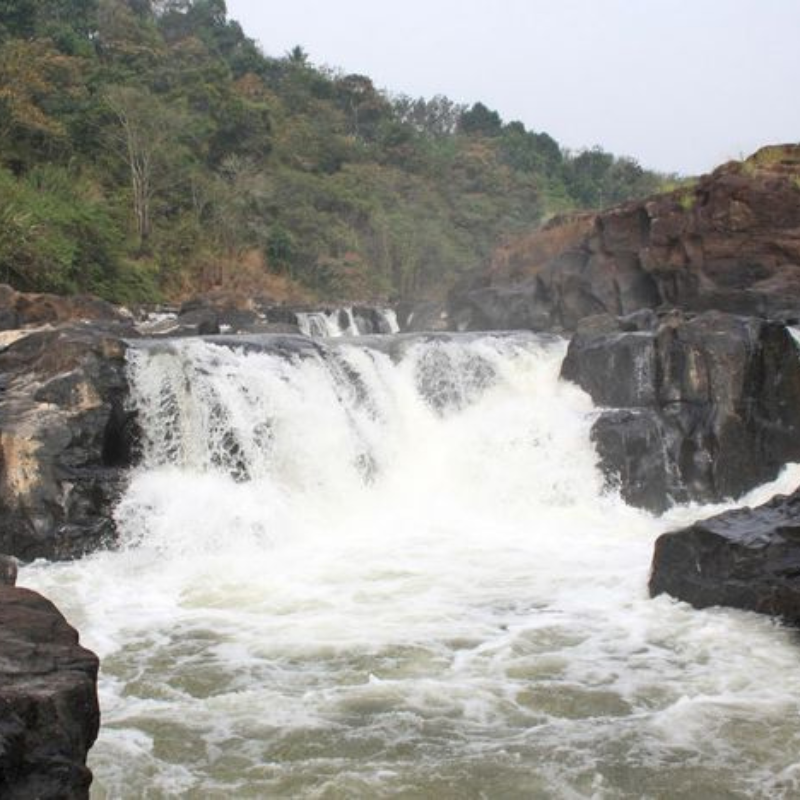
Wide panoramic view of Perunthenaruvi rocky waterfall
Destinations

Perunthenaruvi Falls

Perunthenaruvi Falls Perunthenaruvi Falls: Nestled gracefully along the rocky path of the holy Pamba River in the Pathanamthitta district, roughly 36 kilometers from Pathanamthitta town, Perunthenaruvi Waterfalls is a spectacular and dramatic natural wonder. The name Perunthenaruvi translates literally to “The Great Honey Stream” in Malayalam, a nod to the countless wild beehives that historically lined the dense forest cliffs surrounding the river valleys. Unlike the sheer, vertical drops characteristic of many Western Ghats cascades, Perunthenaruvi is celebrated for its immense width and unique geological formations. Here, the powerful currents of the Pamba River spread wide over a massive, rugged bed of solid rock before thundering down a series of wide, multi-tiered rock shelves into a deep, swirling ravine. Surrounded by the pristine, dense canopy of the Ranni forest division, it offers a raw, breathtaking spectacle of untamed water engineering, making it a favorite retreat for travelers seeking a powerful display of nature’s forces away from commercial crowds. Top Things to See & Do Inside: Marvel at the Wide Rock-Shelf Cascade: The main draw of Perunthenaruvi is the sheer scale of its wide, horizontal water curtain. Visitors can stand on the safely designated concrete viewing decks constructed by the tourism department to watch the Pamba River churn into a frothy white torrent as it drops nearly 60 to 100 feet across multiple rocky layers. The sight and sound of such a massive volume of water colliding with the rocky riverbed create an incredibly dramatic, mist-heavy amphitheater. Explore the Geological Rock Formations and Potholes: During the dry, pre-monsoon months, the receding water levels expose a fascinating, alien-like landscape of smooth, dark granite rocks. Over thousands of years, the swirling currents and pebbles have carved deep, perfectly circular potholes and intricate channels directly into the solid rock bed. Walking carefully along the dry fringes of these ancient geological formations offers a unique look at how natural river erosion shapes the landscape. Relax at the Kudamurutti Echo-Tourism Park: The forest and tourism departments have developed the area immediately surrounding the falls into a clean, low-impact eco-park. Visitors can stroll along paved stone pathways, cross rustic bridges, and rest at shaded seating clearings nestled beneath giant jungle trees. The park features a dedicated children’s play area and small kiosks selling local forest produce, providing a comfortable space to spend a relaxing afternoon listening to the distant roar of the falls. Trek Through the Bordering Ranni Forest Trails: For adventure seekers, guided nature walks can be arranged through the lush, semi-evergreen forest patches that line the riverbank. These paths wind beneath a dense canopy of wild teak, bamboo thickets, and indigenous trees, offering excellent opportunities for birdwatching and spotting unique butterflies. The trails lead to peaceful upstream glades where the river flows gently before reaching the main falls, showcasing the changing moods of the Pamba. View Nearby Destinations All Events Destinations Perunthenaruvi Falls Gavi Kannur & Kasaragod Wayanad Kozhikode & Malappuram Thrissur & Palakkad Load More End of Content.

Destinations

Aranmula

Aranmula Aranmula: Nestled along the sweeping curves of the holy Pamba River in the Pathanamthitta district, Aranmula is a globally renowned heritage village where ancient spiritual traditions, classical craftsmanship, and seasonal spectacles are deeply woven into the local culture. While much of Kerala’s travel map highlights modern leisure resorts, Aranmula stands out as a protected cultural sanctuary, officially declared a Global Heritage Village by the United Nations for its preservation of centuries-old artistic and architectural lineages. The village serves as a fascinating crossroads where the rich heritage of the land seamlessly blends with the daily rhythms of rural Kerala. It is a place where metal alloys are transformed into flawless mirrors using secret formulas, and the waters of the Pamba River come alive with the thunderous rhythm of oarsmen during legendary boat races. For travelers, it offers an unhurried, deeply immersive cultural escape defined by grand temple architecture, ancient performing arts, and a community dedicated to keeping its ancestral legacies alive. Top Things to See & Do Inside: Witness the Mystery of the Aranmula Kannadi (The Metal Mirror Workshops): The absolute crown jewel of the village’s craftsmanship is the creation of the Aranmula Kannadi, a unique front-surface metal mirror that defies modern industrial production. Unlike standard glass mirrors, these pieces are cast from a secret, closely guarded alloy of copper and tin by a few traditional artisan families. The alloy is polished continuously for days to achieve a flawless, distortion-free reflection. Holding one of these masterworks, which are considered highly auspicious symbols of prosperity, offers a tangible connection to an ancient metallurgical art form found nowhere else on earth. Marvel at the Grandeur of the Aranmula Parthasarathy Temple: Rising majestically on a high terrace overlooking the Pamba River sits the ancient Parthasarathy Temple, dedicated to Lord Krishna in his role as the divine charioteer. This sprawling shrine features classic Kerala-style gabled timber architecture, intricate wood carvings, and vibrant mural paintings dating back centuries. The temple acts as the spiritual and cultural anchor of the entire region, hosting grand daily rituals and serving as the starting point for all major local festivals and river processions. Experience the Thunder of the Aranmula Uthrattathi Boat Race (Vallamkali): If you visit during the post-monsoon harvest festival of Onam, the calm waters of the Pamba River transform into a grand arena for the legendary Aranmula Vallamkali. This is not merely a sports competition, but a deeply sacred river pageant. Dozens of majestic, snake-shaped wooden boats (Palliyodams), each manned by over a hundred synchronized oarsmen dressed in traditional white attire, speed down the river to the thunderous rhythm of classical boat songs (Vanchippattu). The collective energy, splashing water, and echoing chants create an unforgettable visual and auditory spectacle. Indulge in the Grand Ritualistic Feast of Aranmula Valla Sadya: Tied directly to the temple and boat race traditions is the Valla Sadya, one of the largest and most elaborate ritualistic banquets in India. Prepared as a massive offering to the oarsmen of the snake boats, this staggering vegetarian feast consists of over 45 distinct traditional dishes served on giant banana leaves. The oarsmen request extra helpings of specific dishes through rhythmic poetic chants, and the atmosphere in the grand dining halls is an incredible display of community bonding, hospitality, and traditional culinary heritage. View Nearby Destinations All Events Destinations Aranmula Gavi Kannur & Kasaragod Wayanad Kozhikode & Malappuram Thrissur & Palakkad Load More End of Content.

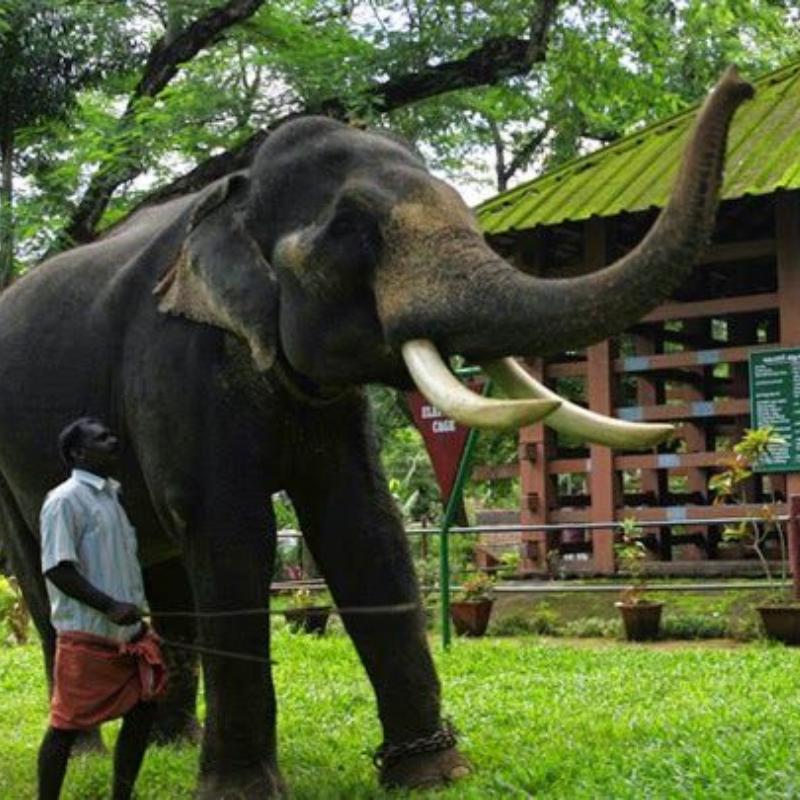
Historic wooden elephant training cage at Konni
Destinations

Konni Elephant Cage

Konni Elephant Cage Konni Elephant Cage: Tucked away along the lush banks of the Achankovil River in the Pathanamthitta district, the Konni Elephant Training Center (widely known as the Konni Elephant Cage) is one of the oldest and most important hubs of forest heritage in Kerala. Long before modern wildlife conservation frameworks were established, Konni served as the premier elephant training camp for the princely state of Travancore. It is a destination deeply defined by Kerala’s historic relationship with the Asian Elephant (Elephas maximus). Sprawling across a beautifully cleared forest reserve patch, the center is a living monument to ancient Indian forestry and training methods. The absolute heart of the complex is its massive, historic wooden cages—locally called Aanakoodu—built entirely from thick, hand-hewn logs of wild teak and rosewood sourced from the surrounding mountain valleys. Today, the facility has completely transitioned into a progressive, state-of-the-art Elephant Welfare and Rehabilitation Center. It offers travelers a unique, educational look at the daily care, medical treatment, and dietary management of rescued and orphaned elephants under the strict supervision of the Kerala Forest Department. Top Things to See & Do Inside: Marvel at the Monumental Teak Aanakoodu (The Elephant Cage): The definitive architectural and historical crown jewel of Konni is the giant, century-old Aanakoodu. Built originally in 1942 AD, this massive wooden structure stands as an engineering marvel of rural Malabar craftsmanship. Designed to safely hold up to three mature elephants simultaneously, its thick teak wooden pillars were engineered to withstand immense physical force. Walking around this imposing, weather-beaten structure provides a tangible sense of the sheer scale of historic elephant management operations. Visit the Elephant Museum and Audio-Visual Theater: For a deeper understanding of wildlife biology, the center houses a comprehensive, specialized Elephant Museum. The exhibits showcase complete skeletal structures of elephants, historical training tools used by generations of Mahouts (handlers), and detailed interactive displays illustrating elephant evolution, communication, and migratory paths across the Western Ghats. The attached mini-theater screens educational documentaries focused on active habitat conservation efforts in South India. Observe the Morning Bath and Feeding Rituals: The most popular experiential activity for visitors occurs during the early morning hours when the resident elephants are led out to the spacious open grounds. Visitors can watch from a safe distance as the Mahouts use traditional coconut husks and specialized natural scrubs to scrub and wash the gentle giants. Following the bath, you can observe the preparation and distribution of their morning diet, which includes massive, hand-rolled balls of nutritious cooked ragi, jaggery, salt, and fresh green forage. Trek the Adjoining Achankovil Eco-Tourism Trails: For outdoor enthusiasts, the forest department organizes guided eco-walks that launch directly from the perimeter of the elephant center. These rugged trekking trails wind through the surrounding semi-evergreen forest patches, leading past quiet streams, ancient canopy trees, and local spice plantations. It is an excellent opportunity to spot rich birdlife, butterflies, and smaller forest mammals while experiencing the raw, natural ecosystem that borders the training camp. View Nearby Destinations All Events Destinations Konni Elephant Cage Gavi Kannur & Kasaragod Wayanad Kozhikode & Malappuram Thrissur & Palakkad Load More End of Content.

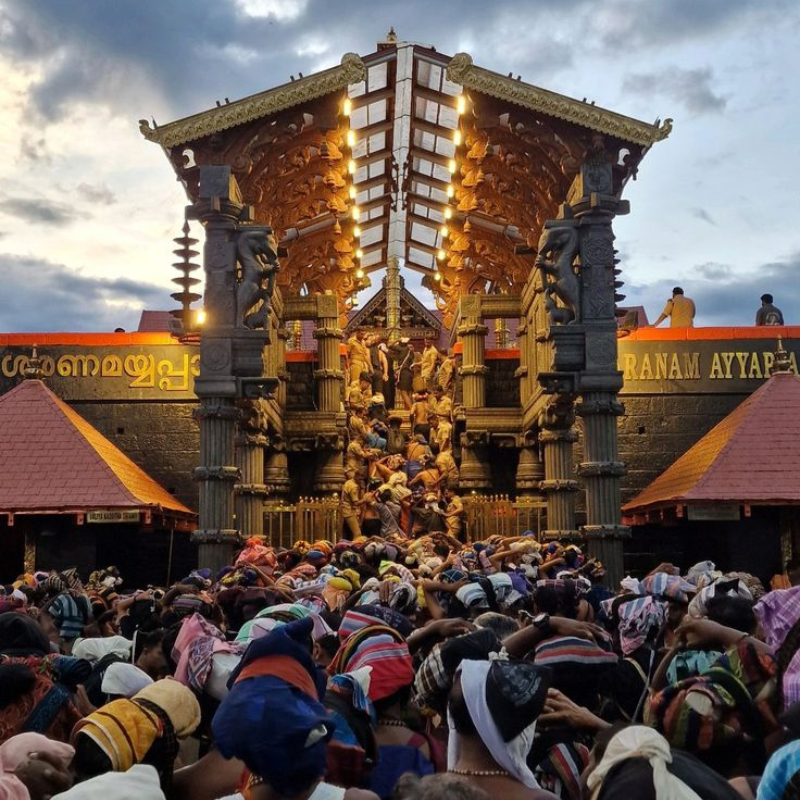
Pilgrimage center Sabarimala Sree Dharma Sastha Temple
Destinations

Sabarimala

Sabarimala Sabarimala: Perched at an elevation of roughly 3,000 feet amidst the rugged, mountain terrain of the Pathanamthitta district, Sabarimala is one of the largest and most intense annual pilgrimage sites in the world. While other prominent temples across India are nestled within bustling urban cities or easily accessible plains, Sabarimala is famously isolated, situated deep within the dense, strictly protected evergreen forests of the Periyar Tiger Reserve. The ancient shrine is dedicated to Lord Ayyappan, a celibate deity who, according to local mythology, meditated on these very hills after defeating the demoness Mahishi. The pilgrimage itself is uniquely defined by a spirit of radical egalitarianism; every devotee, regardless of social status, caste, or wealth, dresses in identical black or blue attire and is addressed equally as “Swami.” To step onto the sacred hills, pilgrims traditionally undergo a rigorous 41-day austerities period (Vratham), transforming the journey into a profound spiritual and physical test of endurance against the elements of the deep Western Ghats wilderness. Top Things to See & Do Inside: Climb the Sacred Pathinettam Padi (The 18 Divine Steps): The absolute spiritual and architectural gateway to the main sanctum is a flight of 18 majestic steps covered in pure gold and brass plating. According to scriptural lore, these steps represent different spiritual milestones, including the five senses, the eight human passions, and the three inherent qualities of nature. Devotees are permitted to ascend these highly revered steps only if they are carrying the Irumudikkettu—the sacred two-compartment cloth bundle packed with ritual offerings like coconuts filled with ghee. Witness the Grandeur of the Main Sannidhanam (Sanctum Sanctorum): At the summit of the hill sits the main temple complex, featuring a traditional Kerala-style low-slung structure topped with a glittering copper-and-gold roof. Here, pilgrims catch a fleeting, high-energy glimpse of the dynamic idol of Lord Ayyappan, depicted in a unique yogic posture. The atmosphere inside the courtyard is an overwhelming sensory mix of burning camphor, classical chanting, and the breaking of thousands of coconuts against the designated granite stone walls. Participate in the Petta Thullal at Erumeli: For those following the traditional, long-distance pilgrimage route, the journey begins with this vibrant, ritualistic mask-dance at the town of Erumeli. Pilgrims paint their faces and bodies in bright colors, carry wooden arrows, and dance through the streets to the rhythm of local drums. This joyous ritual commemorates the mythological victory of Lord Ayyappan over dark forces and uniquely involves paying respects at the Vavar Mosque, celebrating a historic bond of interfaith harmony between the deity and his Muslim companion, Vavar. Trek the Traditional Periyanavattam and Karimala Forest Routes: For fitness enthusiasts and traditionalists, skipping the modern vehicle routes in favor of the Pedestrian Forest Trek is an unforgettable challenge. This grueling 48-kilometer path winds directly through the heart of the tiger reserve, crossing deep river streams like the Pamba and ascending the notoriously steep, lung-busting inclines of the Karimala and Neelimala hills. Walking beneath towering jungle canopies surrounded by wildlife calls offers a raw connection to the ascetic origins of the shrine. View Nearby Destinations All Events Destinations Sabarimala Gavi Kannur & Kasaragod Wayanad Kozhikode & Malappuram Thrissur & Palakkad Load More End of Content.

Deep forest landscape and wildlife trekking in Gavi Kerala
Destinations

Gavi

Gavi Gavi: The Untamed Eco-Wilderness of the Periyar Tiger Reserve Tucked away deep inside the rugged Ranni reserve forest division of the Pathanamthitta district, roughly 28 kilometers from Kumily, Gavi is a pristine, high-altitude eco-tourism sanctuary. While the standard hill stations of Kerala are often crowded with commercial tea stalls and luxury resorts, Gavi stands out as a carefully protected, raw wilderness enclave. The destination is managed strictly under the eco-tourism initiatives of the Kerala Forest Development Corporation (KFDC). Spanning an expansive terrain of dense tropical evergreen forests, mist-shrouded valleys, and rolling grasslands, Gavi is a critical corridor of the Periyar Tiger Reserve. It serves as a secluded haven for an incredible array of endangered wildlife, including the Lion-tailed Macaque, the Nilgiri Tahr, and massive herds of wild elephants. For travelers, it offers a deeply immersive, low-impact outdoor experience where cell phone networks drop away, replaced by the crisp mountain air, pristine emerald lakes, and the deep, echoing sounds of an untouched Indian jungle. Top Things to See & Do Inside: Row Across the Emerald Waters of Gavi Lake: Nestled right in the heart of the forest clearing sits Gavi Lake, a breathtaking, crystal-clear freshwater body surrounded by towering evergreen trees and dense canopies. Visitors can board traditional, non-motorized rowboats or paddle canoes managed by local forest guides. Drifting silently across the placid, green-tinted waters offers a deeply peaceful experience, with the absolute silence broken only by the calls of forest birds and the occasional rustle of wildlife drinking at the water’s edge. Embark on a Controlled Jungle Jeep Safari: The primary way to explore the vast, restricted expanses of Gavi is via an open-top, forest-department-approved jeep safari. Navigating rugged, unpaved dirt tracks beneath towering canopies of old-growth timber, these guided safaris offer a front-row seat to the region’s rich biodiversity. The routes wrap past deep gorges and remote forest patches, providing excellent opportunities to spot wild elephants, Indian bison (Gaur), Malabar Giant Squirrels, and rare hornbills. Trek to the Sabarimala Viewpoint: For hiking enthusiasts, a guided forest trek takes you through dense, leech-rich undergrowth up to a dramatic, high-altitude cliff ridge. This spectacular vantage point offers a sweeping, panoramic view of the deep ravines of the Western Ghats and overlooks the famous, isolated hilltop shrine of the Sabarimala Temple nestled deep within the surrounding tiger reserve. Watching the mist roll through the deep valleys from this elevated perch is a highlight of the Gavi wilderness experience. Tour the High-Altitude Cardamom Plantations and Factory: Tucked inside the forest clearings are vast, shade-grown cardamom plantations managed sustainably by the KFDC. Visitors can take an educational walking tour through the spice-scented trails to learn about the traditional cultivation and harvesting of high-grade Malabar green cardamom. The walk also includes a visit to the historic, local processing factory to see how the aromatic pods are dried, sorted, and prepared using decades-old methods. View Nearby Destinations All Events Destinations Gavi Kannur & Kasaragod Wayanad Kozhikode & Malappuram Thrissur & Palakkad Ernakulam Load More End of Content.

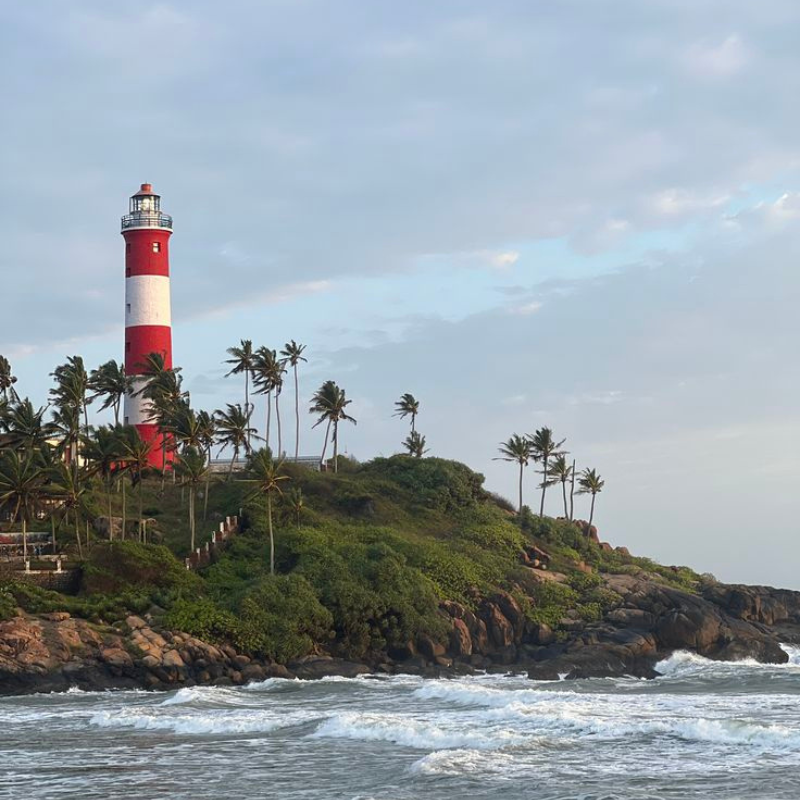
Red and white striped Thangassery Lighthouse built in 1902
Destinations

Thangassery Lighthouse

Thangassery Lighthouse Thangassery Lighthouse: Towering a magnificent 135 feet above the rugged coastline of Kollam, the Thangassery Lighthouse (also spelled Thangasseri) is one of the most iconic, enduring landmarks of maritime Kerala. While many historical sites are tucked away in inland enclaves, this soaring, cylindrical stone tower stands directly on the shores of a historic seaside enclave that once served as a prized trading post for the Portuguese, Dutch, and British empires. Commissioned in 1902 AD by the British East India Company to guide ships navigating the treacherous, reef-strewn waters of the Quilon coast, the lighthouse is instantly recognizable by its bold, red-and-white painted checkerboard stripes. Today, it remains fully operational, casting a powerful beam across the Arabian Sea that can be seen over 18 nautical miles out. For travelers, it offers a fascinating journey through old-world nautical engineering and a thrilling physical climb that rewards the adventurous with the finest panoramic coastal views in Southern Kerala. Top Things to See & Do Inside: Climb the Spiral Staircase for 360-Degree Views: The ultimate highlight of a visit to Thangassery is climbing the 200-plus steps of the internal winding spiral staircase. As you ascend the historic stone tower, the air grows cooler until you emerge onto the breezy, railed outdoor observation deck. From this incredible vantage point, you are treated to a stunning, bird’s-eye view of the crashing waves of the Arabian Sea, the sprawling Thangassery breakwater harbor, and the endless green canopy of Kollam’s coconut plantations. Inspect the Vintage Optic and Lantern Room: For engineering and history enthusiasts, the lantern room at the summit houses a magnificent, vintage second-order Fresnel lens system. Visitors can get a close-up look at the intricate, hand-polished glass prisms that have focused and thrown light across the ocean for generations. Learning about the transition from traditional oil lamps to modern automated LED systems offers a rare glimpse into the evolution of global seafaring technology. Explore the Ruins of the Dutch and Portuguese Forts: Directly surrounding the lighthouse precinct are the atmospheric, vine-covered ruins of Fort Thomas and the old Dutch cemetery. Built by the Portuguese in 1518 AD, the remaining seaside walls, bastions, and arches of the fort sit right on the cliff’s edge. Walking through these weathered stone structures allows you to step back in time and imagine the era when European armada fleets fought for control of the Malabar spice trade. Walk the Massive Thangassery Breakwater Jetty: Extending nearly 3 kilometers right into the ocean from the foot of the lighthouse area is the massive Thangassery breakwater system. Constructed of giant, interlocking concrete tetrapods, this seaside pier is a favorite spot for evening walks. It allows you to walk far out into the water, with the crashing surf on one side and the calm fishing harbor on the other, providing the perfect angle to photograph the towering lighthouse against a setting sun. View Nearby Destinations All Events Destinations Thangassery Lighthouse Kannur & Kasaragod Wayanad Kozhikode & Malappuram Thrissur & Palakkad Ernakulam Load More End of Content.

Scroll to Top