Konni Elephant Cage
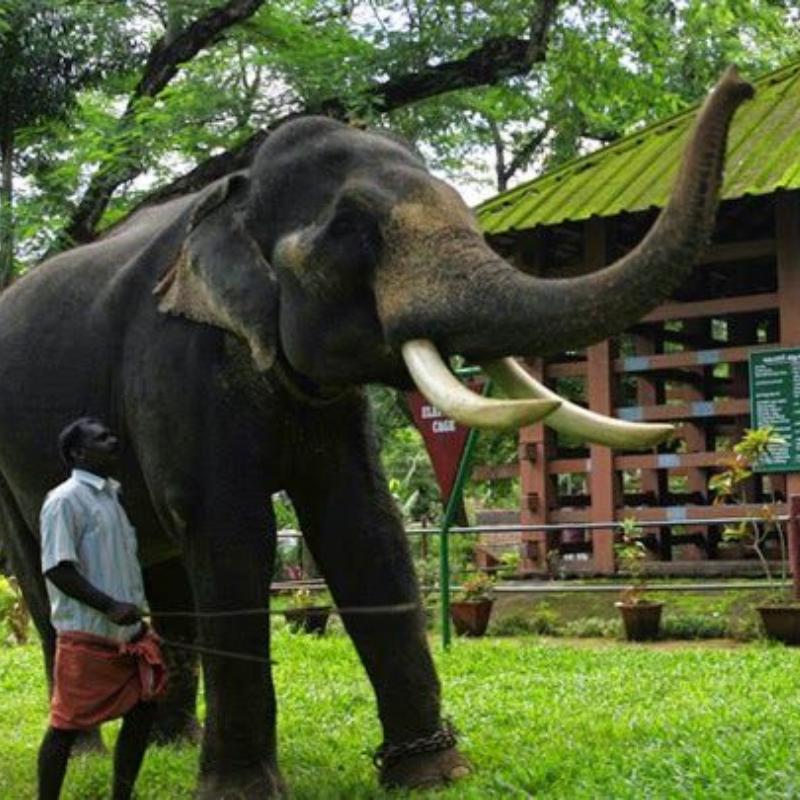
Konni Elephant Cage:
Tucked away along the lush banks of the Achankovil River in the Pathanamthitta district, the Konni Elephant Training Center (widely known as the Konni Elephant Cage) is one of the oldest and most important hubs of forest heritage in Kerala. Long before modern wildlife conservation frameworks were established, Konni served as the premier elephant training camp for the princely state of Travancore. It is a destination deeply defined by Kerala’s historic relationship with the Asian Elephant (Elephas maximus).
Sprawling across a beautifully cleared forest reserve patch, the center is a living monument to ancient Indian forestry and training methods. The absolute heart of the complex is its massive, historic wooden cages—locally called Aanakoodu—built entirely from thick, hand-hewn logs of wild teak and rosewood sourced from the surrounding mountain valleys. Today, the facility has completely transitioned into a progressive, state-of-the-art Elephant Welfare and Rehabilitation Center. It offers travelers a unique, educational look at the daily care, medical treatment, and dietary management of rescued and orphaned elephants under the strict supervision of the Kerala Forest Department.
Top Things to See & Do Inside:
Marvel at the Monumental Teak Aanakoodu (The Elephant Cage): The definitive architectural and historical crown jewel of Konni is the giant, century-old Aanakoodu. Built originally in 1942 AD, this massive wooden structure stands as an engineering marvel of rural Malabar craftsmanship. Designed to safely hold up to three mature elephants simultaneously, its thick teak wooden pillars were engineered to withstand immense physical force. Walking around this imposing, weather-beaten structure provides a tangible sense of the sheer scale of historic elephant management operations.
Visit the Elephant Museum and Audio-Visual Theater: For a deeper understanding of wildlife biology, the center houses a comprehensive, specialized Elephant Museum. The exhibits showcase complete skeletal structures of elephants, historical training tools used by generations of Mahouts (handlers), and detailed interactive displays illustrating elephant evolution, communication, and migratory paths across the Western Ghats. The attached mini-theater screens educational documentaries focused on active habitat conservation efforts in South India.
Observe the Morning Bath and Feeding Rituals: The most popular experiential activity for visitors occurs during the early morning hours when the resident elephants are led out to the spacious open grounds. Visitors can watch from a safe distance as the Mahouts use traditional coconut husks and specialized natural scrubs to scrub and wash the gentle giants. Following the bath, you can observe the preparation and distribution of their morning diet, which includes massive, hand-rolled balls of nutritious cooked ragi, jaggery, salt, and fresh green forage.
Trek the Adjoining Achankovil Eco-Tourism Trails: For outdoor enthusiasts, the forest department organizes guided eco-walks that launch directly from the perimeter of the elephant center. These rugged trekking trails wind through the surrounding semi-evergreen forest patches, leading past quiet streams, ancient canopy trees, and local spice plantations. It is an excellent opportunity to spot rich birdlife, butterflies, and smaller forest mammals while experiencing the raw, natural ecosystem that borders the training camp.
View Nearby Destinations
- All Events
- Destinations