Destinations

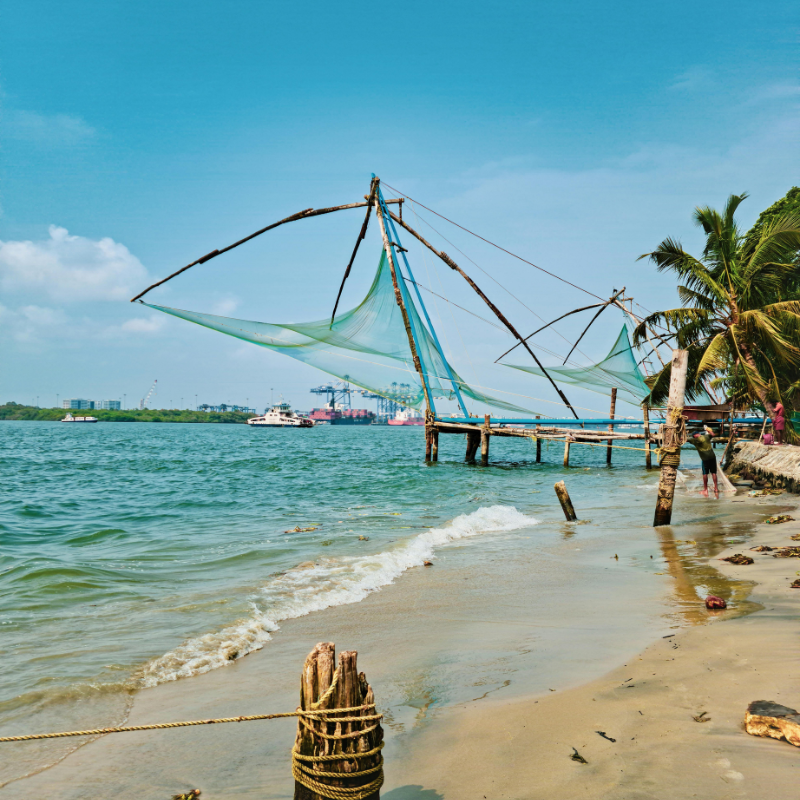
Large cantilevered Chinese fishing nets at sunset in Fort Kochi
Destinations

Fort Kochi

Fort Kochi Fort Kochi: Steeped in centuries of seafaring history and layered with the structural footprints of global empires, Fort Kochi is a captivating, water-fringed heritage neighborhood on the western edge of Kochi’s sprawling port matrix. Unlike the bustling modern commercial districts of Ernakulam, this tranquil seaside enclave operates as a living open-air museum where the past is beautifully preserved along quiet, shaded avenues. The destination is a magnificent architectural melting pot, bearing the distinct, enduring marks of Portuguese, Dutch, and British colonial occupations, alongside ancient trade links with China and the Middle East. Walking along its sun-dappled lanes, you pass weathered 500-year-old European villas, grand colonial administrative halls, and old spice warehouses that now double as vibrant contemporary art spaces. For travelers, Fort Kochi serves as the definitive cultural gateway to Kerala, offering an enchanting, atmospheric journey where the scent of sea salt mixes with hot ginger coffee and the historic rustle of old world trade. Top Things to See & Do Inside: Marvel at the Iconic Chinese Fishing Nets: Stretching dramatically along the breezy coastal shoreline of Fort Kochi beach, these massive, cantilevered teak-and-bamboo structures are the undisputed visual signature of the coast. Originally introduced by traders from the court of Kublai Khan in the 14th century, these elegant shore-operated lift nets (Cheena Vala) rely on complex, balanced counterweights. Watching teams of local fishermen work in unison to lower and haul the nets against a glowing crimson sunset remains a timeless maritime spectacle. Explore the Historic Corridors of St. Francis Church: Built originally in 1503 by Portuguese Franciscan friars, this understated yet deeply historic structure stands proud as the oldest European-built church in India. It is highly celebrated as the original resting place of the legendary Portuguese explorer Vasco da Gama, who died in Kochi in 1524 before his remains were later relocated to Lisbon. Visitors can walk down its quiet, lofty nave to view the preserved, hand-carved stone tombstone and admire the old-world timber architecture. Wander the Creative Alleyways of Kashi Art Gallery and Cafe: Fort Kochi has evolved into a powerhouse hub for contemporary Indian art, anchored heavily by the world-famous Kochi-Muziris Biennale. Stepping into local art spaces housed inside restored Dutch-era townhouses allows you to experience avant-garde sculptures, paintings, and installations by cutting-edge regional artists. The attached open-air courtyard cafes offer a relaxing, leafy setting to enjoy a slice of homemade moist chocolate cake and artisan espresso. Stroll the Sun-Drenched Paths of Fort Kochi Beach and Promenade: Fringed by massive, ancient rain trees draped in heavy moss, the stone walking path running along the coast is the social heartbeat of the neighborhood. A morning or evening stroll along the walkway provides an intimate look at the daily rhythms of the port town, from street vendors roasting fresh corn on charcoal to massive international cargo container ships gliding smoothly through the harbor channel into the Cochin Port. View Nearby Destinations All Events Destinations Fort Kochi Pathiramanal Island Gavi Kannur & Kasaragod Wayanad Kozhikode & Malappuram Load More End of Content.
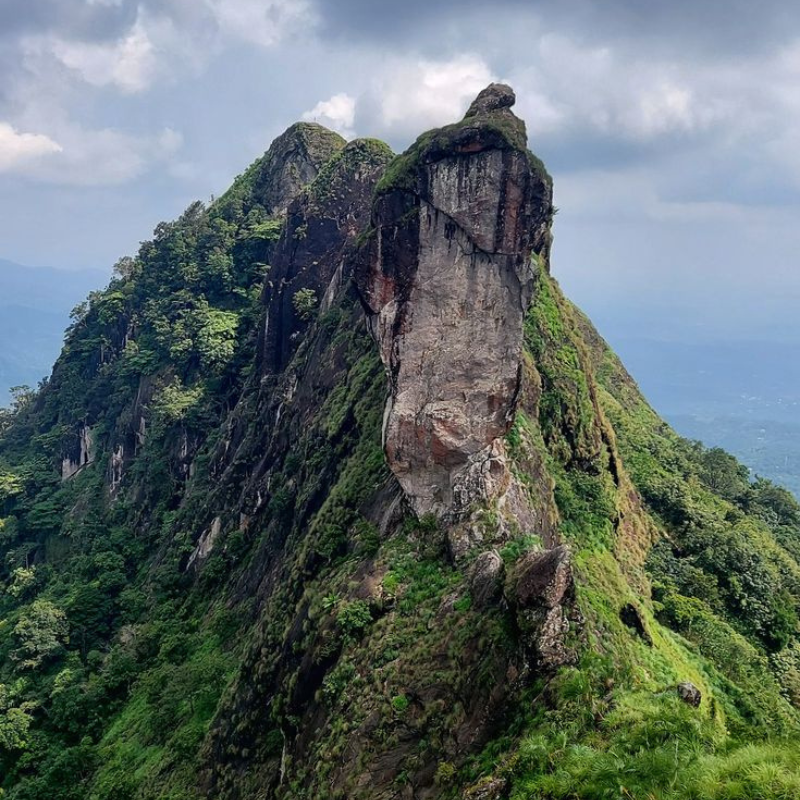
The iconic 4000ft rock formation at Illikkal Kallu Kottayam
Destinations

Illikkal Kallu

Illikkal Kallu Illikkal Kallu: The Mythic Monolith and Razor-Edge Ridge of Kottayam Rising formidably to an elevation of approximately 4,000 feet above sea level near Teekoy in the Kottayam district, Illikkal Kallu is one of the most visually striking, geologically unique, and high-adrenaline mountain destinations in the Western Ghats. This monumental peak is defined by three massive, distinct granite boulders that sit precariously atop a soaring hill ridge, creating a dramatic, primeval silhouette that can be seen from miles away across the lowlands. The name Illikkal Kallu translates directly to “The Stone of the Bamboo-Reed Hill”, an allusion to the dense groves of wild Illi (bamboo reeds) that wrap around its lower slopes. The three colossal rock pillars that form the summit have individual names and structural identities rooted in regional geography and lore: Kuda Kallu (resembling a giant stone umbrella), Koonan Kallu (the hunchback stone), and a fractured, deep monolithic gap known as Narakapalam (The Bridge to Hell). Surrounded by steep, near-vertical chasms that drop thousands of feet into the valleys below, Illikkal Kallu offers a thrilling alpine experience where winds howl continuously and swirling mountain clouds routinely swallow the massive stone pillars whole. Top Things to See & Do Inside: Behold the Three Columns and the Mythic Narakapalam: The primary highlight of a visit is viewing the incredible geological configuration of the summit stones. While Kuda Kallu is a massive dome-shaped rock, Koonan Kallu features a stark, vertical face. Bridging these two pillars is Narakapalam, a famously narrow, razor-thin ridge walk that spans a terrifying chasm. While walking across the bridge itself is now strictly cordoned off by tourism authorities for visitor safety, standing at the designated safe observation decks provides an unparalleled front-row view of this vertigo-inducing geological wonder. Embark on the High-Comfort Shuttle Safari or Steep Ridge Climb: To reach the main viewing plateau, visitors arrive at the forest department check-post at the base of the ridge. From there, you can choose to embark on a brisk, steep 1-kilometer uphill walk along the paved mountain track or board eco-friendly forest department safari jeeps that navigate the hairpin turns. The journey upwards offers spectacular glimpses of the landscape changing from tropical greenery to high-altitude montane meadows. Gaze Across Seven Districts from the Horizon Deck: Because Illikkal Kallu stands out as an exceptionally high, isolated ridge line pushing toward the western edge of the Ghats, its summit serves as an incredible panoramic viewing deck. On a rare, perfectly clear post-monsoon day, the unobstructed horizon line allows keen-eyed visitors to look clear across the plains of central Kerala to catch the distant, shimmering blue reflection of the Arabian Sea and the silver networks of the backwaters. Experience the Sudden Fog Whiteouts and Mountain Winds: The microclimate at the summit plateau is legendary for its volatile, rapid changes. In a matter of seconds, roaring mountain gales can push a dense, freezing blanket of pure white cloud up from the deep valley basins, dropping visibility to almost zero and completely isolating the massive rock pillars from view. Standing on the safe viewing platforms as the cold fog rushes past your face creates an unforgettable, ethereal high-altitude atmosphere. View Nearby Destinations All Events Destinations Illikkal Kallu Pathiramanal Island Gavi Kannur & Kasaragod Wayanad Kozhikode & Malappuram Load More End of Content.
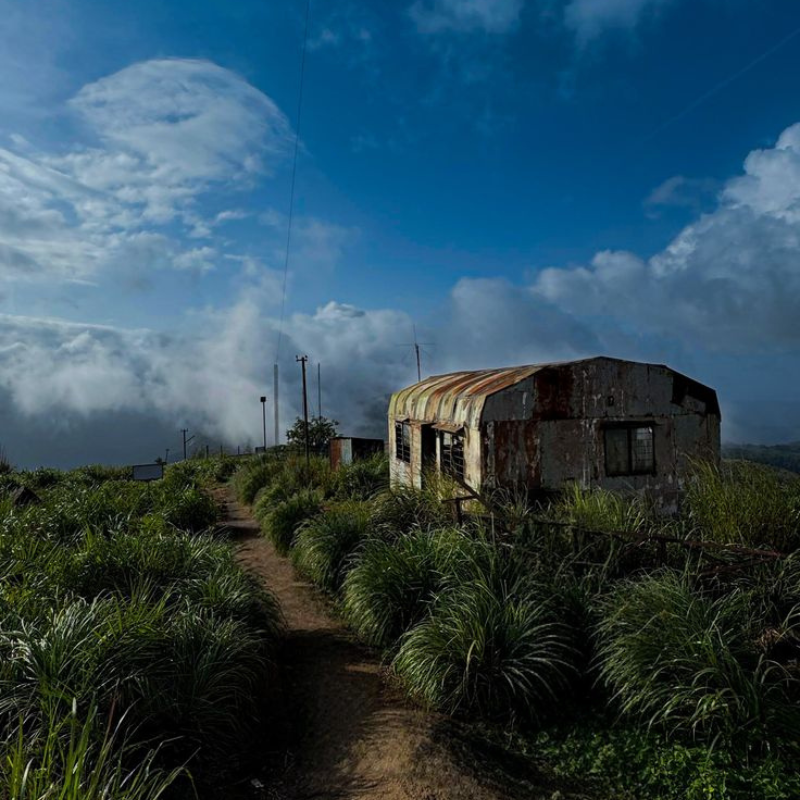
High altitude grassy hills of Ilaveezhapoonchira under a cloudy sky
Destinations

Ilaveezhapoonchira

Ilaveezhapoonchira Ilaveezhapoonchira: Tucked away on the eastern fringes of the Kottayam district, near Melukavu, Ilaveezhapoonchira is one of the most striking, surreal, and untouched hill stations in South India. Perched at an altitude of roughly 3,200 feet above sea level, this pristine destination is uniquely cradled by three majestic mountain peaks: Mankunnu, Kudayathoor Hill, and Thonippara. Top Things to See & Do Inside: Conquer the Rugged 4×4 Off-Road Jeep Trek: The journey to the top of Ilaveezhapoonchira is an adrenaline-pumping experience in itself. The steep, unpaved rocky tracks winding up the mountain sides are completely inaccessible to standard vehicles. Adventure seekers must board rugged, locally operated 4×4 jeeps at the base town of Kanjar. The intense, bumpy ascent takes you right along the edge of sheer cliffs, offering thrilling glimpses of the deep valleys dropping off below. Watch the Spectacular Sunrise and Sunset Horizon: Because the open, grassy plateau at the summit faces no obstruction from trees or adjacent peaks, it serves as an unparalleled viewing deck. On a perfectly clear day, the panoramic vantage point allows you to look across the landscape to spot the distinct lines of seven neighboring districts. Watching the sun dip below the western horizon while the distant lights of central Kerala’s towns begin to glimmer in the dusk is a legendary visual experience. Trek the Windswept Ridges of Mankunnu and Thonippara: For active hikers and outdoor enthusiasts, the interconnected green ridges between the three anchoring hills offer exceptional trekking trails. Walking along these high paths feels like walking on the edge of the world. The terrain is a mix of smooth grass and ancient rock formations, with the mountain wind whistling loudly through the gaps, creating a deeply peaceful, slow-travel atmosphere. Experience the Magic of the Sudden Cloud-Sea Phenomenon: The weather at Ilaveezhapoonchira changes with incredible, dramatic speed. Within a matter of minutes, the bright blue sky can vanish as a dense, fast-moving blanket of pure white mist rolls in from the valley below, reducing visibility to a few feet. Standing on the peak as you are completely enveloped by cold mountain fog, only to watch it clear just as quickly to reveal a sweeping “sea of clouds” tucked into the mountain hollows, is an unforgettable alpine spectacle. Conquer the Rugged 4×4 Off-Road Jeep Trek: The journey to the top of Ilaveezhapoonchira is an adrenaline-pumping experience in itself. The steep, unpaved rocky tracks winding up the mountain sides are completely inaccessible to standard vehicles. Adventure seekers must board rugged, locally operated 4×4 jeeps at the base town of Kanjar. The intense, bumpy ascent takes you right along the edge of sheer cliffs, offering thrilling glimpses of the deep valleys dropping off below. Watch the Spectacular Sunrise and Sunset Horizon: Because the open, grassy plateau at the summit faces no obstruction from trees or adjacent peaks, it serves as an unparalleled viewing deck. On a perfectly clear day, the panoramic vantage point allows you to look across the landscape to spot the distinct lines of seven neighboring districts. Watching the sun dip below the western horizon while the distant lights of central Kerala’s towns begin to glimmer in the dusk is a legendary visual experience. Trek the Windswept Ridges of Mankunnu and Thonippara: For active hikers and outdoor enthusiasts, the interconnected green ridges between the three anchoring hills offer exceptional trekking trails. Walking along these high paths feels like walking on the edge of the world. The terrain is a mix of smooth grass and ancient rock formations, with the mountain wind whistling loudly through the gaps, creating a deeply peaceful, slow-travel atmosphere. Experience the Magic of the Sudden Cloud-Sea Phenomenon: The weather at Ilaveezhapoonchira changes with incredible, dramatic speed. Within a matter of minutes, the bright blue sky can vanish as a dense, fast-moving blanket of pure white mist rolls in from the valley below, reducing visibility to a few feet. Standing on the peak as you are completely enveloped by cold mountain fog, only to watch it clear just as quickly to reveal a sweeping “sea of clouds” tucked into the mountain hollows, is an unforgettable alpine spectacle. View Nearby Destinations All Events Destinations Ilaveezhapoonchira Pathiramanal Island Gavi Kannur & Kasaragod Wayanad Kozhikode & Malappuram Load More End of Content.
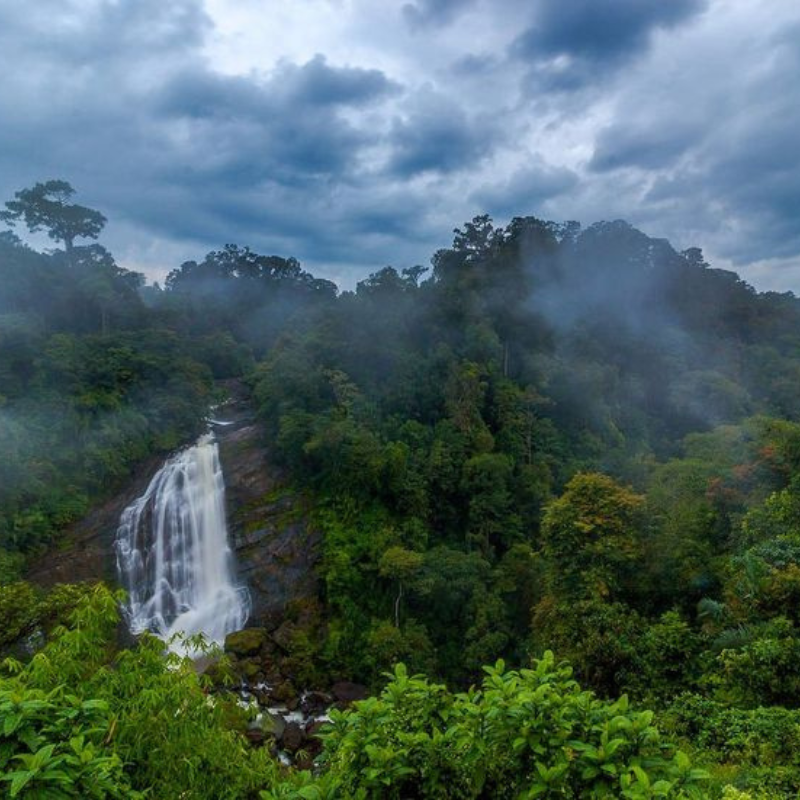
Scenic waterfall cascading through rocks and greenery near Munnar
Destinations

Attukad Waterfalls

Attukad Waterfalls Attukad Waterfalls: Tucked away between Pallivasal and Munnar in the Idukki district, Attukad Waterfalls (also spelled Attukal) is one of the most spectacular and thunderous multi-tiered cascades in the Western Ghats. Located roughly 9 kilometers from Munnar town, this wild mountain torrent plunges down a series of sharp, jagged rock faces hidden deep inside a steep, amphitheater-like valley. What sets Attukad apart from other regional falls is its dramatic, uncommercialized mountain setting. To reach it, visitors must navigate a narrow, winding road and cross an old, thrilling bridge that spans directly over the rushing river canyon. Enveloped by an endless expanse of rolling emerald tea plantations, thick jungle foliage, and seasonal wildflowers, Attukad transforms from a clear, multi-tiered stream in the dry months into a roaring, mist-shrouded white monster during the monsoon season. For travelers, it represents a high-energy eco-adventure escape where the thundering sound of crashing water completely drowns out the rest of the world. Top Things to See & Do Inside: Stand on the Historic Valley View Bridge: The absolute definitive vantage point for experiencing Attukad is the narrow bridge running directly across the mountain gorge facing the falls. Standing on this wooden-and-iron structure rewards you with an incredible front-row view of the upper and lower tiers as they slam into the rocky pool below. The force of the drop creates a perpetual cloud of cool mountain mist that blankly covers the bridge, offering a refreshing natural spray on a warm afternoon. Trek Through the Pallivasal Tea Estate Trails: The hills cradling the waterfall are crisscrossed by scenic, unpaved plantation paths. Guided trekking tours take adventure seekers down through the steep, manicured rows of the Pallivasal tea gardens, offering panoramic views of the deep mountain valley. Walking along these misty trails allows you to hear the roar of the falls getting progressively louder as you approach through the trees. Photograph the Majestic Monsoon Surge: If you travel during or immediately after the rainy season (June to September), Attukad turns into a paradise for landscape photographers. The volume of water swells exponentially, causing the distinct rock tiers to merge into a singular, massive wall of rushing white foam. The surrounding shola forests and tea estates flush with a deep, vibrant green, creating an elite visual contrast against the dark granite cliffs. Relax at the Riverside Tea and Spice Kiosks: Perched on the steep rocky slopes overlooking the river canyon are a few rustic, locally run eco-cafes. After a trek down the valley slopes, visitors can sit on open-air wooden decks to sip a hot cup of locally harvested orthodox Munnar tea or fresh cardamom-infused coffee while watching the water churn through the boulders directly below. View Nearby Destinations All Events Destinations Attukad Waterfalls Pathiramanal Island Gavi Kannur & Kasaragod Wayanad Kozhikode & Malappuram Load More End of Content.
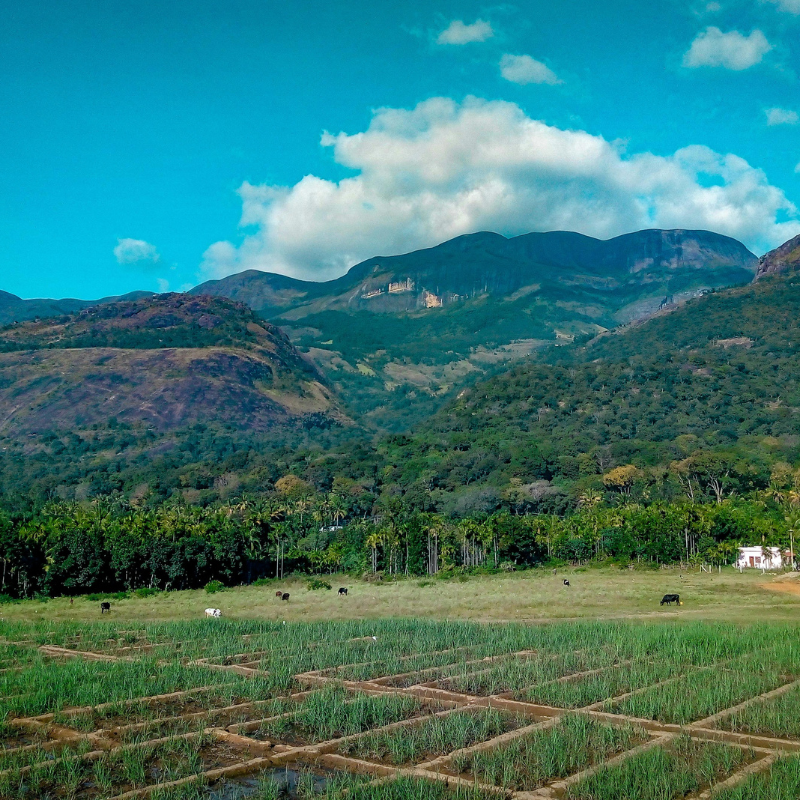
Natural sandalwood trees and ancient dolmens in Marayoor
Destinations

Marayoor

Marayoor Marayoor: Nestled in the rain-shadow region of the Western Ghats, roughly 40 kilometers landward from Munnar in the Idukki district, Marayoor (also written as Marayur) is a spectacular, sun-drenched valley that feels wonderfully distinct from the misty tea gardens of the higher hills. The name Marayoor is historically rooted in local lore, translating to “The Land Hidden by the Hills” or “The Land of the Maravas” (an ancient tribal warrior clan). Geographically blessed with a unique microclimate, Marayoor is the only place in Kerala that features a natural growth of high-grade Sandalwood forests. It is a mesmerizing region where the scent of precious wood fills the air, and prehistoric history lies scattered across mountain ledges. For travelers, Marayoor represents a magnificent cultural and historical crossover node, offering a journey through pristine sugar cane fields, aromatic forests, and stone monuments built by humans thousands of years ago. Top Things to See & Do Inside: Peer Into Prehistory at the Muniyara Dolmens: Perched on a massive, wind-swept granite ridge in the surrounding foothills are the Muniyara Dolmens—ancient, megalithic burial chambers dating back to the Iron Age (between 1000 BC and 200 AD). Constructed entirely out of heavy, flat granite stone slabs arranged to form a box structure topped with a massive capstone, these prehistoric chambers are a wonder of primitive engineering. Walking among these silent monuments offers a rare, panoramic look back into the dawn of human civilization on the subcontinent. Gaze Through the Fences of the Sacred Sandalwood Reserve: Marayoor is home to a sprawling, state-protected natural Sandalwood forest reserve containing tens of thousands of mature trees (Santalum album). Because of the immense value of the wood, the heart of the forest is securely enclosed within extensive iron fencing systems monitored by forest guards. Driving or walking along the perimeter trails allows visitors to see the unique, rough-barked trees and breathe in the rich, soothing aroma that wafts across the valley. Watch Traditional Jaggery Making in the Marayoor Sarkara Farms: The valleys surrounding the forest are a sea of bright green sugarcane fields. Marayoor is highly celebrated for its traditional, GI-tagged Marayoor Sarkara (dark jaggery). Visitors can visit local, open-air processing sheds (Aala) to watch farmers extract fresh sugarcane juice, boil it down in massive iron vats over firewood, and hand-roll the warm, thick syrup into sweet, dark golden jaggery balls without using chemical additives. Discover Ancient Rock Paintings at Attala and Ezhuthu Guha: Hidden within the deep rock shelters and cliff faces of the Marayoor valley are pristine galleries of prehistoric rock art. Shaded by natural stone overhangs, sites like Ezhuthu Guha feature detailed pictographs drawn using reddish-brown iron peroxide and natural plant extracts. The ancient lines depict hunters, wild deer, tigers, and geometric patterns, offering an intimate look at the creative expressions of ancient human communities. View Nearby Destinations All Events Destinations Marayoor Pathiramanal Island Gavi Kannur & Kasaragod Wayanad Kozhikode & Malappuram Load More End of Content.
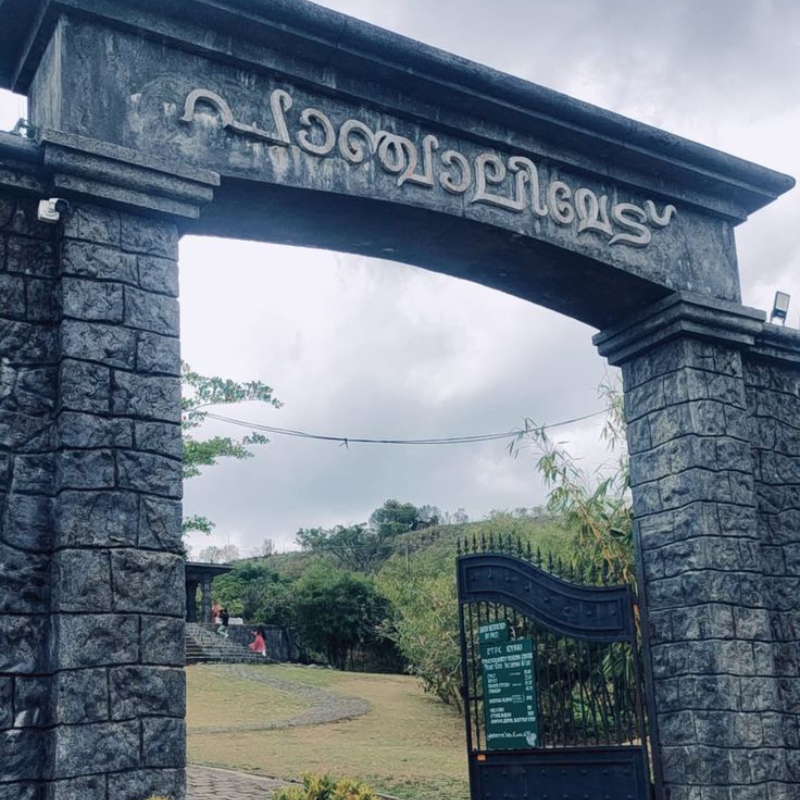
Rolling hills and trekking paths at the mythological site of Panchalimedu
Destinations

Panchalimedu

Panchalimedu Panchalimedu: Perched serenely at an elevation of roughly 2,500 feet above sea level in the Idukki district, near Peerumedu, Panchalimedu is an enchanting, offbeat hill station that beautifully blends panoramic high-altitude landscapes with ancient epic lore. The name translates literally to “The Hills of Panchali”, referencing the legendary princess from the Hindu epic Mahabharata. According to local mythology, it was across these rolling, wind-swept grasslands and misty valleys that the Pandavas, along with their wife Draupadi (Panchali), spent a significant portion of their twelve-year exile (Vanavasam). The destination operates as a magnificent natural viewing deck, characterized by endlessly rolling green meadows, steep rocky cliffs, and dense, low-lying fog that can blanket the entire landscape within seconds. Panchalimedu is also notable for its unique cultural harmony; it serves as a respected spiritual site where an ancient temple dedicated to Goddess Bhuvaneshwari and a series of historic wooden crosses stand on adjacent hilltops, drawing trekkers, historians, and spiritual seekers to its cool, whistling ridges. Top Things to See & Do Inside: Discover the Mythological Footprints and Panchali Kulam: Walking along the main grassy plateaus reveals several landmarks deeply tied to the Mahabharata. The most famous is the Panchali Kulam (Panchali’s Pond), a small, natural freshwater pond nestled between the hills. Local lore holds that this pond was created for Draupadi’s daily use and remarkably, its waters are said to never dry up, even during the peak of the summer months. Nearby, unique rock formations are pointed out by locals as the ancient caves and stone hearths used by the Pandavas during their wilderness exile. Visit the Ancient Panchali Bhuvaneshwari Temple: Situated gracefully on one of the prominent hill crests sits a small, historic shrine dedicated to Goddess Bhuvaneshwari. This temple retains a deeply spiritual, old-world charm, housing ancient stone idols that were reportedly worshipped by the Pandavas themselves. During the annual festival seasons, the temple comes alive with traditional rituals, providing a stark visual contrast against the wild, windswept mountain backdrop. Trek the Via Crucis (Way of the Cross) Hilltop: Directly facing the temple hill is another distinct ridge marked by a long, scenic line of monumental wooden and stone crosses. This hillside serves as a major pilgrimage site for the regional Christian community, particularly during the Holy Week of Easter, when thousands of devotees trek up the misty stone paths to commemorate the Passion of Christ. Standing at the summit near the main cross offers an incredible, unobstructed view of the deep valleys dropping off toward the western plains. Witness the Sacred Makaravilakku Horizon: Panchalimedu possesses a unique geographic alignment that makes it a highly sought-after vantage point during the winter month of January. From these high western ridges, visitors can clearly see the distant hills of Sabarimala. On the auspicious night of Makar Sankranti, thousands gather on the slopes of Panchalimedu to catch a pristine, unobstructed view of the Makaravilakku—the sacred hill-fire flash that appears on the distant mountain horizon. View Nearby Destinations All Events Destinations Panchalimedu Ramakkalmedu Pathiramanal Island Gavi Kannur & Kasaragod Wayanad Load More End of Content.

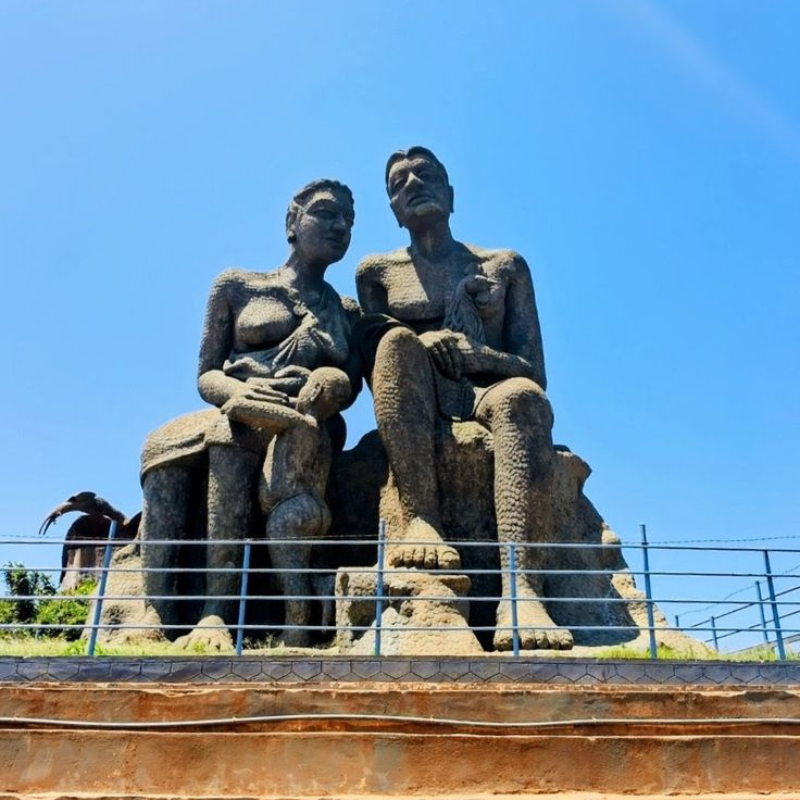
Large stone statues at Ramakkalmedu viewpoint overlooking the valley
Destinations

Ramakkalmedu

Ramakkalmedu Ramakkalmedu: Perched at a commanding altitude of 3,500 feet above sea level in the Idukki district, Ramakkalmedu is an enchanting, wind-swept hill station along the Munnar-Thekkady travel corridor. The name translates literally to “Land of Rama’s Stone” or “the land where Rama placed his foot”. According to the Ramayana epic, Lord Rama and his brother Lakshmana set foot on this rocky precipice while searching for Goddess Sita following her abduction by Ravana. Beyond its deep mythological roots, Ramakkalmedu is recognized as one of the windiest locations in Asia, experiencing a continuous, roaring wind speed of approximately 35 kilometers per hour year-round, completely independent of the shifting seasons. The landscape is characterized by rolling montane grasslands, unique Shola forest pockets, and sparse bamboo groves that lean heavily under the relentless high-altitude gales. Top Things to See & Do Inside: Behold the Monumental Kuravan & Kurathi Twin Statue: Standing proudly at the summit of the hill is the colossal Kuravan and Kurathi monument, sculpted in 2005 by renowned artist C.B. Jinan. It stands as the highest twin-statue installation in Kerala. The monument pays homage to the historical tribal couple whose names are immortalized by the twin mountains (Kuravan Mala and Kurathi Mala) that were bridged to construct the iconic Idukki Arch Dam. Take in Panoramic Horizon Views of the Tamil Nadu Plains: Positioned right on the steep eastern fault line of the Western Ghats, the viewpoint offers an unobstructed, bird’s-eye panorama of the neighboring state. Visitors can look down at the sprawling farmlands, vineyards, and agricultural towns of Cumbum, Theni, and Uthamapalayam. The vantage point is spectacular at dusk, when the lights of the towns below begin to glimmer against a purple mountain sunset. Explore the Geologic Boulders of Tortoise Rock (Amappara): A short distance from the main crest lies Amappara—translating to Tortoise Rock in Malayalam—where massive natural boulders lean together to mirror the shell structure of a giant tortoise. Adventure seekers can trek through the narrow, natural rock crevices and explore the small caves beneath the formations while the wind wails loudly through the stone gaps. Tour the High-Capacity Wind Energy Farms: Capitalizing on the region’s immense geographic wind currents, the villages of Pushpakandam and Kuruvikanam near the crest host one of the most prominent renewable energy projects in the state. Standing beneath the massive white blades of these industrial windmills as they rotate against the mountain fog provides a striking visual contrast where technology meets raw environmental energy. View Nearby Destinations All Events Destinations Ramakkalmedu Pathiramanal Island Gavi Kannur & Kasaragod Wayanad Kozhikode & Malappuram Load More End of Content.
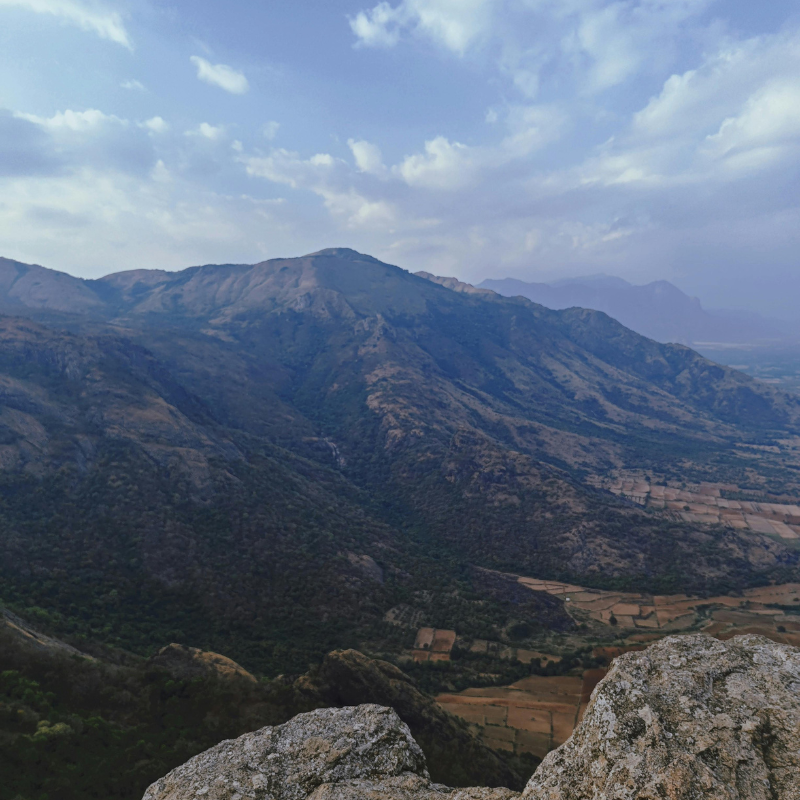
The summit of Anamudi Peak, the highest point in the Western Ghats
Destinations

Anamudi Peak

Anamudi Peak Anamudi Peak: Rising formidably to a monumental height of 8,842 feet ($2,695text{ meters}$) above sea level within the strictly protected core zone of Eravikulam National Park, Anamudi Peak is the undisputed geographical apex of Peninsular India. The name Anamudi translates literally to “Elephant’s Forehead” in the native tongue of Malayalam, a fitting title inspired by the mountain’s massive, smooth granite face which strikingly resembles the frontal profile of a majestic bull elephant. As the highest mountain peak in India south of the Himalayas, Anamudi stands as a towering weather-maker for the entire region, trapping the moisture-laden monsoon clouds to feed the vital river systems of Kerala. Geographically, it sits at the critical tri-junction where three major mountain ranges of the Western Ghats converge: the Anaimalai Hills from the north, the Palani Hills from the northeast, and the Cardamom Hills from the south. For travelers, it represents a grand, mist-wrapped natural monument that defines the skyline of the Munnar highlands, showcasing a raw, prehistoric landscape that towers far above the surrounding valleys. Top Things to See & Do Inside: Marvel at the Monolithic Summit Architecture: The main highlight of experiencing Anamudi is admiring its unique, physical configuration. Unlike the pointed peaks of the Himalayas, Anamudi is a massive, single block of solid gneissic rock. Viewing its sheer, near-vertical southern wall from the designated observation decks reveals the immense scale of this geological marvel, which drops sharply into deep, primeval forested ravines. Observe Rare Alpine Flora and Fauna from the Viewpoints: The slopes of Anamudi harbor a delicate, high-altitude ecosystem found nowhere else on earth. From the permissible viewing lines, keen-eyed visitors using binoculars can spot the endangered Nilgiri Tahr grazing along the sheer rock ledges. The mountain is also home to specialized flora, including Anamudica, a rare genus of bamboo endemic to this single peak, and the unique Resnova orchids that cling to its mist-drenched rock crevices. Photograph the Majestic Dawn Mist and Cloud-Seas: Arriving at the mountain’s viewing corridors at daybreak offers a spectacular visual reward for landscape photographers. As the morning sun rises behind the peak, the surrounding valleys and lower plateaus of the Eravikulam sanctuary are completely blanketed by a dense, shifting ocean of white cloud and low-lying fog. Watching the dark, elephantine silhouette of Anamudi pierce cleanly through this swirling sea of mist is a definitive South Indian alpine spectacle. Explore the Base Trails of the Shola-Grassland Mosaic: While ascending to the absolute summit is strictly restricted by the Forest Department to preserve the fragile, high-altitude environment, walking along the permitted base paths provides an intimate look at the ancient Shola ecosystem. These trails take you past patches of stunted, moss-draped evergreen rainforests tucked into mountain hollows, which open up into vast, windswept montane grasslands rolling down the lower ridges of the peak. View Nearby Destinations All Events Destinations Anamudi Peak Pathiramanal Island Gavi Kannur & Kasaragod Wayanad Kozhikode & Malappuram Load More End of Content.
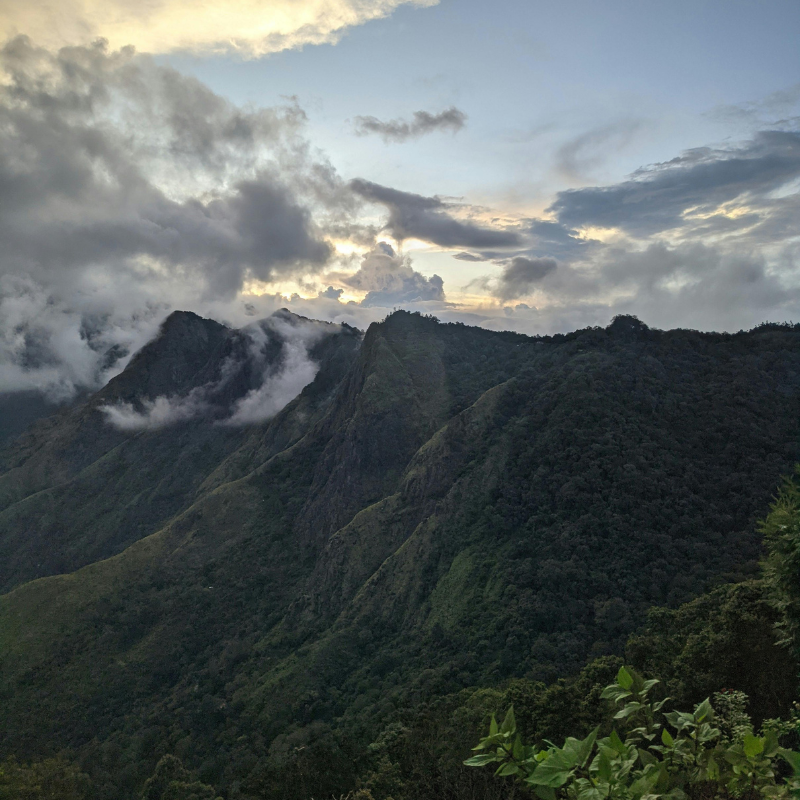
Scenic valley view from the highest point at Top Station Munnar
Destinations

Top Station

Top Station Top Station: Perched formidably at an elevation of roughly 5,500 feet ($1,700text{ meters}$) above sea level on the border of the Idukki district of Kerala and the Theni district of Tamil Nadu, Top Station is the absolute geographic crescendo of the Munnar tourism circuit. Located approximately 32 kilometers from Munnar town, this historic mountain pass marks the highest point of the Kannan Devan Hills. The name Top Station is rooted in its 20th-century colonial industrial heritage. It served as the topmost transshipment terminal for the historic Kundala Valley Railway—India’s first monorail and narrow-gauge mountain railway system. Up until a catastrophic flood dismantled the infrastructure in 1924, freshly harvested tea leaves from the valley were transported here via a network of gravity-defying aerial ropeways before being lowered down the sheer cliff faces into the plains of Tamil Nadu. Today, it stands as a legendary vantage point where the structured agro-landscapes of Kerala abruptly drop off into a massive, 2,000-foot vertical chasm, offering travelers an unparalleled sensory experience of walking directly through the clouds. Top Things to See & Do Inside: Stand on the Panoramic Border Cliff Lookout: The absolute defining highlight of Top Station is its vertigo-inducing concrete observation deck that juts out over a colossal mountain precipice. Standing at this celestial edge rewards visitors with a spectacular, 360-degree panoramic view of the massive Western Ghats fault line. On a clear morning, you can look down into the sweeping valleys of the neighboring Tamil Nadu plains, catching glimpses of the distant layout of the Theni district and the winding lines of the Kodaikanal mountain ranges. Catch the Majestic Dawn Cloud-Sea Phenomenon: To witness Top Station at its most magical, travelers must arrive at the ridge before 6:00 AM. As the first rays of the sun pierce through the mountain gaps, the vast valleys below completely fill with a dense, moving ocean of pure white low-lying mist. Watching the peaks of distant crags pierce through this swirling “cloud sea” like isolated islands under an orange-and-purple sky is a definitive visual masterpiece of South Indian mountain travel. Walk the Historic Kundala Railway Transshipment Trails: History and heritage enthusiasts can explore the weathered remains of the old colonial ropeway terminal and the historic stone foundations of the ancient transshipment station. Walking along these windswept ridges allows you to trace the path where old British freight cars once rolled. The trails are bordered by patches of rare montane grasslands and stunted Shola rainforest pockets rich with wild orchids and mountain mosses. Camp Under the Stars in the High Wilderness: For active outdoor enthusiasts, the high ridges surrounding Top Station serve as an exceptional venue for overnight wilderness camping. Local eco-tourism groups set up specialized, weather-proof tents along the wind-whipped slopes. Spending a night here allows you to escape commercial lights completely, rewarding you with brilliant, unobstructed stargazing opportunities, followed by waking up directly inside the early morning mountain fog. View Nearby Destinations All Events Destinations Top Station Pathiramanal Island Gavi Kannur & Kasaragod Wayanad Kozhikode & Malappuram Load More End of Content.
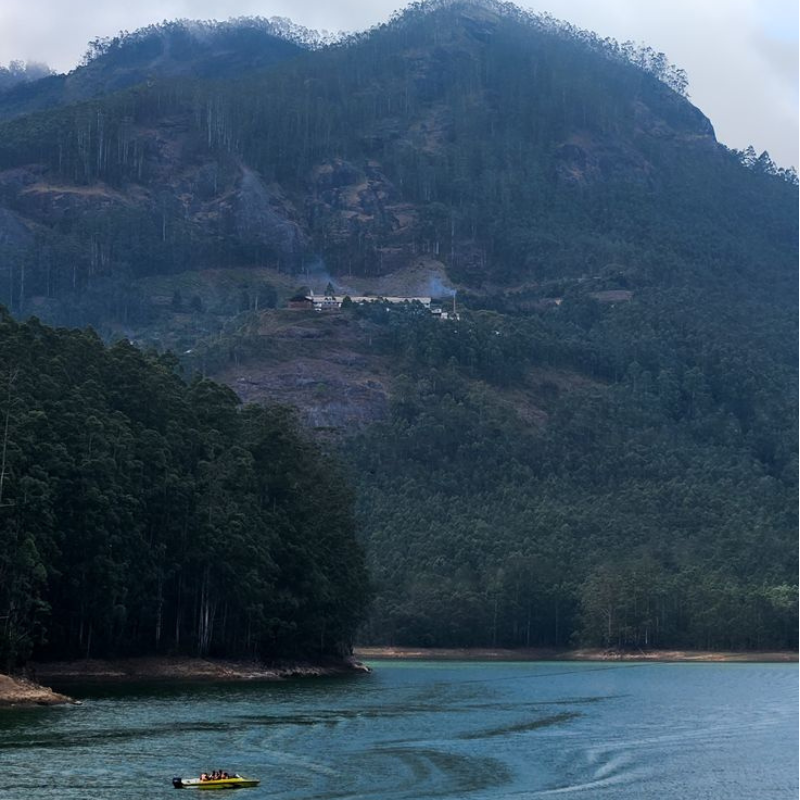
Speedboats on the water with mountain reflections at Mattupetty Dam
Destinations

Mattupetty Dam

Mattupetty Dam Mattupetty Dam: Nestled snugly amidst the towering peaks and rolling tea valleys of Munnar in the Idukki district, the Mattupetty Dam Click to open side panel for more information is a breathtaking storage gravity dam that serves as a premier highlight of Kerala’s upland geography. Built in the late 1940s as a vital component of the Pallivasal Hydro-electric project, this monumental concrete structure effectively restrains the mountain torrents to create a massive, sparkling reservoir lake that reflects the surrounding emerald slopes like a pristine sheet of glass.Situated at an elevation of roughly 5,577 feet ($1,700text{ meters}$) above sea level, the dam is enveloped by a unique landscape matrix where deep pine forests, manicured tea gardens, and the wild wilderness of the Shola woods converge. It is highly celebrated not just for its engineering merit, but as a vibrant eco-tourism hub where travelers can transition instantly from high-comfort lake cruises to wild landscape photography, all while breathing in the crisp, cool mountain air that defines the Western Ghats. Top Things to See & Do Inside: Cruise the Reservoir Lake on a High-Speed Boat Safari: The definitive recreational experience at Mattupetty Dam is embarking on a boating cruise across the expansive, deep blue waters of the reservoir. The district tourism promotion council operates an active fleet of high-speed motorboats and slow-paced pontoon safaris. Speeding across the mountain mirror lake rewards visitors with incredible, unobstructed panoramic views of the dense pine forests and steep mountain crags framing the horizon. Experience the Acoustic Magic at Echo Point: Located just a few kilometers further up along the curves of the reservoir bank sits Echo Point, a fascinating natural amphitheater where the lake water directly meets the base of three converging mountain ridges. Walking down to the water’s edge allows visitors to take part in a popular local pastime—shouting loudly across the placid water mirror and listening as your voice cleanly bounces off the rock faces to echo back to you with pristine clarity. Spot Wild Elephants Along the Forest Fringes: Because the reservoir lake stores immense amounts of fresh water right on the boundary of protected forest zones, it serves as an important watering hole for regional wildlife. Visitors taking a morning boat ride or walking along the bridge walkway can frequently observe wild elephant herds descending from the upper pine forests to drink, bathe, and graze along the lush, muddy banks of the lakebed. Tour the Indo-Swiss Mattupetty Cattle Farm Project: Tucked away in the shaded valleys just adjacent to the dam infrastructure sits the highly specialized Indo-Swiss Dairy Farm project. Established in 1963 through an international bilateral collaboration, this sprawling, manicured grassland estate is dedicated to breeding high-yielding, climate-resilient cattle breeds. While entry inside the core laboratories is restricted, a drive past its rolling Swiss-style pastures offers a unique, picturesque visual change from the surrounding tea gardens. View Nearby Destinations All Events Destinations Mattupetty Dam Pathiramanal Island Gavi Kannur & Kasaragod Wayanad Kozhikode & Malappuram Load More End of Content.

Scroll to Top