Munnar & Alleppey 3 Night 4 Days 2 Pax Itinerary Day 1: Cochin to Munnar Pick up and proceed to...
Thiruvananthapuram — Kerala’s capital city — is one of those destinations that consistently gets left off itineraries, and consistently surprises those who do visit. While Munnar and Alleppey rightly dominate most Kerala tour discussions, Thiruvananthapuram (also called Trivandrum) operates at a different register entirely: older, quieter, more layered, and home to some of the most significant cultural and spiritual landmarks in South India.
If your Kerala itinerary includes the southern stretch — and our 7 Nights 8 Days Kerala package does — Thiruvananthapuram is where the journey reaches its most historically rich point. This guide covers everything you need to know: what to see, how to plan your time, the best areas to stay, what to eat, and when to go.
Munnar & Alleppey 3 Night 4 Days 2 Pax Itinerary Day 1: Cochin to Munnar Pick up and proceed to...
8-Day Enchanting Kerala Escape Itinerary Day 1: Arrival at Cochin Pick up at cochin, visit Dutch palace, Jewish synagogue, chinese...
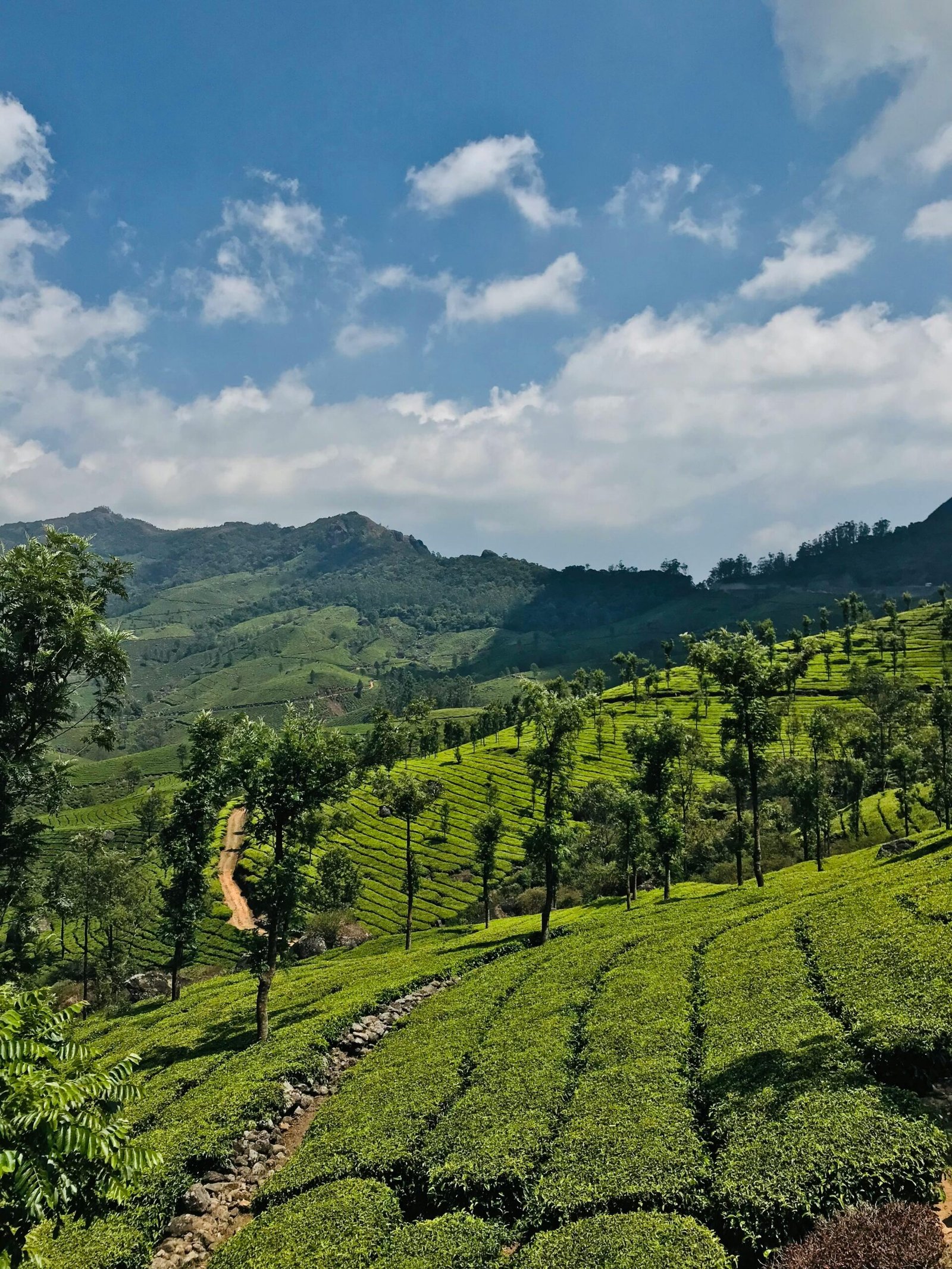
6-Day Enchanting Kerala Escape Itinerary Day 1: Arrival at Cochin Pick-up: Cochin Airport / Railway Station Proceed to hotel check-in...
The world's richest temple.
Estuary where river, lake, and sea meet.
19th-century art and natural history.
Famous for its lion safari and deer park.
Iconic lighthouse and crescent beaches.
The second-highest peak in Kerala (trekking).
One of the oldest in India.
8th-century rock-cut sculptures.
Stunning red cliffs overlooking the Arabian Sea.
A hill station with 22 hairpin curves.
Heritage site for cultural festivals.
Lakeside picnic spot with boating.
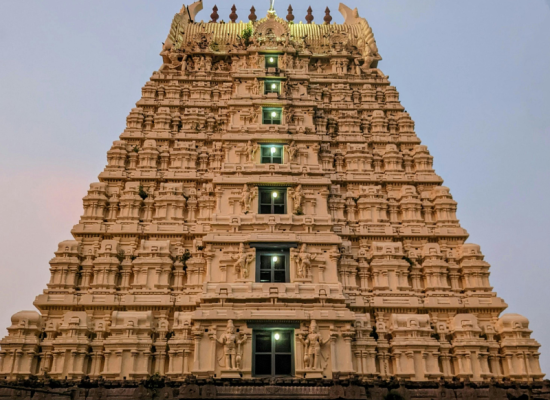
This is the reason Thiruvananthapuram exists. The city’s name literally translates to “the abode of the sacred serpent of Lord Vishnu,” and the Padmanabhaswamy Temple—dedicated to a reclining form of Lord Vishnu—has been the city’s spiritual center for over a thousand years.
The temple’s architecture is a seamless blend of Kerala and Dravidian styles: the towering gopuram (entrance tower) rises seven storeys and is covered in intricate sculptural work that rewards close attention. The inner sanctum houses a 5.5-metre reclining idol of Vishnu, made from a unique herbal paste called Katusarkara Yogam—it can only be viewed through three separate doorways simultaneously, each revealing a different section of the idol.
Entry is restricted to Hindus. Men must wear a dhoti (available for rent outside), and women must wear a saree or salwar kameez—no Western clothing is permitted inside. Visiting hours are early morning from 3:30 AM for the first ritual, with general darshan from 6:30 AM to 7:00 PM with midday breaks. Go early — queues build significantly by 8 AM.
The temple also gained international attention for the discovery of vaults beneath it containing an extraordinary collection of gold, jewels, and historical artifacts—now one of the largest known treasures of any religious institution in the world.
Less than 200 meters from the Padmanabhaswamy Temple and largely missed by visitors in a rush, the Kuthiramalika Palace is one of the finest examples of traditional Kerala palace architecture that exists. Built in the early 19th century by the Travancore king Swathi Thirunal — himself a celebrated classical composer — it gets its name from the 122 carved wooden horses (kuthira = horse) that support the roof eaves.
Inside, the museum displays royal artifacts, ivory carvings, Belgian crystal furniture, and portraits of the Travancore royal family. The architecture alone—laterite walls, sloping tiled roofs, carved wooden pillars, and inner courtyards designed for natural ventilation—is an education in how Kerala’s climate shaped its built environment. The entry fee is nominal. Closed on Mondays.
The Napier Museum, built in 1880 and named after a former governor of Madras, is one of the most striking colonial-era buildings in Kerala. The design is an unusual Indo-Saracenic style—terracotta tiles, carved gables, and horseshoe arches—and the collection inside is genuinely interesting: Kerala bronzes, temple chariots, ancient coins, ivory carvings, and a life-size model of a Kathakali performer.
Adjacent to it are the Natural History Museum and the Kerala Government Museum, all within the same landscaped park complex. The complex also contains the Thiruvananthapuram Zoo, one of the oldest in India, spread across 55 acres with a notable collection of big cats, primates, and birds. Plan 2–3 hours for the full complex if you have children with you or enjoy museums.
Open: 10 AM – 4:45 PM. Closed on Mondays and the first day of every month.
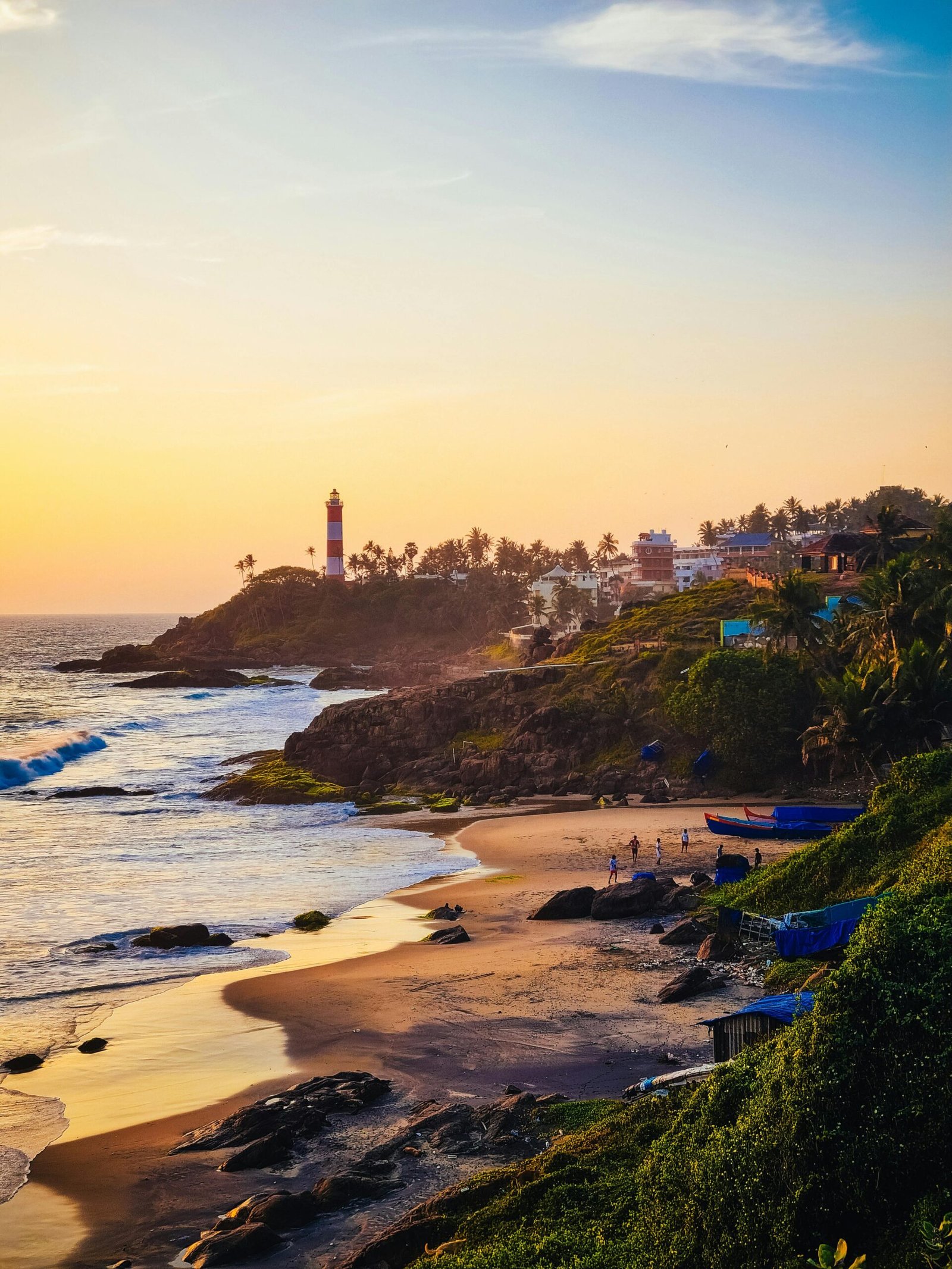
Sixteen kilometers south of the city center, Kovalam is the beach that put Kerala on the international tourism map in the 1970s—and it remains one of the finest beach destinations in South India. The crescent-shaped Lighthouse Beach is the most popular: calm waters, a working lighthouse you can climb for panoramic views, and a beach strip lined with seafood restaurants.
Hawah Beach (adjacent to Lighthouse Beach) is quieter and better for swimming when the sea is calm. Samudra Beach, further north, is the least commercial of the three and popular with long-stay travelers who want to avoid the crowds.
For sightseeing, the Vizhinjam Marine Aquarium at the southern end of Kovalam is worth a quick visit, and the newly developed Vizhinjam International Seaport nearby is among the most significant infrastructure projects in Kerala’s recent history.
Kovalam is included in our 7 Nights 8 Days Kerala package as part of the southern leg—view full itinerary → https://bestkeralatourpackages.com/trips/kerala-tour-package-7-nights-8-days/
Closer to the city (just 8 km from the center, next to the airport), Shanghumugham Beach is Thiruvananthapuram’s local beach—less glamorous than Kovalam but entirely genuine. The main attraction here is a massive sculpture of a reclining woman (Jalakanshuka) by the artist Kanayi Kunhiraman, which has become one of the city’s most photographed landmarks.
Veli Tourist Village, adjoining Shanghumugham, sits at the point where a freshwater lagoon meets the Arabian Sea—an unusual geography that makes it pleasant to walk and boat around. Paddleboats and ferries operate here. Sunset views across the lagoon are among the best in the city.
Thirty kilometres south of Thiruvananthapuram, Poovar is one of Kerala’s quietest and most beautiful spots. Like Veli but more remote, it is where the Neyyar River meets the Arabian Sea, creating a backwater-beach confluence that is genuinely stunning.
The island is accessible only by boat. A boat ride through the backwaters to Poovar Beach — passing through mangrove forests and bird-rich lagoons — is the experience here. It is not as well-known as Alleppey, which means it is unhurried and largely crowd-free. If you are spending 2 days in Thiruvananthapuram, a morning at Poovar is worth the trip.
About 32 kilometers east of the city, Neyyar is an underrated wildlife destination. The sanctuary covers over 12,000 hectares of forest at the foothills of the Western Ghats and is home to elephants, leopards, lion-tailed macaques, and a significant bird population.
The Neyyar Dam reservoir creates a large backwater within the forest—boat rides on it offer a chance to spot wildlife from the water. The sanctuary also runs a crocodile rehabilitation center and a lion safari park. For travelers who want a wildlife experience beyond Thekkady, Neyyar is a genuine alternative and far less crowded.
The area around East Fort, immediately adjacent to the Padmanabhaswamy Temple, is the oldest commercial quarter of Thiruvananthapuram. The Chalai Bazaar that runs through it is one of the longest continuous markets in Kerala — a narrow lane of shops selling spices, textiles, traditional lamps, banana chips, Ayurvedic products, brassware, and every variety of Kerala pickle and snack.
This is the place to buy actual local goods rather than tourist-market versions. Walk from East Fort south through Chalai in the morning when it is at its most active. It is loud, crowded, fragrant, and completely authentic. Budget an hour and go without a plan.
Beyond the standard sightseeing list, here are experiences worth seeking out:
Watch a Kathakali performance. The Kerala Kalamandalam and several cultural centers in the city stage Kathakali performances in the evenings—the full makeup process, which takes 2–3 hours, is often viewable before the performance. If you have not seen Kathakali up close, Thiruvananthapuram is one of the best places in Kerala to do so.
Ayurvedic treatment. As Kerala’s capital, Thiruvananthapuram has some of the most established Ayurvedic institutions in the country—the Government Ayurveda College Hospital is one of Asia’s oldest. For travelers interested in authentic Ayurveda (rather than spa-style versions), this is the place to explore it.
Eat at a local meal restaurant. A Kerala Sadhya—the traditional feast served on a banana leaf—is a cultural experience as much as a meal. In Thiruvananthapuram, local meal restaurants serve a full sadhya on weekday afternoons for a very modest sum. Do not leave the city without having one.
Attend the Attukal Pongala (if timing aligns). Held annually in February or March, Attukal Pongala is one of the largest gatherings of women in the world—millions cook a ritual offering of rice porridge simultaneously in the streets around the Attukal Devi Temple. It is extraordinary to witness.
The city offers accommodation across all budgets:
Near the Temple / East Fort area — best for those whose primary focus is the Padmanabhaswamy Temple and the old city. Walking distance to Kuthiramalika Palace and Chalai Bazaar.
Kovalam / Lighthouse Beach area — best for those who want beach access and a more relaxed pace. The 16 km into the city is easily covered by auto or cab.
MG Road / City Centre — central to everything, with the widest range of mid-range hotels, restaurants, and shopping. Good base if you are splitting time between the city and Kovalam.
Our 7 Nights 8 Days Kerala package includes accommodation in Thiruvananthapuram / Kovalam on twin-sharing basis with breakfast and dinner—view full details → https://bestkeralatourpackages.com/trips/kerala-tour-package-7-nights-8-days/
| Season | Months | Conditions |
|---|---|---|
| Peak / Best | November – February | Cool and dry, ideal for sightseeing and beach |
| Shoulder | March – May | Warm but manageable; less crowded |
| Monsoon | June – September | Heavy rain; beach activities limited but city sightseeing unaffected |
| Post-Monsoon | October | The city is lush and green; transitional weather |
Unlike Munnar, Thiruvananthapuram is a year-round destination—the rain is warm, and the city does not shut down in monsoon. However, Kovalam Beach is at its best from November to February.
1 full day covers the Padmanabhaswamy Temple, Kuthiramalika Palace, and the Napier Museum. Add a second day for Kovalam beach and Poovar Island. 2 days is the ideal minimum for a relaxed visit.
No. Entry is restricted to Hindus only. Dress code is strictly traditional — dhoti for men, saree or salwar for women.
Lighthouse Beach and Hawah Beach are generally safe within flagged zones and with lifeguards present during peak season. Always swim within designated areas and check conditions locally.
Yes. Most city sightseeing—the temple, museums, palace, markets — is entirely unaffected by rain. Beach visits are restricted during heavy monsoon months (June–August), but the city itself is fully functional and often more atmospheric in the rains.




Best Kerala Tour Packages is a specialized division of
Pravas Sukhacha™
Network & Ecosystem.
Pravas Sukhacha Office 201, 2nd Floor, Raigad Complex, Salatwada Main Road, Vadodara – 390001, Gujarat
Business Hours:
Monday to Saturday: 10:00 AM – 7:00 PM
Sunday: Closed
Copyright © 2026 All Right Reserved BEST KERALA TOUR PACKAGES