Munnar & Alleppey 3 Night 4 Days 2 Pax Itinerary Day 1: Cochin to Munnar Pick up and proceed to...
Most travellers think of Kerala as a state of backwaters and hill stations. That framing is not wrong — but it leaves out an entire cultural and geographical zone that runs along the northern Malabar coast. Kozhikode and Malappuram together form that zone. They are, in many ways, the most historically significant part of Kerala.
Kozhikode — known to the world as Calicut — is where Vasco da Gama landed in 1498 and changed the global spice trade forever. It is where the Zamorin kings built one of the most powerful port kingdoms in medieval Asia. It is where Malabar cuisine — widely regarded as some of the finest cooking in South India — developed its particular identity over centuries of Arab, Portuguese, and indigenous influence.
Malappuram, directly south of Kozhikode, is different in character but equally layered. It is Kerala’s most densely forested district in the northern belt, home to the Nilambur teak forests that supplied timber to Victorian Britain, and to a cultural landscape shaped by centuries of trade, pilgrimage, and intellectual exchange across the Arabian Sea.
Therefore, if your Kerala trip currently ends in Thrissur heading north — or if you are planning a route that takes in the full western coast — these two districts are not optional. They are essential.
Munnar & Alleppey 3 Night 4 Days 2 Pax Itinerary Day 1: Cochin to Munnar Pick up and proceed to...
8-Day Enchanting Kerala Escape Itinerary Day 1: Arrival at Cochin Pick up at cochin, visit Dutch palace, Jewish synagogue, chinese...
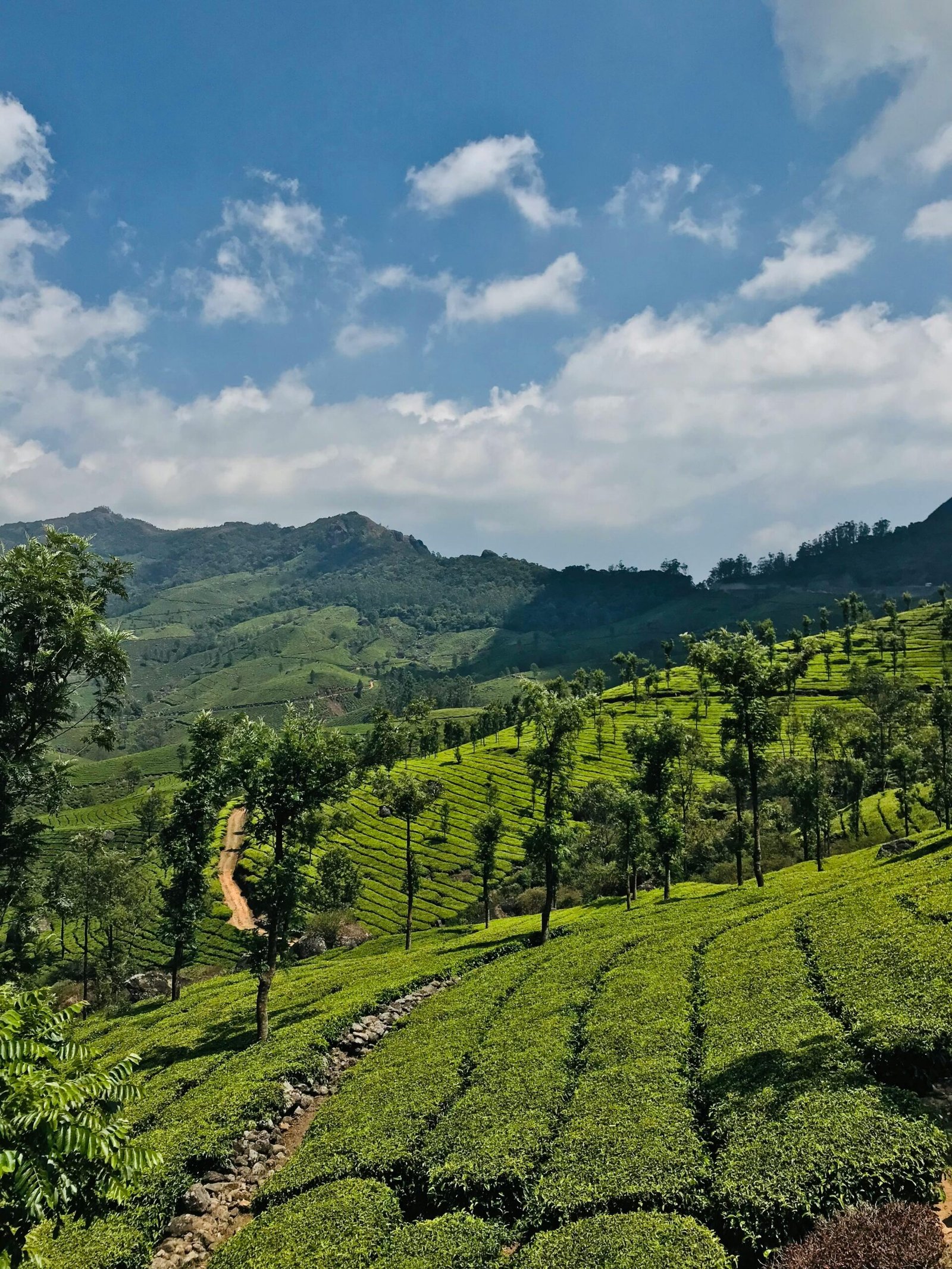
6-Day Enchanting Kerala Escape Itinerary Day 1: Arrival at Cochin Pick-up: Cochin Airport / Railway Station Proceed to hotel check-in...
Famous for its old piers and seafood.
Three-tiered falls for trekking.
First teak museum in the world.
Where Vasco da Gama landed in 1498.
The "Munnar of Malabar."
World’s oldest man-made teak plantation.
Ancient port known for "Uru" ship building.
Historic shopping and food lane.
Most travellers think of Kerala as a state of backwaters and hill stations. That framing is not wrong — but it leaves out an entire cultural and geographical zone that runs along the northern Malabar coast. Kozhikode and Malappuram together form that zone. They are, in many ways, the most historically significant part of Kerala.
Kozhikode — known to the world as Calicut — is where Vasco da Gama landed in 1498 and changed the global spice trade forever. It is where the Zamorin kings built one of the most powerful port kingdoms in medieval Asia. It is where Malabar cuisine — widely regarded as some of the finest cooking in South India — developed its particular identity over centuries of Arab, Portuguese, and indigenous influence.
Malappuram, directly south of Kozhikode, is different in character but equally layered. It is Kerala’s most densely forested district in the northern belt, home to the Nilambur teak forests that supplied timber to Victorian Britain, and to a cultural landscape shaped by centuries of trade, pilgrimage, and intellectual exchange across the Arabian Sea.
Therefore, if your Kerala trip currently ends in Thrissur heading north — or if you are planning a route that takes in the full western coast — these two districts are not optional. They are essential.
Kozhikode is a mid-sized city by Indian standards. However, it punches significantly above its weight in terms of historical importance, cultural output, and food quality. Because it developed as a trading city rather than an administrative one, its character is mercantile and outward-looking in a way that is still palpable today.
The old city near the beach and the SM Street corridor carries the accumulated texture of centuries of commerce. Spice warehouses, timber merchants, gold shops, and textile dealers sit alongside each other in a streetscape that has not fundamentally changed its function in hundreds of years. The scale is human. The pace is manageable. Unlike Cochin, which has been significantly shaped by tourism infrastructure, Kozhikode operates primarily for its own residents.
That, above all, is what makes it interesting to visit.
Sixteen kilometres north of Kozhikode city, at a beach called Kappad, Vasco da Gama stepped ashore on 27 May 1498. That moment changed global history. It opened the sea route from Europe to Asia, ended the Arab monopoly on the spice trade, and set in motion the colonial encounters that shaped the modern world.
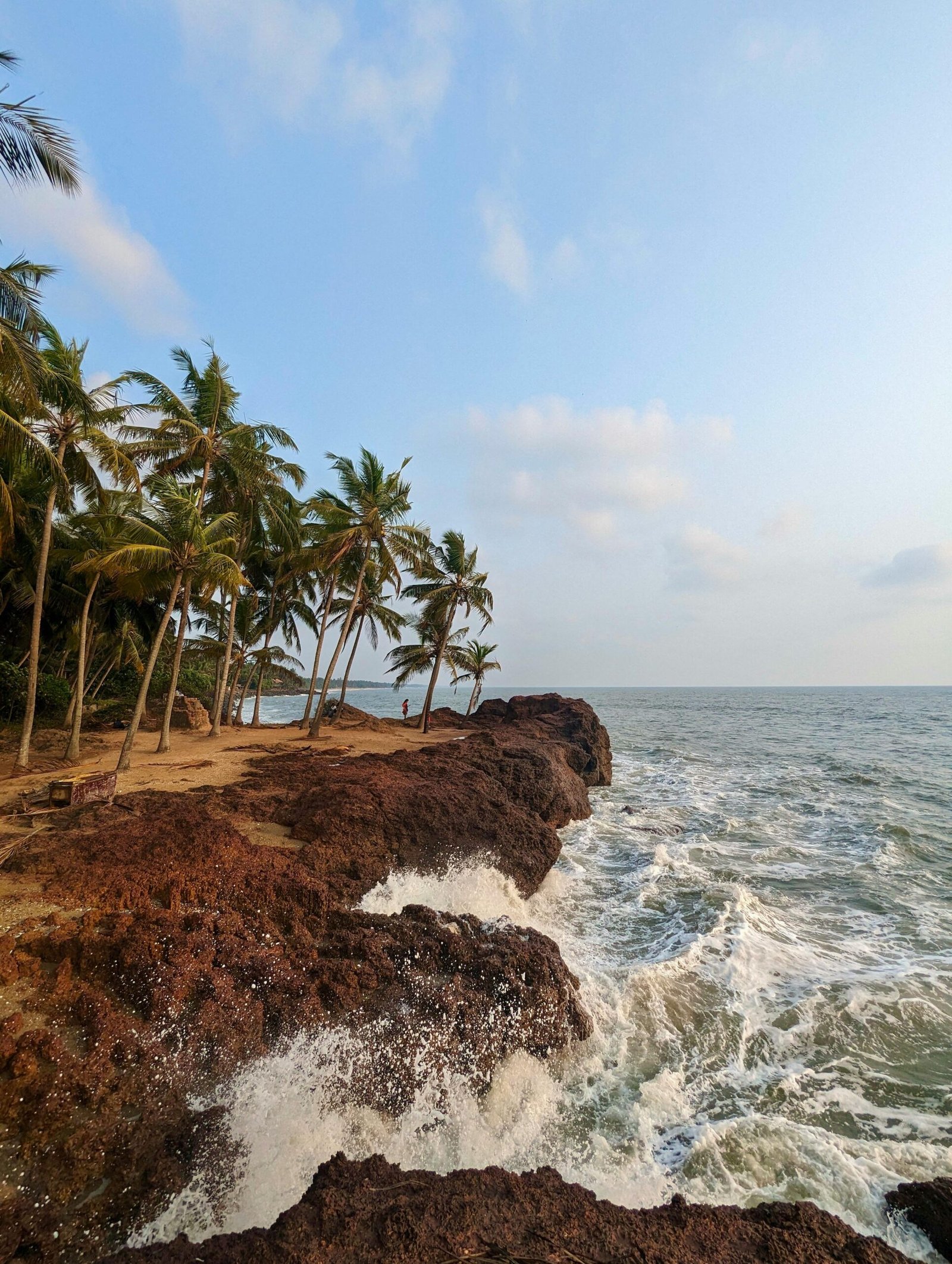
A small stone monument marks the landing point. The beach itself is pleasant — rocky at the northern end, sandy further south, with fishing boats pulled up on the shore and the usual rhythm of a working Kerala coastal village behind it.
However, the reason to visit Kappad is not primarily the monument. It is the historical imagination the place invites. Standing at the waterline here, knowing what that landing meant for Kerala, for India, and for the world, gives the beach a weight that more conventionally beautiful stretches of coast do not have.
The village behind the beach has a relaxed, unhurried character. There are small restaurants serving fresh seafood directly from the daily catch. The headland at the northern end gives a view back down the coast toward Kozhikode. It is, in short, a worthwhile morning — history, food, and coast in a single compact visit.
Kozhikode Beach is the city’s western edge — a long, open stretch of coast that locals use as an evening walkway and gathering point. The beach itself is not Kerala’s finest for swimming. However, it is genuinely useful as a place to understand the city’s relationship with the sea.
The two old British-era piers — one of them now partially collapsed into the water — give the beach a distinctive silhouette. The Lions Park at the beach’s southern end is where families gather after dark. The cricket pitches on the sand are in use from early morning until the light fails.
SM Street — locally called Mittayi Theruvu, or Sweet Meat Street — runs parallel to the beach a few hundred metres inland. It is the city’s oldest commercial street and the best single place in Kozhikode to understand the food culture that has made this city famous. Halwa shops, tea houses, fried snack stalls, and bakeries line both sides. Most of the establishments have been in business for generations.
Consequently, a morning walk from the beach to SM Street and back — stopping at whatever catches your attention — covers both the city’s coast and its commercial heart in a single unhurried circuit.
Twelve kilometres south of Kozhikode, where the Chaliyar River meets the Arabian Sea, is Beypore — one of the oldest shipbuilding centres in the world.
The boats built here are called Urus — large wooden dhows constructed entirely by hand using traditional techniques that have not changed significantly since Arab traders commissioned them in the early medieval period. Beypore Urus are still ordered by clients from Oman, the UAE, and other Gulf countries who value the craftsmanship and the tradition. A single large Uru can take three to four years to build and involves dozens of craftsmen working across multiple specialisations.
Visiting the boatyards is possible and straightforward. The craftsmen work in open sheds on the riverbank. There is no formal tour — you walk in, observe, and occasionally talk to the workers if language allows. The scale of a half-finished Uru at close range — the curved ribs of the hull, the smell of seasoned teak and caulking, the sound of hand tools on wood — is genuinely impressive.
In addition to the boatyards, the Beypore fishing harbour is active from before dawn. The fish auction that happens as the boats return — typically between 5 and 7 AM — is fast, loud, and entirely authentic. Fresh fish changes hands in minutes. If you are in Kozhikode and want to understand the working life of the coast, Beypore at dawn is the most direct way to do it.
Three kilometres from Kozhikode city centre, the Pazhassiraja Museum is named after Kerala Varma Pazhassiraja — the Kottayam king who led one of the earliest armed resistances against British rule in India, long before 1857.
The museum covers the archaeological and natural history of the Malabar region. The collection includes ancient bronzes, megalithic burial urns, models of traditional Kerala architecture, and a dedicated section on the Pazhassiraja rebellion itself. The adjacent Art Gallery holds a collection of paintings — Ravi Varma prints alongside works by Kerala artists — that gives context to the visual culture of the region.
Furthermore, the Krishnendu Museum of Natural History on the same campus houses specimens of the biodiversity of the Western Ghats — relevant for anyone planning a subsequent visit to Nilambur or Wayanad.
The complex is well-maintained, not crowded, and takes about an hour and a half to cover properly. Closed on Mondays.
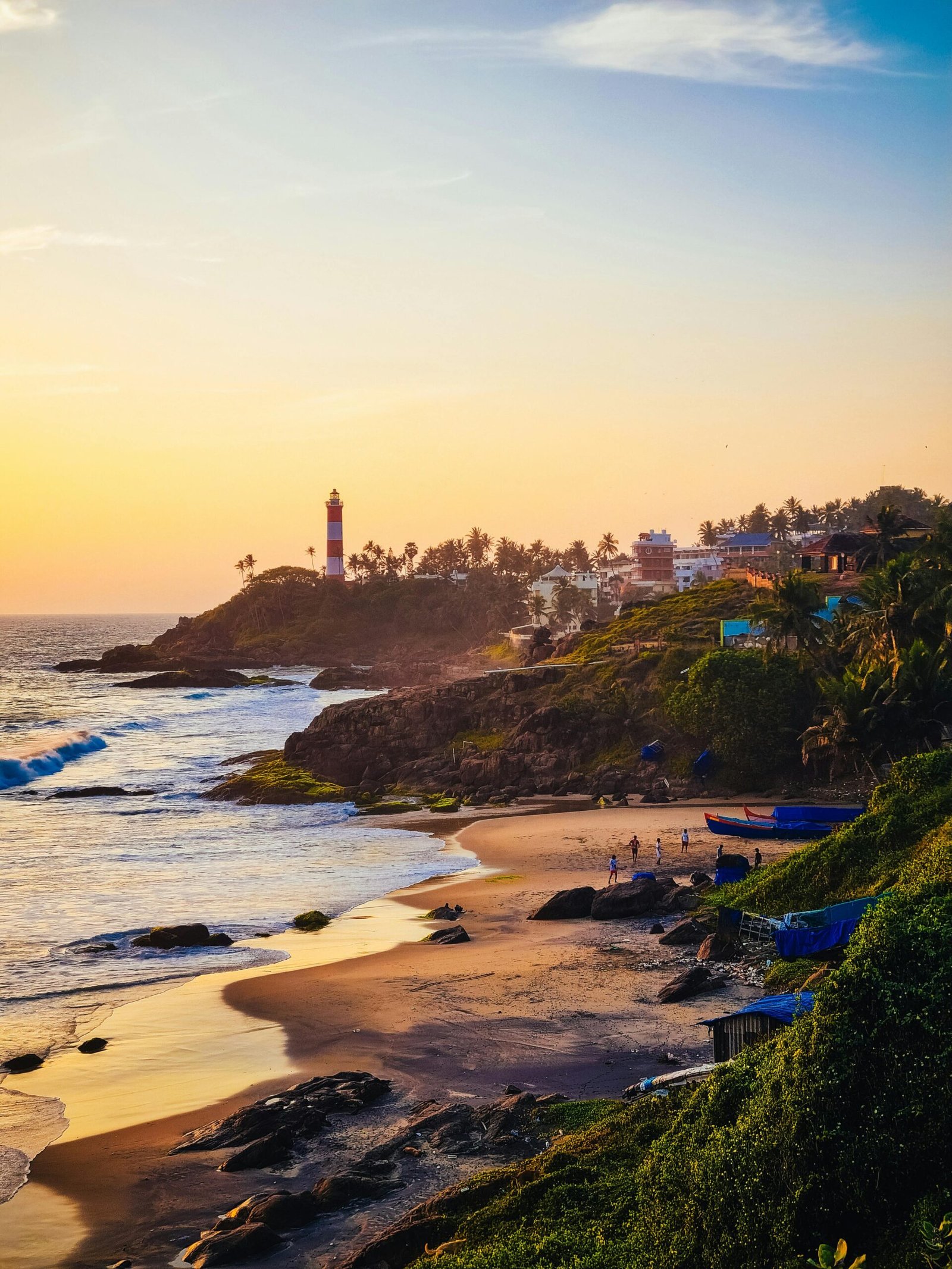
Twenty-five kilometres north of Kozhikode, the Thikkoti Lighthouse stands on a headland above one of the more dramatic stretches of the Malabar coast. The lighthouse itself is operational. On days when it is open to visitors, climbing to the top gives a 360-degree view over the Arabian Sea to the west and the river estuary and coconut groves to the east.
The drive north from Kozhikode to Thikkoti passes through Kadalundi — where the Kadalundi River meets the sea — and the Kadalundi Bird Sanctuary. The sanctuary covers a cluster of small islands in the river estuary and is one of the most important bird habitats on the Kerala coast.
Between October and March, migratory birds arrive from Central Asia and Europe — whimbrels, sandpipers, terns, and several species of heron that do not appear elsewhere in Kerala. Boat rides through the estuary islands are available and give close access to the mangrove habitat where the birds roost. The crossing takes about 20 minutes each way and the guides know the island routes well.
Therefore, a half-day drive north from Kozhikode — Kadalundi birds in the morning, Thikkoti lighthouse afterward — makes a coherent and rewarding excursion without requiring an overnight stay.
It would be possible to write this entire guide about Kozhikode’s food. In fact, several books have. The Malabar cuisine tradition that centres on Kozhikode is considered by food scholars to be one of the most sophisticated regional cuisines in India — shaped by Arab traders, the Zamorin court, the mappila (Malabar Muslim) community, and the natural abundance of the coast and the forests behind it.
Kozhikode Halwa is the dish most associated with the city. Made from maida, coconut oil, and sugar — cooked slowly over hours until it reaches a dense, translucent, slightly chewy consistency — it comes in flavours including banana, jackfruit, and the classic black halwa made with sugar syrup. SM Street has multiple halwa shops that have been making it the same way for generations. Buy it fresh, not packaged.
Malabar Biryani is a different thing from Hyderabadi or Lucknowi biryani. It uses small-grained kaima rice, which is shorter and more fragrant than basmati. The spicing is different — more black pepper, less saffron. The meat is cooked into the rice rather than layered over it. The result is a biryani that is more intensely spiced, less perfumed, and more direct than its northern counterparts. It is available everywhere in Kozhikode. The best versions are at small, unfancy Muslim restaurants that have been doing it for decades.
Kallummakkaya (Mussels): The mussels from the Kozhikode coast are large, sweet, and available in preparations ranging from stir-fried with coconut and green chilli to cooked in a thick Malabar masala. They are best eaten at coastal restaurants where the mussels arrived that morning.
Pathiri with Mutton Curry: Pathiri is a thin, unleavened rice flour flatbread that is specific to Malabar Muslim cooking. It is light, slightly crispy at the edges, and designed to absorb the thick, slow-cooked mutton or chicken curries served alongside. It is fundamentally different from parotta and worth seeking out specifically.
Kozhikodan Chicken Biriyani and Dum preparations at the old Muslim eateries near Mananchira Square are, for many travellers, the single meal they most remember from their entire Kerala trip.
Mananchira Square is an ancient tank and garden at the centre of old Kozhikode city. The tank — originally dug by the Zamorin kings — is surrounded by a public park that remains one of the city’s most used open spaces.
The square is worth visiting not for any single attraction but for what it reveals about the city’s character. Early mornings bring walkers, school children, office workers eating breakfast, and elderly residents completing their daily circuits. The buildings around the square — the Town Hall, the Tagore Centenary Hall, old commercial buildings — speak to different periods of the city’s history.
In the evenings, the square takes on a different character. Street food vendors set up around the perimeter. The park fills with families. The old town streets around it — particularly the area toward the beach — become the city’s most active pedestrian zone.
Above all, Mananchira Square is the place where Kozhikode feels most like itself. It is not staged for anyone. It just happens every day.
Cross from Kozhikode into Malappuram and the landscape does not change dramatically at first. The coast continues. The coconut palms continue. However, the character of the towns shifts. Malappuram is Kerala’s fastest-growing district and one of its most densely populated. It has a strong Muslim majority in most taluks, a cultural connection to the Gulf that is visible in the architecture and economy of many towns, and a landscape that moves quickly from coastal plain to forested hills as you travel east.
The district does not feature heavily on standard Kerala travel routes. That gap between its actual interest and its visibility in travel media is significant — and closing, as searches for Malappuram tourism have grown steadily over the past three years.
Sixty kilometres east of Malappuram town, in the foothills of the Western Ghats, is Nilambur — a town whose name is inseparable from one thing: teak.
The Nilambur teak forests are the oldest managed teak plantations in the world. The British established them in 1844 specifically to supply the Royal Navy with timber for shipbuilding. The oldest living plantation teak trees here are over 170 years old — enormous, straight-trunked specimens that rise 40 metres above a forest floor kept clear of undergrowth by the plantation management system.
The Conolly’s Plot, established by the British collector H.V. Conolly in 1846, is the oldest teak plantation in existence and is maintained as a heritage site within the forest. Walking through it — the trees so large that their canopy shuts out direct sunlight entirely — is a genuinely distinctive experience. It does not feel like a managed forest. It feels like a very old jungle.
In addition to the teak plantations, Nilambur is the base for access into the Karulai and Aralam forest areas, which form the southern extension of the Nilgiri biosphere. The Nilambur Valley also grows cardamom, pepper, and coffee — plantation stays in the valley offer a combination of forest access and agricultural immersion that is harder to find in more visited parts of Kerala.
The Nilambur Teak Museum, in the town itself, covers the history of teak cultivation, the forestry management system, and the ecological significance of the Western Ghats teak belt. It is small but well-organised and provides useful context before walking the plantation.
Forty-five kilometres from Malappuram town, near Nilambur, Adyanpara Waterfalls cascade over a wide rock face into a natural pool surrounded by forest. Unlike many Kerala waterfalls that are best during monsoon but diminish sharply by November, Adyanpara maintains a reasonable flow well into the post-monsoon season because of the dense forest catchment above it.
The pool below the falls is clean and swimming is possible during calmer flow periods — November through February gives the best combination of accessible water and manageable current. The forest trail to the falls takes about 20 minutes from the road and passes through light jungle cover.
Because Adyanpara sits off the standard Malappuram circuit and requires a specific detour to reach, it is consistently quiet. On weekdays outside school holiday periods, you may have it largely to yourself. That makes it one of the more peaceful waterfall visits available in this part of Kerala.
Tirur, a small town in Malappuram district, holds a geographical indication that almost no traveller has heard of but that affects the daily life of hundreds of millions of people across South Asia.
Tirur betel leaves — the pan that is chewed across India, Bangladesh, and Southeast Asia — have a Geographical Indication tag from the Government of India, recognising that the specific soil and climate of the Tirur region produces a leaf of distinct flavour, texture, and medicinal quality that cannot be replicated elsewhere.
The betel cultivation around Tirur is an intricate, labour-intensive process. The vines are grown on bamboo trellises, hand-watered, and harvested leaf by leaf. Walking through a betel garden is genuinely unusual — the plants grow in dense, cave-like tunnels of bamboo and leaf that block the light entirely and have a particular humid, aromatic quality.
Given that most travellers have never encountered this crop at its source, and given how central betel is to South Asian culture, a visit to the Tirur betel gardens is the kind of agricultural experience that makes a trip memorable in ways that standard sightseeing does not.
Malappuram town itself is not a major tourist destination. However, the Kottakkunnu hillock at its centre — a forested hill that rises above the town with gardens, a small auditorium, and walking paths — gives the town a pleasant public green space and a viewpoint over the surrounding landscape.
The hill is historically significant as the site of the Malappuram fort, used during the period of the Malabar rebellions in the 19th century. Remnants of the fortification are visible within the garden grounds. The view from the top of Kottakkunnu takes in the town, the rice fields below, and the Western Ghats ridge to the east.
It is not a destination that justifies a long journey. However, if you are passing through Malappuram town — which you likely will be on the way to Nilambur or Kozhikode — spending an hour on Kottakkunnu gives the transit stop more value than it would otherwise have.
About 40 kilometres east of Malappuram town, at an altitude of around 900 metres, is Ponmala — a highland area that is beginning to appear in Kerala travel searches but remains largely undeveloped as a tourist destination.
The landscape here is a combination of grassland, forest edge, and rolling hills that look westward over the Malappuram plains. On clear mornings, the view extends to the coast. Unlike Vagamon or Nelliyampathy, which have established homestay infrastructure and regular visitor traffic, Ponmala is still in the early stages of tourism development.
Therefore, visiting now means seeing a place before it becomes familiar — the tradeoff being that accommodation options are limited and the access road requires a good vehicle. For travellers who specifically seek out places at this stage of development, Ponmala is worth the effort.
Although Wayanad is a separate district, the most common route into it from the Kerala coast passes through Kozhikode. The drive from Kozhikode to Kalpetta — Wayanad’s main town — takes approximately 2.5 hours through the Thamarassery Ghat Pass, one of the most scenic road climbs in north Kerala.
The Thamarassery Ghat has 11 hairpin bends, climbs over 1,000 metres, and passes through forest that becomes progressively denser as the road ascends. Waterfalls appear on the hillside during and after monsoon. The change in temperature from Kozhikode to Kalpetta — a drop of 8 to 10 degrees — is noticeable and immediate when you reach the plateau.
Consequently, Kozhikode works naturally as the base city for travellers who want to combine the coast with a Wayanad visit on the same trip. A night in Kozhikode followed by the Thamarassery Ghat drive and two nights in Wayanad is a coherent 3-night extension to a standard Kerala circuit.
| Season | Months | What to Expect |
|---|---|---|
| Peak / Best | November – February | Cool, dry, ideal for coast, Beypore, and forest visits |
| Shoulder | March – May | Warm, less crowded, good hotel rates |
| Monsoon | June – September | Heavy rain, dramatic coast, Nilambur forest is lush |
| Post-monsoon | October | Fresh and green, waterfalls still running, excellent value |
Worth noting: The Malabar coast receives the southwest monsoon with significant intensity — heavier than Thiruvananthapuram or Ernakulam. Kozhikode in June and July sees sustained heavy rain. The coast is rough and dramatically atmospheric during this period. However, outdoor sightseeing is significantly limited. November through February is the most comfortable and most practical window for a first visit.
Malappuram’s food culture is closely related to Kozhikode’s Malabar tradition but has its own specific character. The district’s strong agricultural base — rice, coconut, banana, and spice cultivation — means the cooking uses local ingredients with a freshness and directness that is hard to replicate in city restaurants elsewhere.
Malabar Fish Curry in Malappuram uses coconut milk and a specific combination of spices that produces a lighter, more fragrant curry than the darker, tamarind-heavy versions found further south. Eaten with red rice and a fish fry alongside, it is the defining meal of the district.
Unniyappam — small, round, sweet rice cakes fried in coconut oil, filled with jaggery and banana — are the snack most associated with Muslim festivals in Malappuram but available year-round at tea shops and small bakeries across the district.
Ari Pathiri — a version of the rice flour flatbread thinner than the Kozhikode version, eaten with coconut milk curry — is the breakfast most specific to Malappuram’s rural areas. Finding it requires eating where local families eat, not at highway restaurants.
Kozhikode by Air: Calicut International Airport (CCJ) is 26 kilometres from the city and handles direct flights from Mumbai, Delhi, Bangalore, and major Gulf cities — particularly Dubai, Abu Dhabi, and Muscat. Flight frequency to the Gulf reflects the significant NRI population from this region.
Kozhikode by Train: Kozhikode Railway Station is on the main Shoranur-Mangalore line. Direct trains from Ernakulam take approximately 3.5 hours. From Thiruvananthapuram, about 7 hours. From Thrissur, approximately 2 hours.
Malappuram by Road: Malappuram town is 55 kilometres southeast of Kozhikode — about 1.5 hours by road on NH 966. It sits between Kozhikode and Palakkad and is therefore naturally on the route between them. Nilambur is a further 60 kilometres east of Malappuram town.
By Train to Malappuram: Tirur and Tanur stations on the Shoranur-Mangalore line serve the coastal parts of Malappuram district. Nilambur Road Railway Station connects the teak valley to the main rail network.
For first-time Kerala visitors, Kozhikode works best as an add-on to the northern end of the standard circuit. After Thrissur, continuing north to Kozhikode for 1 or 2 nights adds the Malabar coast, Beypore, Kappad, and the food culture of the city without significantly extending the overall trip duration.
For repeat Kerala visitors who have already covered the standard south-central circuit, Kozhikode and Malappuram — combined with Wayanad — constitute a complete northern Kerala route that covers entirely different territory from the Cochin-Munnar-Thekkady-Alappuzha circuit.
Suggested northern extension: Kozhikode (2 nights) → Nilambur/Malappuram (1 night) → Wayanad (2 nights) → return via Kozhikode. This 5-night circuit covers the Malabar coast, the teak forests, and the Wayanad highlands without repeating any experience from the standard packages.
View 5 Nights 6 Days Kerala Package → https://bestkeralatourpackages.com/trips/kerala-tour-package-5-nights-6-days/
View 7 Nights 8 Days Kerala Package → https://bestkeralatourpackages.com/trips/kerala-tour-package-7-nights-8-days/
View all packages → https://bestkeralatourpackages.com/trips/
Contact us for custom itineraries → https://bestkeralatourpackages.com/contact/
| Kozhikode | Malappuram | |
|---|---|---|
| Best known for | Malabar cuisine, Kappad, Beypore shipbuilding | Nilambur teak forests, Tirur betel, Adyanpara |
| Top attraction | SM Street food trail and Beypore boatyards | Nilambur teak plantation and Conolly’s Plot |
| Hidden gem | Kadalundi Bird Sanctuary | Ponmala highland and Adyanpara Waterfalls |
| Best time to visit | November – February | November – February |
| Nearest airport | Calicut International Airport (26 km) | Calicut International Airport (55 km) |
| Suits | Food travellers, history seekers, coast lovers | Forest and nature travellers, off-beat seekers |
Three things set it apart. First, it uses kaima rice — a short, fat, fragrant grain specific to Kerala — rather than basmati. Second, the spice profile leans on black pepper, cardamom, and cloves rather than saffron and rose water. Third, it is typically less oily and less heavy than Hyderabadi versions. As a result, it has a clean, direct flavour that is immediately distinctive.
Yes. The boatyards are open working spaces on the riverbank and visitors can walk in without a formal arrangement. However, a local guide adds significant value — they know which yards are actively building, can introduce you to the craftsmen, and can explain the construction process in detail. Several local operators in Kozhikode offer half-day Beypore tours at reasonable rates.
Yes. Despite being less visited than Kozhikode or Ernakulam, Malappuram is a safe and welcoming district. Solo women travellers are advised to dress conservatively in town areas, as is generally true across most of Kerala’s more traditional districts. In forest and rural areas, the hospitality is straightforward and direct.




Best Kerala Tour Packages is a specialized division of
Pravas Sukhacha™
Network & Ecosystem.
Pravas Sukhacha Office 201, 2nd Floor, Raigad Complex, Salatwada Main Road, Vadodara – 390001, Gujarat
Business Hours:
Monday to Saturday: 10:00 AM – 7:00 PM
Sunday: Closed
Copyright © 2026 All Right Reserved BEST KERALA TOUR PACKAGES