Munnar & Alleppey 3 Night 4 Days 2 Pax Itinerary Day 1: Cochin to Munnar Pick up and proceed to...
Kerala is often described in terms of its landscapes — backwaters, hill stations, beaches, forests. However, two districts in the state’s central-northern corridor offer something different. Thrissur gives you Kerala’s deepest cultural and religious traditions, concentrated in a city that has been a centre of temple arts and festivals for over a thousand years. Palakkad gives you the mountain gap through which the rest of India has reached Kerala since ancient times — a corridor of forts, rivers, reservoirs, and forests that sits at the edge of the Western Ghats.
Together they form a part of Kerala that most first-time visitors do not reach on the standard circuit. That is precisely why they are worth understanding before you plan your trip. Because if your dates align with Thrissur Pooram, or your interest runs toward Silent Valley’s primeval forest, or you want to stand at the point where the plains of Tamil Nadu give way to Kerala’s hills — these two districts deliver experiences that Munnar and Alleppey simply do not.
Munnar & Alleppey 3 Night 4 Days 2 Pax Itinerary Day 1: Cochin to Munnar Pick up and proceed to...
8-Day Enchanting Kerala Escape Itinerary Day 1: Arrival at Cochin Pick up at cochin, visit Dutch palace, Jewish synagogue, chinese...
6-Day Enchanting Kerala Escape Itinerary Day 1: Arrival at Cochin Pick-up: Cochin Airport / Railway Station Proceed to hotel check-in...
Classical Kerala-style architecture.
Center for learning Kathakali and traditional arts.
Untouched tropical rainforest.
Trekking spot with a small waterfall.
Major pilgrimage site for Lord Krishna.
A well-maintained "Love Shore" beach.
Hidden hills known for orange groves.
Famous for its heritage Brahmin villages and chariot festival.
Elephant sanctuary with over 50 elephants.
Gardens, ropeway, and rock garden.
Rich wildlife and teak plantations.
Thrissur holds the title of Kerala’s cultural capital, and unlike most honorary titles attached to Indian cities, this one is accurate. The density of temples, classical arts institutions, festivals, and active religious life in this single district exceeds what most Indian states can claim as a whole.
The city is built around a raised central ground — Thekkinkadu Maidan — at the heart of which sits the Vadakkunnathan Temple complex. Everything in Thrissur radiates outward from this point. The annual Pooram festival uses the Maidan as its stage. The city’s commercial streets run around its perimeter. The cultural identity of the district is inseparable from the architectural and spiritual presence of this central complex.
Beyond the temple, Thrissur is the headquarters of the Kerala Sangeetha Nataka Akademi, the Kerala Sahitya Akademi, and several of the state’s most important Kathakali and Mohiniyattam training institutions. Classical music, visual arts, and literary culture are not performed here for tourists — they are practised here as a living tradition.
The Vadakkunnathan Temple at the heart of Thrissur city is one of the oldest functioning temples in Kerala. It is dedicated to Lord Shiva and built in the classic Kerala temple style — sloping tiled roofs, wooden carvings, circular shrines within concentric walls — that represents one of South India’s most distinctive architectural traditions.
The temple complex is large. Within its outer walls sit shrines to Shankaranarayana, Rama, and Parvati alongside the main Shiva sanctum. The wooden carvings inside, particularly on the ceiling of the main sanctum, are among the finest surviving examples of traditional Kerala woodcraft — intricate, layered, and painted in the natural pigment palette that characterises Kerala temple art.
Entry to the inner sanctum is restricted to Hindus. However, the outer precincts and the Thekkinkadu Maidan surrounding the complex are open to all. The perimeter walk around the temple walls — past ancient lamps, carved doorways, and the massive banyan trees that have grown into the compound over centuries — takes about 30 minutes and is worth every minute of it.
The temple opens at 3 AM for the first ritual. For non-pilgrims, arriving between 6 and 8 AM gives a sense of the morning activity — priests moving between shrines, devotees completing their rounds, the smell of sandalwood and camphor in the cool early air.
If you know one thing about Thrissur, it is likely Thrissur Pooram. Held every year in April or May on the Medam Pooram day of the Malayalam calendar, it is the most spectacular temple festival in India and one of the largest public gatherings in the world.
The festival brings together ten temples from the surrounding area in a daylong procession on Thekkinkadu Maidan. Two groups — the Thiruvambady and Paramekkavu temples — face each other across the Maidan in competitive display, each group presenting between 15 and 30 decorated elephants adorned with gold caparisons, silk umbrellas, and peacock fans, while percussion ensembles of over 100 musicians perform simultaneously.
The percussion — panchavadyam and chenda melam — reaches a controlled intensity over several hours that has no real equivalent in Indian festival music. The sound at peak performance carries for kilometres. Observers who attend describe it as physically overwhelming in the best possible sense.
The festival culminates before dawn with a fireworks display — the Kudamattom — that is itself considered among the finest in Asia. The fireworks begin around 3 AM and last approximately three hours.
Consequently, Thrissur becomes extremely crowded during Pooram. Hotels book out months in advance. If attending is your intention, plan accommodation at least three to four months ahead. That said, the experience justifies whatever logistical effort it requires. Most people who attend Thrissur Pooram describe it as the single most extraordinary public event they have ever witnessed in India.
Seventy-eight kilometres from Thrissur town, at the point where the Chalakudy River drops off the Sholayar ranges, is Athirapilly Falls — the largest waterfall in Kerala.
The falls drop approximately 80 feet across a wide rock face into a forested gorge below. During and immediately after the monsoon — August through October — the volume of water is extraordinary. The roar is audible from the viewpoint, the spray carries into the surrounding forest, and the visual scale of the fall against the green hillside behind it is genuinely impressive.
The teak and rosewood forest surrounding Athirapilly is part of the Sholayar forest range and is home to the endangered Hornbill species — particularly the Great Indian Hornbill, which nests in the tall trees along the river. Athirapilly is one of the best places in Kerala to see this bird.
Vazhachal Falls, four kilometres further into the forest, is smaller but arguably more beautiful — a series of cascades across dark rock in a quieter setting that the main Athirapilly viewpoint crowd rarely reaches. Therefore, if you are visiting Athirapilly, continue to Vazhachal. The additional drive takes 15 minutes and the additional walk takes 20. It is worth both.
Weekends at Athirapilly are very crowded. Visiting on a weekday, particularly in the morning, reduces the queue at the entry gate significantly.
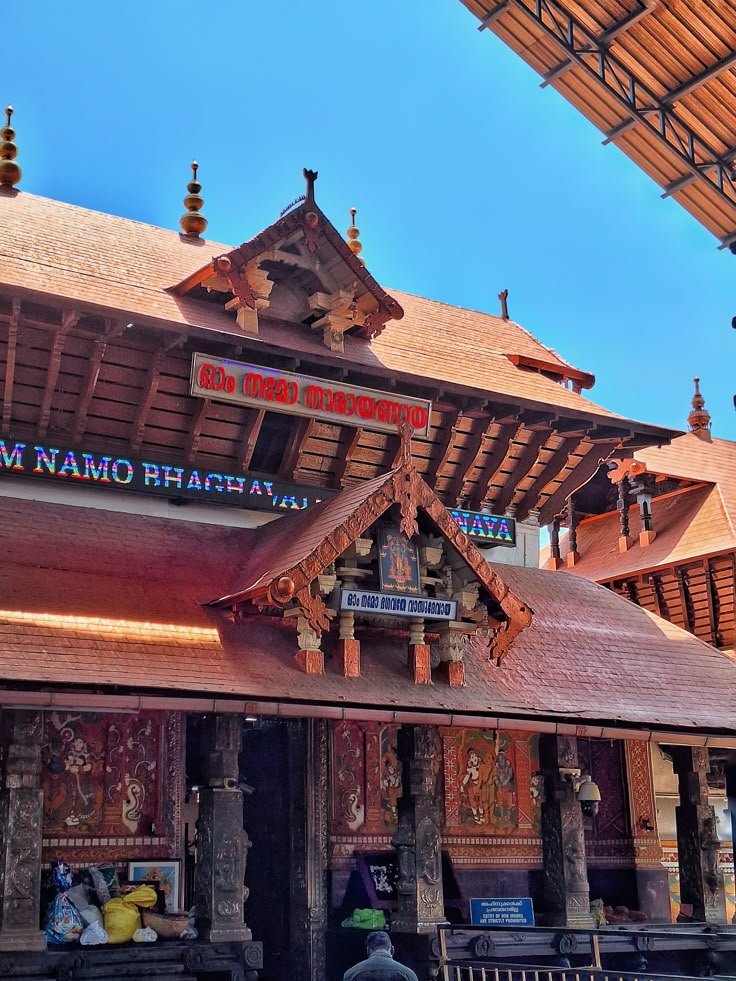
Thirty kilometres west of Thrissur city is Guruvayur — home to the Sri Krishna Temple that is the most visited temple in Kerala and the fourth most visited in India, receiving an estimated 80,000 to 100,000 pilgrims on peak days.
The deity here — Guruvayurappan — is considered one of the most powerful manifestations of Lord Vishnu in the Vaishnavite tradition. Devotees travel from across India, particularly from Tamil Nadu and Kerala, to offer prayers, conduct weddings, and perform other sacraments at this temple.
Entry is restricted to Hindus. The dress code is strictly enforced — men must wear dhoti, women must wear saree or salwar. The queue system is well organised but the wait for darshan on weekdays averages 2 to 3 hours. Early morning — the 3 AM opening — has the shortest queues for those willing to keep those hours.
Beyond the temple, Guruvayur is also home to the Punnathur Kotta Elephant Sanctuary — a palace compound that houses over 50 temple elephants. These are the elephants used in temple festivals across Kerala, including Thrissur Pooram. The sanctuary is open to visitors and allows relatively close observation of the animals in their compound. It is not a natural wildlife setting — these are captive working animals — but for those interested in Kerala’s deep relationship between temples and elephants, it is an informative and accessible visit.
About 32 kilometres north of Thrissur, in the village of Cheruthuruthy on the banks of the Bharatapuzha River, is Kerala Kalamandalam — the state’s most important institution for classical performing arts.
Kalamandalam was founded in 1930 specifically to prevent the extinction of Kathakali, which at that time was in serious decline. Today it trains students in Kathakali, Mohiniyattam, Kuchipudi, Bharatanatyam, Thullal, Koodiyattam, and other classical forms — all on residential courses that can run for seven years or more.
The campus is open to visitors. A heritage tour covers the performance halls, the practice studios where students can be observed in training, and the museum of costumes and instruments. Performances are staged periodically for visitors — check the schedule on the KFDC or Kalamandalam website before visiting.
What makes a Kalamandalam visit valuable is not primarily the performance — it is watching students in the practice rooms. The physical training for Kathakali involves years of daily eye and facial muscle exercises, body conditioning, and mudra practice. Observing students in that process, rather than watching a finished performance, gives a truer understanding of what these art forms actually require.
Twenty-five kilometres south of Thrissur, in Irinjalakuda town, is the Koodalmanikyam Temple — one of very few temples in India dedicated to Bharata, the brother of Lord Rama from the Ramayana.
The temple’s significance for architecture enthusiasts is the Koothambalam — the traditional Kerala theatre hall within the temple complex. This is one of the finest surviving examples of traditional Kerala temple theatre architecture. The building’s interior ceiling is carved in concentric wooden panels that create remarkable acoustics — designed specifically for Koodiyattam performances, the oldest surviving theatre tradition in India, which is performed here on festival days.
Because Irinjalakuda does not feature on standard Thrissur sightseeing lists, the temple is quietly accessible. There are no queues, no crowds, and no rush. That makes it one of those places where the quality of the experience is inversely proportional to the number of visitors it receives.
Drive or take the train north from Thrissur toward Palakkad and something changes. The hills that press close to Kerala’s eastern edge in Idukki and Ernakulam begin to recede. The landscape flattens and opens. The sky becomes larger. The air takes on a different quality — drier, more direct.
This is the effect of the Palakkad Gap — a natural break in the Western Ghats, approximately 32 kilometres wide, through which wind, weather, and historically, people and trade have moved between Kerala and the Tamil Nadu plains since ancient times.
The gap is the reason Palakkad exists as a strategic location. It is why the Tipu Sultan built his fort here. It is why the railways chose this corridor to connect Kerala to the rest of India. It is why Palakkad’s climate is notably different from the rest of Kerala — hotter in summer, with less rainfall than the districts to the south, and historically more influenced by Tamil culture and language.
That crossroads character gives Palakkad a distinct personality within Kerala — culturally layered in ways that districts further south are not.
In the centre of Palakkad town stands one of the best-preserved 18th-century forts in Kerala. Hyder Ali began its construction in 1766. His son Tipu Sultan completed and expanded it. The British captured it in 1783, renamed it Fort William, and used it as a military installation.
Unlike many forts across India that have been reduced to ruins, Palakkad Fort is structurally intact. The granite walls stand at full height. The bastions at each corner are complete. The moat — now dry — still defines the perimeter. The interior courtyard holds a Hanuman temple that has been in continuous worship since the fort’s early days.
The Archaeological Survey of India maintains the fort and its grounds are open to visitors daily. The structure itself is compact enough to walk in 30 to 40 minutes, but the proportions of the walls and bastions are impressive at close range. Because Palakkad Fort does not appear on most Kerala travel lists, it is almost always uncrowded — a significant contrast to the heritage sites of Fort Kochi or Mattancherry.
The Kalpathy heritage village, about two kilometres from the fort, is worth combining into the same visit. Kalpathy is a Tamil Brahmin agraharam — a traditional settlement of stone-built houses arranged in parallel lanes, developed over several centuries by the Ayyar community that migrated here from Tamil Nadu. The architecture is unlike anything elsewhere in Kerala. The annual Kalpathy Ratholsavam — a chariot festival held in November — is one of Palakkad’s most visually striking events.
Eleven kilometres from Palakkad town, on the Bharatapuzha tributary, is Malampuzha Dam — the largest irrigation dam in Kerala and the most visited tourist site in the district.
The dam creates a large reservoir backed by forested hills. The garden complex on the dam’s northern bank was designed partly by Jawaharlal Nehru’s personal choice of landscape architects and contains one of the most recognisable rock sculptures in Kerala — a reclining female figure carved by Kanayi Kunhiraman, the same sculptor whose work appears at Shanghumugham Beach in Thiruvananthapuram.
A ropeway cable car crosses the reservoir from the garden to the hills on the far bank — the only aerial ropeway within a dam complex in South India. The view from the cable car, looking back over the reservoir toward the Palakkad plains, is genuinely good.
The garden and dam area is primarily a local leisure destination. It is busy on weekends and school holidays. Visiting on a weekday morning gives you the reservoir views without the crowd. The Fantasy Park amusement complex adjacent to the garden suits families travelling with children — it is a full-day option for young visitors.
This is the destination in Palakkad that matters most for travellers with any interest in natural history or conservation.
Silent Valley National Park covers 237 square kilometres of tropical evergreen rainforest in the Nilgiri Hills, forming part of the Nilgiri Biosphere Reserve — the largest biosphere reserve in India. The forest here is one of the last undisturbed tracts of tropical rainforest in the entire South Asian region.
The name comes not from silence but from the historical absence of the loud cicadas that fill most Kerala forests. In Silent Valley, the specific species of cicada that creates that characteristic tropical sound does not exist. The result is a forest that sounds different — deeper, more varied, dominated by bird calls and the Kunthi River rather than insect noise.
The biodiversity here is extraordinary. Silent Valley is home to the lion-tailed macaque — one of the world’s most endangered primates, with fewer than 4,000 individuals remaining — along with tigers, leopards, elephants, giant squirrels, and over 400 species of birds. Because access is controlled and visitor numbers are strictly limited, the wildlife density per visitor is higher here than at almost any other protected area in Kerala.
Entry requires prior permission from the Forest Department. Jeep safaris operate from the Mukkali entry point, 28 kilometres from Mannarkkad town. A guide is mandatory. The forest roads are unpaved and the drive itself passes through increasingly dense vegetation — sightings often happen before you reach the main forest zone.
Most importantly: book your entry permit well in advance, particularly for peak season. Walk-in access is not guaranteed and is frequently unavailable during high demand periods.
Most people searching for Kerala hill stations land on Munnar. Vagamon is appearing more in searches now. However, Nelliyampathy remains largely unknown outside Kerala — and among people within Kerala who know it, it is spoken of with a particular affection.
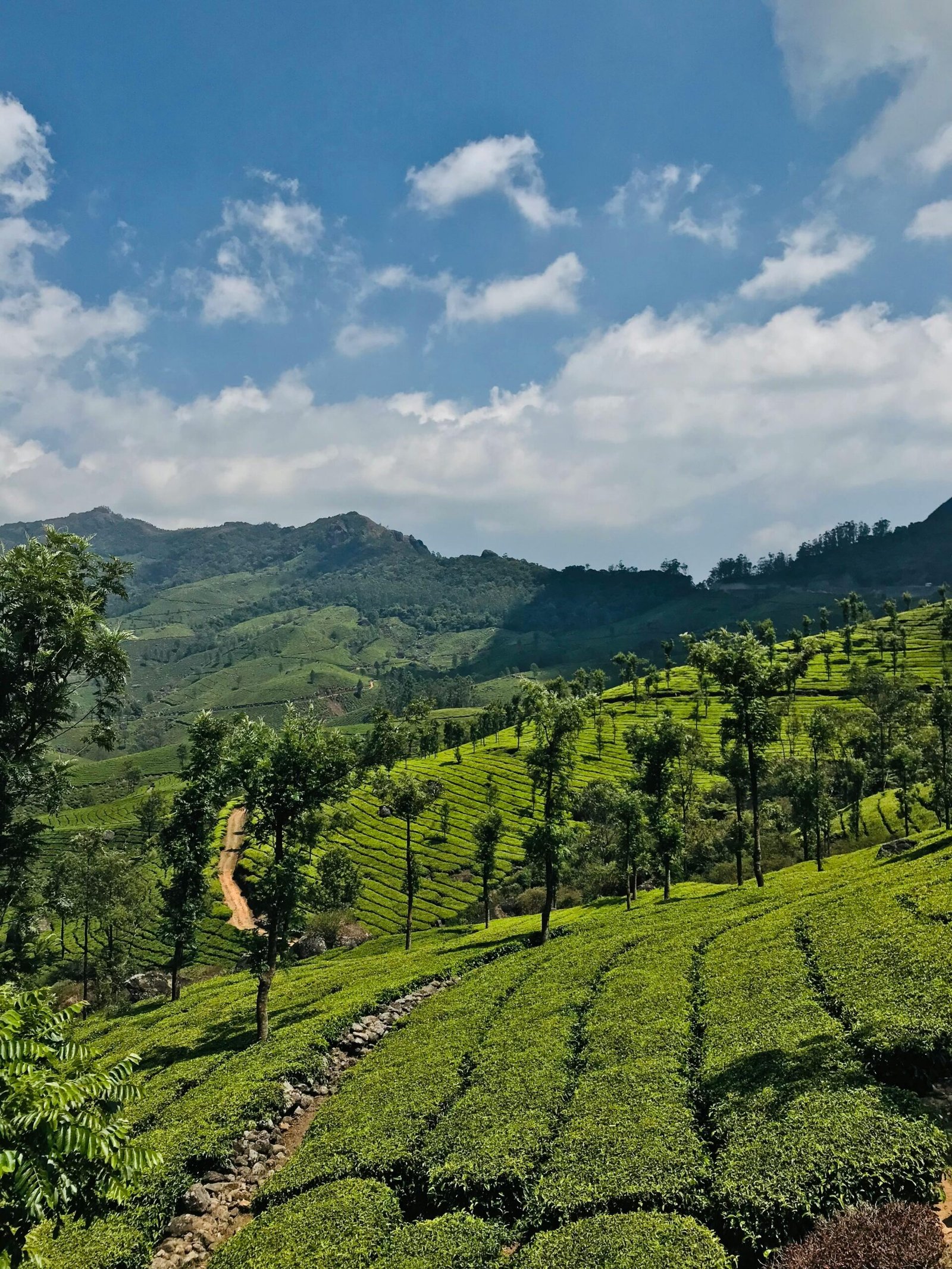
Nelliyampathy sits at 467 to 1572 metres above sea level in the Palakkad hills, about 60 kilometres from Palakkad town. The landscape is a combination of tea and coffee estates, orange groves, cardamom gardens, and dense forest — all on terrain that rises and falls dramatically along a single ghat road that climbs through 22 hairpin bends.
Because Nelliyampathy receives significantly less tourist footfall than Munnar, the estates here are working agricultural operations rather than scenery for visitors. Walking through an orange grove at harvest time, or watching tea being processed at a small estate factory that is not set up for demonstration tours, has a genuineness that more visited hill stations cannot offer.
The Kesavan Para viewpoint above Nelliyampathy looks north over the Palakkad plains — a view of extraordinary scale on clear mornings, with the flat agricultural land stretching toward the horizon and the Tamil Nadu border beyond. Sunrise from this point, when the plains are still in shadow and the tops of the hills catch the first light, is one of the quieter great views in Kerala.
Shared between Palakkad and Thrissur districts, in the hills above Nelliyampathy, is Parambikulam Tiger Reserve — one of the best-managed protected forests in South India.
The reserve covers 643 square kilometres and includes three reservoirs — Parambikulam, Thunakadavu, and Peruvaripallam — surrounded by dense tropical forest. The combination of water and forest attracts extraordinary wildlife density. Tiger sightings here are among the most frequent of any reserve in Kerala, though sightings are never guaranteed. Elephant herds, gaur, sambar, and giant squirrels are more reliable.
The Kerala Forest Department operates bamboo and teak tree houses and forest bungalows within the reserve — some of the best wildlife accommodation in South India. Staying inside the forest rather than at a resort outside the boundary makes a significant difference to what you see and when you can see it.
Day visits with a guide are available, but overnight stays within the reserve require advance booking through the Forest Department website. The tree houses book out weeks in advance during peak season. Plan accordingly.
Most people outside Kerala have never heard of Nemmara Vallanghy Vela. That gap between its quality and its obscurity is significant.
Held every April in the Nemmara area about 25 kilometres from Palakkad town, this festival involves 40 temples coming together over multiple days in a celebration that includes decorated elephants, percussion ensembles, and competitive display between temple groups. In scale — number of elephants, number of participants, duration — it is comparable to Thrissur Pooram.
Because it is less known and less covered in travel media, the crowd experience is different. You are attending a genuine village festival that happens to be spectacular, rather than a famous event that has been partially shaped by its own publicity. That distinction matters for the quality of the experience.
The festival date changes each year according to the Malayalam calendar. Searching for the current year’s dates in advance is necessary — local news sources and the Kerala Tourism website carry the schedule.
Thrissur sits in central Kerala where the food traditions of the coast and the hills intersect. The fish curry here uses kokum rather than tamarind — a subtle but important difference that gives it a rounder sourness. Kerala prawn preparations are excellent in the restaurants around Thrissur market. Puttu and kadala curry — steamed rice cylinders with black chickpea curry — is the breakfast that defines central Kerala and is best eaten at a small local restaurant, not a hotel.
Palakkad food carries a strong Tamil Brahmin influence because of the Palghat Iyer community that has lived here for centuries. Their cooking tradition — known to food scholars across India as one of the most refined vegetarian cuisines in South India — produces dishes like Palakkadan moru curry (yoghurt curry with specific tempering), koottukari (mixed vegetable and lentil preparation), and Palghat rasam that are different in character from standard Kerala vegetarian cooking.
Palakkad is also known for its Palakkadan Matta rice — a red rice variety grown in the district with a specific flavour and nutritional profile that chefs across India now seek out. Eating rice here, where it is grown and milled, is different from eating the same variety in a city restaurant elsewhere.
In addition, Palakkad’s proximity to Tamil Nadu means idli, dosa, and sambhar here are made in the Tamil style — thinner, more fermented, more assertively spiced than the Kerala versions found further south. Small restaurants near Palakkad town bus stand serve the best versions of this.
| Season | Months | Thrissur | Palakkad |
|---|---|---|---|
| Peak / Best | November – February | Cooler weather, festival season | Ideal for Silent Valley, Parambikulam |
| Festival Season | April – May | Thrissur Pooram — plan months ahead | Nemmara Vallanghy Vela |
| Monsoon | June – September | Heavy rain, green and atmospheric | Significant rainfall; forest roads can be difficult |
| Post-monsoon | October | Fresh and green, fewer crowds | Excellent for wildlife after rains |
Worth noting: Palakkad is significantly hotter than the rest of Kerala in March through May because the Palakkad Gap allows hot dry air from the Tamil Nadu plains to enter the district directly. Temperatures regularly exceed 40°C during these months. For Palakkad specifically, November to February is strongly recommended for comfort.
For most travellers on a first Kerala trip, Thrissur and Palakkad work best as extensions to the standard circuit rather than replacements for it. Here is how to think about it:
If your trip falls in April or May: Thrissur Pooram is a reason to restructure the entire itinerary around it. Build a night in Thrissur specifically for the festival and adjust the rest of the circuit accordingly. No other Kerala experience is comparable.
If you are a repeat Kerala visitor: Both districts offer territory that the standard Cochin-Munnar-Thekkady-Alappuzha circuit does not cover. A dedicated 3 to 4 night extension covering Thrissur, Guruvayur, Palakkad Fort, Malampuzha, and Silent Valley fills in a significant part of the state that first-time itineraries leave unexplored.
If wildlife is the priority: Parambikulam Tiger Reserve and Silent Valley together represent two of the best-managed and most biodiverse protected forests in South India. Combined with Thekkady, they constitute a Kerala wildlife circuit that is among the finest available in India.
For all current Kerala packages and extension enquiries:
View 5 Nights 6 Days Kerala Package → https://bestkeralatourpackages.com/trips/kerala-tour-package-5-nights-6-days/
View 7 Nights 8 Days Kerala Package → https://bestkeralatourpackages.com/trips/kerala-tour-package-7-nights-8-days/
View all packages → https://bestkeralatourpackages.com/trips/
Contact us for custom itineraries → https://bestkeralatourpackages.com/contact/
| Thrissur | Palakkad | |
|---|---|---|
| Best known for | Thrissur Pooram, Vadakkunnathan Temple | Silent Valley, Palakkad Fort, Parambikulam |
| Top attraction | Thrissur Pooram festival | Silent Valley National Park |
| Hidden gem | Irinjalakuda Koodalmanikyam Temple | Nelliyampathy Hill Station |
| Best time to visit | November – February; April for Pooram | November – February |
| Nearest airport | Cochin International Airport (74 km) | Coimbatore Airport (60 km) / Cochin (148 km) |
| Suits | Culture lovers, festival seekers, classical arts | Wildlife enthusiasts, history travellers, trekkers |
The date changes each year according to the Malayalam calendar — it falls in April or May. Search for the specific year’s date from Kerala Tourism or local news sources. Book accommodation at least 3 to 4 months in advance for Pooram dates as hotels fill completely.
Non-Hindus can walk the outer precincts and the Thekkinkadu Maidan surrounding the temple complex. Entry to the inner sanctum is restricted to Hindus. The architecture and atmosphere of the outer areas are worth experiencing regardless.
Yes. The Archaeological Survey of India maintains the fort and entry is free. It is open daily from sunrise to sunset. The adjacent Kalpathy agraharam is also freely accessible and walkable.
Yes, with planning. The tree houses and forest bungalows inside the reserve are genuinely exciting for children. Day safaris are suitable for children above around 6 years. The boat rides on the Parambikulam reservoir are gentle and wildlife sightings from the water are common. Book well in advance.




Best Kerala Tour Packages is a specialized division of
Pravas Sukhacha™
Network & Ecosystem.
Pravas Sukhacha Office 201, 2nd Floor, Raigad Complex, Salatwada Main Road, Vadodara – 390001, Gujarat
Business Hours:
Monday to Saturday: 10:00 AM – 7:00 PM
Sunday: Closed
Copyright © 2026 All Right Reserved BEST KERALA TOUR PACKAGES