Munnar & Alleppey 3 Night 4 Days 2 Pax Itinerary Day 1: Cochin to Munnar Pick up and proceed to...
Everyone has seen the photograph. A wooden houseboat moving slowly through a green canal, coconut palms reflected in still water, absolute silence except for the occasional bird. That photograph is of Alappuzha — and the good news is that it is accurate.
The less-discussed part is that Alappuzha requires a little navigation to get the most out of it. Because it is Kerala’s most visited backwater destination, it has also become one of its most commercially layered ones. The difference between a genuine backwater experience and a disappointing one often comes down to knowing what to choose, what to skip, and when to go.
This guide covers all of that honestly.
Munnar & Alleppey 3 Night 4 Days 2 Pax Itinerary Day 1: Cochin to Munnar Pick up and proceed to...
8-Day Enchanting Kerala Escape Itinerary Day 1: Arrival at Cochin Pick up at cochin, visit Dutch palace, Jewish synagogue, chinese...
6-Day Enchanting Kerala Escape Itinerary Day 1: Arrival at Cochin Pick-up: Cochin Airport / Railway Station Proceed to hotel check-in...
The hub for houseboat cruises.
A bird watcher's paradise on Vembanad Lake.
18th-century palace with Kerala murals.
"The Rice Bowl of Kerala" (farming below sea level).
Historic pier and lighthouse.
Site of the Nehru Trophy Boat Race.
Pristine white sand and quiet resorts.
Famous for its "Palpayasam."
Munnar gives you altitude and scenery. Thekkady gives you wildlife. Cochin gives you history. Alappuzha gives you stillness — and that is harder to find than you might think in a busy travel year.
The backwater network here covers over 1,500 kilometres of interconnected canals, rivers, lakes, and lagoons. Vembanad Lake — the longest lake in India at 96 kilometres — forms the geographic heart of it. The landscape is almost entirely flat, which means the sky dominates. At dawn and dusk, the light on the water here is extraordinary in a way that photographs only partially capture.
Beyond the backwaters, Alappuzha also has a beach, a historic pier, a significant coir industry, and an annual snake boat race that draws hundreds of thousands of spectators. In other words, it is more than one thing — which is why it sustains interest even for those who have visited before.
The houseboat is the centrepiece of an Alappuzha trip for most visitors. However, because houseboats range enormously in quality, price, and experience, it is worth understanding what you are choosing before you book.
What a standard houseboat includes: A bedroom (or multiple bedrooms on larger boats), an attached bathroom, a sit-out deck at the front, a kitchen on board, and a crew of two — typically a captain and a cook. Meals are prepared fresh on board, usually Kerala-style fish curry, rice, and vegetables.
The check-in and check-out rhythm: Most houseboats check in around noon and check out by 9 AM the next morning. That gives you roughly 21 hours on the water — an afternoon cruise, a moored night on the backwaters, and a morning cruise before check-out.
Where houseboats are allowed to go: This is the part most brochures skip. Kerala’s waterway authority restricts houseboat movement after dark. By around 5:30–6 PM, houseboats moor at designated spots along the canal. This means your evening and night are spent stationary — not moving through waterways. The mooring spots vary in quality. Some are quiet and genuinely beautiful. Others are crowded with 20 other houseboats side by side.
What this means for you: The experience of being on the backwaters at dawn — before other boats are moving, when mist sits on the water and birds are active — is as good as the photographs suggest. However, the mooring situation is variable. Ask your operator specifically where they typically moor before booking.
Shikara vs houseboat: A Shikara is a small, canopied wooden rowboat — quieter, more manoeuvrable, and able to enter narrow channels that houseboats cannot reach. A 2–3 hour Shikara ride covers the most intimate parts of the backwater network. For travellers on a shorter itinerary, a Shikara ride often delivers more genuine backwater character per hour than a full houseboat overnight.
In our Kerala 5 Nights 6 Days package, Alappuzha is covered with a Shikara backwater ride as part of Day 5. Our 3 Nights 4 Days Munnar & Alleppey package includes the full overnight houseboat experience.
View packages → https://bestkeralatourpackages.com/trips/
Everything in Alappuzha connects, eventually, to Vembanad Lake. At 96 kilometres long and covering over 2,000 square kilometres, it is the largest lake in Kerala and the longest in India. The lake separates Alappuzha from Kumarakom across the water and forms the central body that most houseboats navigate.
In the early morning, Vembanad is remarkable. Fishing canoes move across it in the half-light. Birds — egrets, cormorants, kingfishers — work the shallows systematically. The horizon is wide and uninterrupted in a way that the narrower canals are not.
The Nehru Trophy Boat Race, held on Vembanad Lake every August on the second Saturday, is one of the most spectacular sporting events in India. Snake boats — traditional war canoes up to 130 feet long, rowed by over 100 oarsmen each — race across the lake while thousands watch from the banks. The event is genuinely extraordinary. However, Alappuzha becomes extremely crowded during this period, and accommodation prices spike significantly. Book months in advance if this is your purpose.
Most visitors to Alappuzha focus entirely on the backwaters and overlook the beach. That is understandable but slightly unfortunate, because Alappuzha Beach is one of the better stretches of coast in southern Kerala.
The beach runs along the western edge of the town. The old British-era pier — built in 1861 and stretching 137 metres into the sea — is the defining landmark. It is one of the few old piers still standing on the Kerala coast and gives the beach a character that Kovalam or Varkala do not have.
Sunsets from the pier are worth the walk out. The sea is rougher here than at Kovalam, which means swimming requires caution — but as a place to sit, watch, and decompress after a day on the water, the beach is excellent.
The stretch near the lighthouse is the most pleasant for a morning walk. Beach vendors are present but not overwhelming. Local families use this beach in the evenings, which means it retains an authentic, unperformed quality.
This is the part that matters most for travellers who want to go beyond the standard experience.
Alappuzha’s canal network extends into village territory that houseboats cannot physically enter. The waterways narrow to a few metres, canopied by coconut palms, with houses built right to the water’s edge — boats tied to front steps, children swimming, women doing laundry, fishermen setting lines. This is the Kerala of the backwaters that the photographs were originally taken to show.
These canals are only accessible by Shikara or by the small local wooden ferries that connect villages across the network. Taking one of these local ferries — which run on fixed routes for a few rupees — is one of the most authentic and inexpensive experiences available in Alappuzha. No guide needed. Simply board, observe, and ride.
The canal areas around Kuttanad — the region south of Alappuzha town known as the “rice bowl of Kerala” and famous for farmland lying below sea level — are particularly worth seeking out. Paddy fields, ancient churches, and snake boat clubs all exist within this network.
Forty-seven kilometres south of Alappuzha town, near Kayamkulam, sits Krishnapuram Palace — a beautifully preserved Kerala palace built in the 18th century under the Travancore kingdom.
The palace is built in the Kerala architectural style — gabled roofs, narrow corridors, wooden ceilings, and small windows that manage light and ventilation with precision. Inside, it houses the Gajendra Moksham — one of the largest mural paintings in Kerala, over 14 feet long, depicting a scene from the Bhagavata Purana with extraordinary detail.
Because most visitors to Alappuzha do not make the 47-kilometre drive south, Krishnapuram Palace is consistently uncrowded. Therefore, you get to look at a significant piece of Kerala’s artistic heritage in relative peace. Closed on Mondays.
About 25 kilometres east of Alappuzha town, on the banks of the Pamba River, is Champakulam — the village that is widely credited with originating the snake boat racing tradition in Kerala.
The Champakulam Boat Race, held in June or July during the Moolam festival, is the oldest boat race in Kerala — older even than the famous Nehru Trophy. It is significantly less crowded and more village-scale than the Nehru Trophy, which makes it a very different kind of experience. Watching a snake boat race at Champakulam feels like attending a local celebration that you have been invited into rather than a ticketed spectacle.
In addition, the Champakulam St. Mary’s Church — also on the riverbank — is one of the oldest churches in Kerala, associated with the Syriac Christian tradition and dating to the early centuries of Christianity in India.
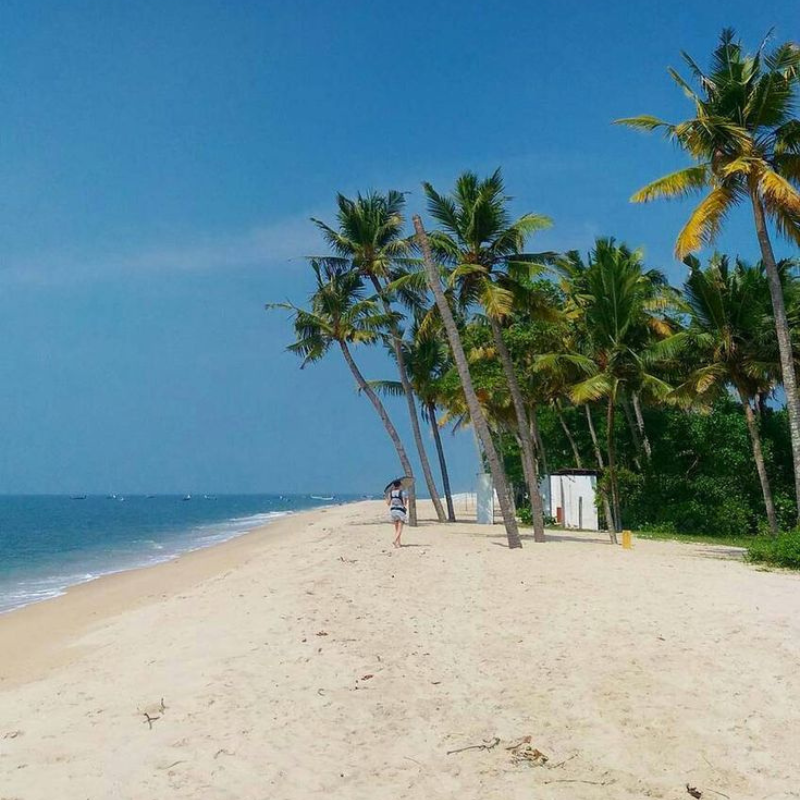
Eleven kilometres north of Alappuzha town, Marari Beach is one of Kerala’s quietest and most beautiful stretches of coastline. Unlike Alappuzha Beach, Marari is almost entirely undeveloped — coconut groves come right to the sand, fishing villages sit at each end, and the beach itself is long, clean, and rarely crowded.
Local fishermen launch their boats from Marari in the early morning. Watching that — the boats heading out through the surf in low light — is something you do not need to pay for or plan. You simply need to be there before 7 AM.
Marari works well as a half-day extension from Alappuzha — close enough to reach easily, different enough in character to feel like a genuinely separate experience.
The food in Alappuzha is some of the best in Kerala. Because the district sits between the sea and the backwaters, the fish available here is extraordinarily fresh and varied.
Karimeen Pollichathu is the dish most associated with Alappuzha. Karimeen (pearl spot fish) is marinated in a spiced paste, wrapped in banana leaf, and roasted directly over flame. The result is something between a steam and a char — the fish holds its moisture inside the leaf while the outside gets a slight crispness. Order it anywhere it appears on a menu. It is rarely bad and frequently excellent.
Prawn Moilee — prawns in a light coconut milk curry, yellow from turmeric, mild enough to taste the prawn clearly — is the backwater dish that most non-spice travellers find immediately accessible and genuinely good.
Kerala Meals on a banana leaf — the full sadhya format — is available at local restaurants for lunch. It is cheaper here than in tourist areas, and the quality is consistently high because the customer base is local.
Toddy (palm wine, locally called kallu) is produced in Alappuzha district and consumed at toddy shops — basic, unlicensed-looking establishments that are entirely legal and deeply embedded in Kerala culture. Fresh toddy in the morning is mildly alcoholic, sweet, and slightly fizzy. By afternoon it is stronger. Toddy shops serve simple food alongside — tapioca, fried fish, pickled mango. It is a cultural experience as much as a culinary one.
Both are backwater destinations on Vembanad Lake. However, they are meaningfully different.
Kumarakom is a resort destination — smaller, more upscale, quieter, and significantly more expensive. The backwater experience there is largely through resort properties and private boat rides. It suits travellers who want luxury and seclusion.
Alappuzha is a working town with a proper urban centre alongside the backwaters. It has restaurants, markets, a beach, a railway station, history, and a canal network that is far more extensive. It suits travellers who want variety, energy, and the full backwater experience at a wider range of price points.
In short — Kumarakom for a retreat, Alappuzha for a destination. Most first-time Kerala travellers are better served by Alappuzha.
| Season | Months | What to Expect |
|---|---|---|
| Peak / Best | November – February | Cool, dry, perfect for houseboat and beach |
| Shoulder | March – May | Warm but manageable, fewer tourists |
| Monsoon | June – September | Heavy rain, backwaters fill dramatically, snake boat races in August |
| Post-monsoon | October | Lush, transitional, good value |
The monsoon is worth special mention. Alappuzha during monsoon is green in a way that the dry season cannot match. The backwaters are fuller and the light is more dramatic. Houseboats still operate. The Nehru Trophy race happens in August. That said, beach activities are largely not possible and some canal routes become difficult. It is a genuinely different kind of visit — not worse, just different.
By Train: Alappuzha Railway Station is on the Ernakulam-Kollam line. Direct trains run from Ernakulam (Cochin) in about 1.5 hours. From Thiruvananthapuram, the journey takes approximately 2.5 hours.
By Road: 53 kilometres from Cochin — roughly 1.5 hours by car on NH 66. This is the most common route in Kerala tour packages. From Thekkady, the drive takes approximately 4.5 to 5 hours through changing landscape.
By Boat: The Alappuzha-Kollam backwater route by government ferry is one of the classic Kerala journeys — 8 hours, through the full length of the waterway network. If your schedule allows it, this is the most atmospheric way to arrive or depart.
Alappuzha works at different depths depending on how much time you have.
Half a day — covers a Shikara ride and the beach. Enough for a real taste of the backwaters within a tight itinerary.
One full day and night — the houseboat overnight. You get the afternoon cruise, the moored night on the water, and the morning cruise before check-out. This is the most complete version of the standard Alappuzha experience.
Two to three days — beyond the houseboat, you can cover Marari Beach, Champakulam, Krishnapuram Palace, Kuttanad, and the local ferry routes into village territory. This is the version that Alappuzha most rewards.
Our Kerala 5 Nights 6 Days package covers Alappuzha with a Shikara ride on Day 5. Our 3 Nights 4 Days Munnar & Alleppey package includes the full overnight houseboat stay.
View both → https://bestkeralatourpackages.com/trips/
Yes, if you book a quality boat in advance. The overnight houseboat is one of the genuinely distinctive travel experiences in India. However, the cheapest options can disappoint — prioritise boats with good reviews over the lowest price.
Absolutely. A Shikara ride covers the most scenic canal sections in 2–3 hours. Many travellers find this more intimate than the houseboat experience, especially because Shikaras can access narrow channels that houseboats cannot.
es. The houseboat is a novel experience for children — sleeping on water is memorable. The beach is accessible. The canal rides are gentle. It is one of the more family-friendly destinations in the Kerala circuit.
It is Kerala’s most famous snake boat race, held on Vembanad Lake in Alappuzha every year on the second Saturday of August. Over 100-oarsmen row traditional snake boats in competition while hundreds of thousands watch. Book accommodation months in advance if you plan to attend.




Best Kerala Tour Packages is a specialized division of
Pravas Sukhacha™
Network & Ecosystem.
Pravas Sukhacha Office 201, 2nd Floor, Raigad Complex, Salatwada Main Road, Vadodara – 390001, Gujarat
Business Hours:
Monday to Saturday: 10:00 AM – 7:00 PM
Sunday: Closed
Copyright © 2026 All Right Reserved BEST KERALA TOUR PACKAGES