Munnar & Alleppey 3 Night 4 Days 2 Pax Itinerary Day 1: Cochin to Munnar Pick up and proceed to...
Most Kerala itineraries follow the same route. Cochin, Munnar, Thekkady, Alleppey — and then home. That circuit is popular for good reason. However, it leaves out two districts that offer something the standard route simply cannot: space, quiet, and a version of Kerala that has not been shaped around tourism.
Kollam and Pathanamthitta sit in southern Kerala, side by side, and between them they hold backwaters, dense forest, one of India’s most visited pilgrimage sites, the world’s largest bird sculpture, and a cashew industry that supplies a significant portion of the globe. In other words, there is quite a lot going on here.
This guide covers both districts honestly — what they offer, who they suit, and how to fit them into a Kerala trip.
Munnar & Alleppey 3 Night 4 Days 2 Pax Itinerary Day 1: Cochin to Munnar Pick up and proceed to...
8-Day Enchanting Kerala Escape Itinerary Day 1: Arrival at Cochin Pick up at cochin, visit Dutch palace, Jewish synagogue, chinese...
6-Day Enchanting Kerala Escape Itinerary Day 1: Arrival at Cochin Pick-up: Cochin Airport / Railway Station Proceed to hotel check-in...
World’s largest bird sculpture.
India's first planned eco-tourism project.
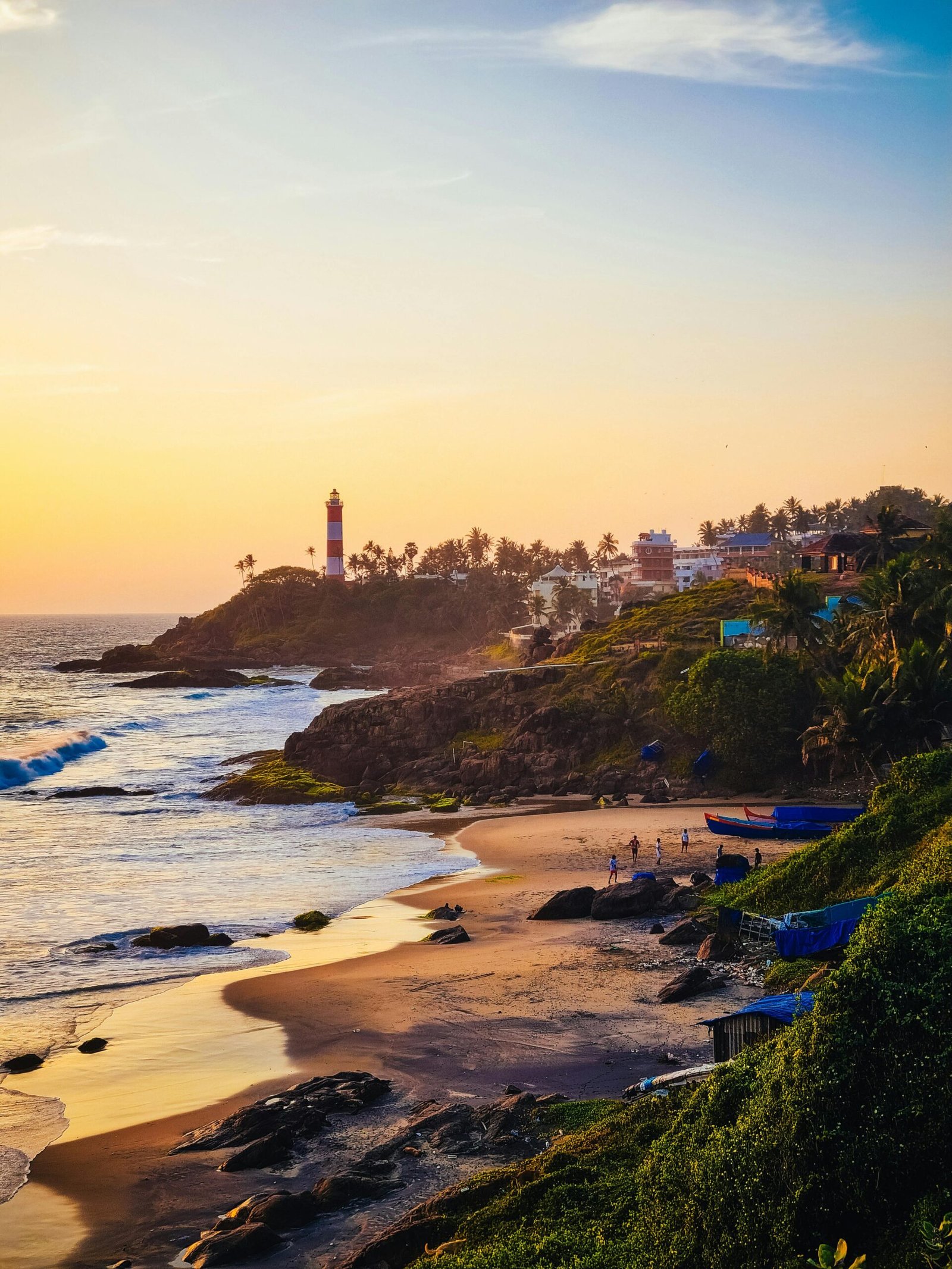
Historic 1902 lighthouse.
Historic elephant training center.
Famous for narrow canal cruises.
A 300 ft "Stream of Milk" waterfall.
Deep forest eco-tourism and wildlife.
Home of the famous metal mirrors and boat races.
The gateway to the backwaters.
Great for evening walks.
.
Major pilgrimage center in the Periyar Tiger Reserve.
A wide, rocky waterfall on the Pamba River.
Kollam (also called Quilon) is Kerala’s seventh-largest city and one of its oldest port towns. Arab traders were doing business here over a thousand years ago. Marco Polo passed through in the 13th century. The Portuguese came after that, then the Dutch, then the British.
Because of this history, Kollam has a layered character that most coastal towns in Kerala do not. The old port quarter still carries traces of every trading era that passed through it. That said, most visitors today know Kollam primarily for one thing — Ashtamudi Lake.
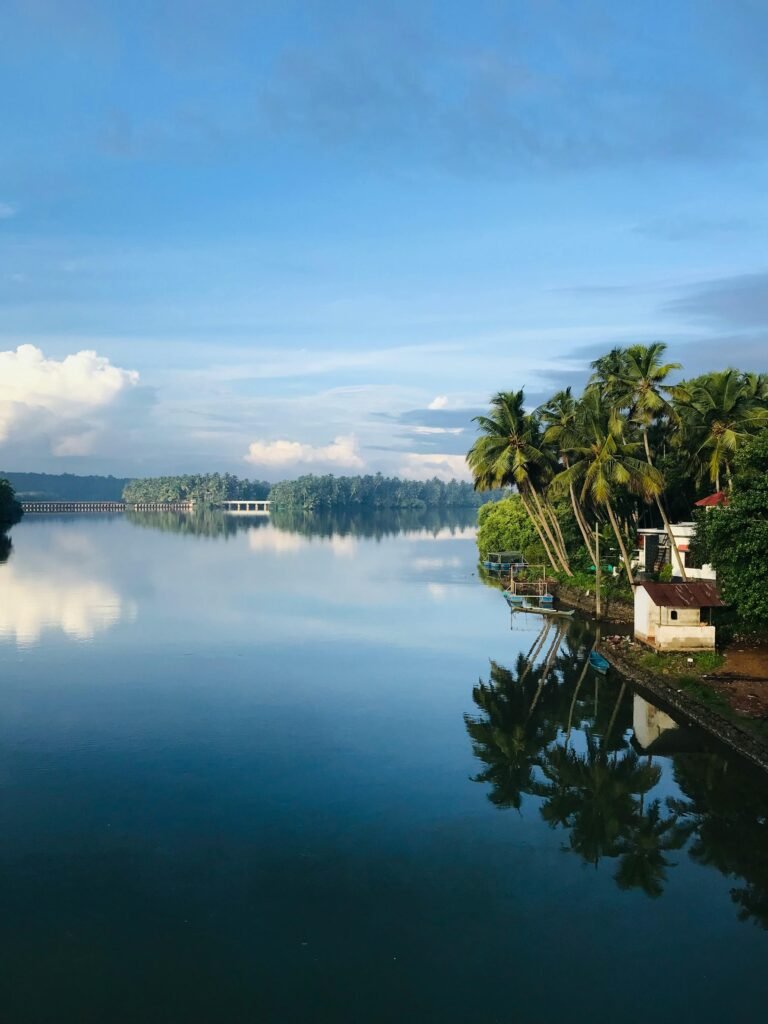
Ashtamudi means “eight braids” in Malayalam, which describes the lake perfectly. Unlike the relatively linear backwaters of Alleppey, Ashtamudi spreads outward in eight distinct channels — a sprawling, palm-fringed network that covers over 61 square kilometres.
The result is a backwater experience that feels fundamentally different from Alleppey. Because the lake is wider and deeper, the light sits on it differently. The boat rides feel more expansive. Villages along the banks are less visited and therefore more genuine.
The most popular thing to do here is the Kollam to Alleppey backwater cruise — an 8-hour journey by government ferry or private houseboat that travels the full length of the National Waterway 3. It is one of the longest backwater journeys you can take in Kerala. In fact, many experienced Kerala travellers say it is more atmospheric than Alleppey alone, precisely because it covers more ground and more variety of landscape.
For a shorter experience, private shikara rides on Ashtamudi Lake from Kollam town take 1.5 to 2 hours and cover the most scenic channels close to the city.
About 50 kilometres from Kollam, near a town called Chadayamangalam, something unusual sits on top of a granite hill. It is a sculpture of Jatayu — the eagle from the Ramayana who fought Ravana to protect Sita — and it is the largest bird sculpture in the world.
The sculpture is 200 feet long, 150 feet wide, and 70 feet tall. It is built into the natural rock of the hill, which means it looks, from certain angles, as if it has always been there. The site has a cable car, a viewpoint, a digital museum on the Ramayana, a rock climbing zone, and a nature trail.
What makes this particularly interesting is that the hill itself — Jatayu Para — is where the Ramayana says Jatayu fell after the battle with Ravana. Therefore, the sculpture is not purely decorative. It marks a site that holds genuine mythological significance for millions of Hindu pilgrims who visit specifically for that reason.
Searches for “Jatayu Earth’s Centre Kerala” have grown sharply since the attraction expanded its facilities. It is now one of the most searched new attractions in South Kerala, and consequently, one of the most photogenic.
Forty kilometres east of Kollam is Thenmala — officially designated as India’s first planned ecotourism destination. The name means “honey hill” in Malayalam, and the area around it lives up to that.
The Thenmala ecotourism zone is built around the Shendurney Wildlife Sanctuary and the Kallada River. Activities here include boating on the reservoir, a sculpture garden, a deer rehabilitation centre, and several forest trails maintained by the Kerala Forest Department.
What Thenmala does well is balance access with conservation. The trails are genuinely within the forest. The deer park houses animals that cannot be released back into the wild but are maintained in conditions that are far more natural than a zoo. The suspension bridge over the Kallada River is a short walk and worth it for the view.
It is not a dramatic destination. However, it is a genuinely peaceful one — and for travellers who want forest without the crowds of Thekkady or Wayanad, Thenmala is a practical and underrated option.
Here is something most travel guides do not mention. Kollam is the cashew processing capital of the world. Roughly 70 percent of global cashew exports are processed in and around Kollam district. The cashew factories here — most of them small family operations — employ hundreds of thousands of workers, the majority of them women.
Some processing units accept visitors. Watching the shelling and grading process is genuinely interesting, and buying cashews directly from Kollam — especially the large W180 grade — is significantly cheaper and fresher than anything available in tourist markets.
If you are in Kollam, buy your cashews here. That is a practical suggestion with real value behind it.
Cross from Kollam into Pathanamthitta and the character of the landscape shifts. The land rises. The forests thicken. The air cools noticeably. Pathanamthitta is often called the “Pilgrim’s Capital of Kerala” — a title it earns because this single district contains more temples, churches, and pilgrimage sites per square kilometre than almost anywhere else in South India.
Most importantly, Pathanamthitta is the gateway to Sabarimala.
Sabarimala is the hilltop temple of Lord Ayyappa, located in the Periyar Tiger Reserve at an altitude of 914 metres. Approximately 50 million pilgrims visit each year during the pilgrimage season, which runs from November to January. That number puts Sabarimala among the highest-attended religious sites anywhere in the world.
The pilgrimage involves a 14-kilometre trek through forest — pilgrims observe a 41-day vow of austerity before undertaking it, wearing black or blue clothing and carrying an irumudi (a double-pouch bag) on their head throughout the journey. The trek itself is physically demanding, spiritually significant, and unlike any other pilgrimage experience in India.
For Hindu travellers, Pathanamthitta during pilgrimage season is extraordinary — the entire district transforms into a river of devotion moving in one direction.
Base camps for the Sabarimala trek are at Nilackal and Pamba, both within Pathanamthitta district.
Beyond the pilgrimage circuit, Pathanamthitta holds one of Kerala’s finest wildlife and forest experiences: Gavi.
Gavi is a former cardamom plantation turned eco-camp, deep inside the Periyar Tiger Reserve — about 55 kilometres from Pathanamthitta town. Because it is within a tiger reserve, access is controlled. Visitors either stay at the KTDC eco-camp inside the forest or join a day safari from Kumily (near Thekkady).
What you get at Gavi is genuinely unusual. The forest here includes some of the highest density of elephants in the Periyar Reserve. Open grasslands appear unexpectedly among the cardamom and coffee estates, and these are where wildlife sightings happen most easily. Sambar deer, gaur, lion-tailed macaques, and various hornbill species are commonly spotted. Elephant sightings are nearly guaranteed if you stay for two or more days.
Gavi is not the easiest place to reach and it requires advance booking because entry is limited. As a result, it remains genuinely uncrowded — which is exactly the point.
About 27 kilometres from Pathanamthitta town is the Konni Elephant Training Centre — one of the oldest elephant kraals in Kerala. The Kerala Forest Department has maintained captive elephants here for timber operations (now largely ceremonial) and for training purposes.
Visiting is straightforward. You can watch elephants being bathed in the river, observe their feeding routines, and in some cases interact under trained supervision. It is not a sanctuary — these are working temple and forest elephants — but it is an honest, unfussy experience without the commercial packaging of some other elephant encounters in Kerala.
Because Konni gets significantly less footfall than Guruvayur or other elephant centres, the atmosphere is quieter and the access to the animals is more natural.
About 33 kilometres from Pathanamthitta, on the Pamba River, Perunthenaruvi is a waterfall that most people outside Kerala have never heard of. During monsoon and early post-monsoon (June through October), the Pamba runs full and the falls are dramatic — a wide cascade across dark river rocks surrounded by forest.
The access path runs along the river, which means the walk to the falls is itself pleasant. It is busy on weekends with local visitors. On weekdays, it is almost empty. The water is clean and swimming is possible at the lower pools during the drier months when the current is manageable.
Pathanamthitta district has one of the highest concentrations of ancient churches in Kerala — some of them dating back to the 3rd and 4th centuries AD, connected to the tradition of St. Thomas the Apostle who is believed to have arrived on the Kerala coast in 52 AD.
The Maramon Convention, held every February near Thiruvalla on the dry bed of the Pamba River, is one of the largest Christian gatherings in Asia — attended by over a million people over eight days.
For travellers with an interest in the history of Christianity in India, the churches around Pathanamthitta — many of them Syrian Orthodox, with ancient wooden architecture and Syriac inscriptions — are historically significant and almost entirely unvisited by mainstream tourism.
For all current Kerala packages and custom enquiries:
View packages → https://bestkeralatourpackages.com/trips/
Contact us → https://bestkeralatourpackages.com/contact/
The main pilgrimage season runs from November to January, peaking in December and January. The Mandala Pooja and Makaravilakku festival periods see the heaviest footfall. If you are visiting as a pilgrim, prepare for large crowds during these weeks. The temple also opens briefly for Vishu in April and during other festival dates.
Yes, because the experience is different. Ashtamudi Lake is wider and less commercial than Alleppey’s canal network. The Kollam-Alleppey cruise covers new landscape entirely. In addition, Jatayu Earth’s Centre and Thenmala have nothing comparable near Alleppey.
Kollam is doable as a day trip (71 km, about 1.5 hours). Pathanamthitta is further and has more to see — therefore, an overnight stay is more practical if you want to cover Gavi, Konni, and the waterfalls without rushing.
Yes, with some planning. The eco-camp inside Gavi requires a forest road journey that young children generally find exciting. Wildlife sightings are frequent. However, the limited accommodation means booking well in advance — several months ahead during peak season.




Best Kerala Tour Packages is a specialized division of
Pravas Sukhacha™
Network & Ecosystem.
Pravas Sukhacha Office 201, 2nd Floor, Raigad Complex, Salatwada Main Road, Vadodara – 390001, Gujarat
Business Hours:
Monday to Saturday: 10:00 AM – 7:00 PM
Sunday: Closed
Copyright © 2026 All Right Reserved BEST KERALA TOUR PACKAGES